
Einfluss von Beanspruchungsgeschwindigkeit und -frequenz auf den Ermüdungswiderstand
Inhaltsverzeichnis
Projektdaten
| Titel | Title Einfluss der Beanspruchungsgeschwindigkeit und der Belastungsfrequenz auf den Ermüdungswiderstand von Beton (EBBE-Beton) | Influence of loading velocity and loading frequency on the fatigue resistance of concrete (EBBE-Beton) Förderer | Funding Deutsche Forschungsgemeinschaft (DFG) Zeitraum | Period 08/2020 – 12/2025 Projektleiter | Project manager Prof. Dr.-Ing. Steffen Marx Team | Team Raúl Enrique Beltrán Gutiérrez Doreen Sonntag (Versuchsdurchführung | Test execution), Heiko Wachtel (Messtechnik | Measurement technology) |
Bericht aus dem Jahrbuch 2024/25
Was zyklisch beanspruchter Beton mit Erdbebenforschung zu tun hat
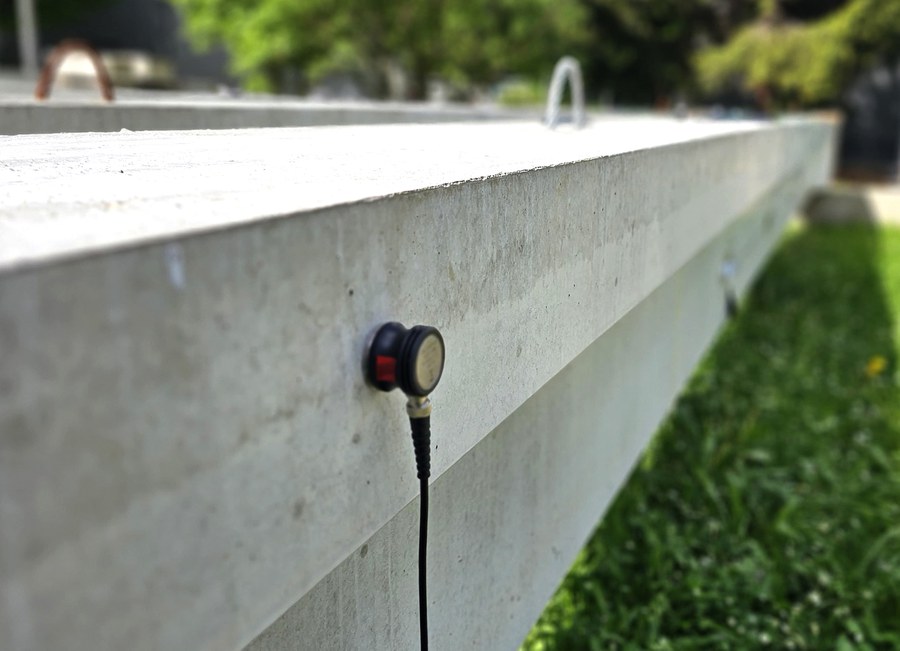
Ultraschallwandler zur Überwachung der Schädigungsentwicklung in einem Spannbetonbalken
Brücken und Windkraftanlagen aus Beton sind unverzichtbare Bestandteile unserer modernen Infrastruktur. Diese Bauwerke gehören zu einer besonderen Gruppe von Konstruktionen: sie sind während ihrer Lebensdauer einer enormen Anzahl von Lastzyklen ausgesetzt. Ein Beispiel: Wenn ein Lastkraftwagen oder ein Zug über eine Brücke fährt, übertragen seine Achsen die Last abschnittsweise auf die Brücke. Da diese Fahrzeuge mehrere Achsen haben, entstehen dabei fortlaufende Be- und Entlastungsvorgänge – ein wiederkehrender Prozess, der für viele Betonstrukturen typisch ist. Deshalb spielt die sogenannte Ermüdungsbemessung eine zentrale Rolle für die Lebensdauerprognose solcher Bauwerke.
Bislang stützte sich die Ermüdungsbemessung auf statische Materialeigenschaften wie die Druckfestigkeit. Dynamische Effekte wie die Erhöhung der Betondruckfestigkeit bei schneller Belastung oder die teilweise Erholung des Materials während der Entlastungsphase blieben jedoch unberücksichtigt. Interessanterweise sind solche Effekte seit Langem Gegenstand der Erdbebenforschung. Geophysiker haben festgestellt, dass Gesteine tief in der Erde während eines Erdbebens ähnliche Phänomene zeigen: Materialeigenschaften ändern sich abhängig vom Spannungsniveau und der Geschwindigkeit der Belastung. Dabei spielen die Festigkeitszunahme bei Belastung und die Erholung des Materials bei Entlastung eine zentrale Rolle – sie entscheiden buchstäblich über den Zeitpunkt, in dem das Gestein versagt.
Im Projekt EBBE-Beton wird dieses Wissen auf den Ingenieurbau übertragen. Ziel ist es, neue Modelle zu entwickeln, die die Bruchlastwechselzahl – also den Moment des Versagens – anhand dynamischer Phänomene während der Belastung präziser abschätzen können. Die Erkenntnisse aus der Geophysik dienen dabei als Grundlage, um das Versagen von Betonbauwerken besser zu prognostizieren und den Zustand ermüdungsbeanspruchter Bauwerke realistisch zu bewerten. Mit diesem Ansatz könnte die Sicherheit und Lebensdauer moderner Infrastruktur erheblich verbessert werden.
Bericht aus dem Jahrbuch 2023
Ballspiele mit Beton

Probekörper im Kriechstand
Stellen Sie sich einen Ball vor, welcher sich einerseits wie ein Hacky Sack verhält – er kann nicht springen, sich aber sehr langsam immer weiter ausdehnen – und andererseits zeitweise wie ein Flummi-Ball unaufhörlich springt, als hätte er ein Eigenleben. Es gibt eine Gruppe von Stoffen, zu denen auch Beton gehört, die so ein eigentümliches Verhalten aufweisen. Das bedeutet, das Verformungsverhalten ändert sich je nach den Belastungsbedingungen. Die Entwicklung der Verformung von Beton hängt von der Zeitskala ab, in der der Belastungsprozess stattfindet. Die Belastungsgeschwindigkeit bestimmt das Dehnungsverhalten. Wenn die Belastung sehr langsam, z. B. bis maximal 10–3 N/mm²s, erhöht wird oder nahezu konstant bleibt, scheint die Verformung durch das Kriechen des Betons maßgebend beeinflusst zu werden. Wird der Beton dagegen sehr schnell belastet, so scheint sich seine Steifigkeit zu erhöhen und sein Verformungsbild ändert sich deutlich.
Die Untersuchung dieser Eigenschaften ist besonders wichtig für Betontragwerke, die schnellen zyklischen Belastungen ausgesetzt sind, wie beispielsweise Windkraftanlagen oder Brücken. Sowohl bei diesen Bauwerken als auch bei Laborversuchen hat die Geschwindigkeit, mit der Belastungszyklen auftreten, einen Einfluss auf die Ermüdungsfestigkeit des Materials oder Bauwerks. Um diese Unterschiede hervorzuheben und die Veränderungen der mechanischen Eigenschaften von Beton zu untersuchen, welcher extremen Belastungsgeschwindigkeiten ausgesetzt ist, wurden in diesem Jahr im Rahmen des EBBE-Beton-Projekts sowohl Kriechversuche als auch Druckversuche bei sehr hohen Belastungsgeschwindigkeiten bis ca. 106 N/mm²s durchgeführt. Auf Grundlage der Versuchsdaten werden der Einfluss der Belastungsgeschwindigkeit auf die Entwicklung der Ermüdungsschädigung untersucht und darauf basierend Modelle entwickelt.
Durch den Einsatz dieser Modelle kann die bisherige eingeschränkte Übertragbarkeit von Erkenntnissen aus Ermüdungsversuchen mit hohen Belastungsgeschwindigkeiten im Labor auf reale Bauteilsituationen mit geringeren Belastungsgeschwindigkeiten verbessert werden. Selbst Haaland oder Messi würden sich ohne dieses Wissen und geeignete Modelle nicht trauen, mit unserem launigen Betonball zu spielen.
Bericht aus dem Jahrbuch 2021
Betonermüdung schnell oder langsam?

Probekörper unter Druckschwellenbeanspruchung
Betonbrücken werden während ihrer Lebensdauer von einer großen Anzahl an Lastwechseln durch Autos, LKW oder Züge beansprucht. Das hat zur Folge, dass der Beton an den hochbeanspruchten Stellen ermüdet. In den letzten Jahren wurden Wissenslücken sowie Diskrepanzen zwischen dem im Labor beobachteten Ermüdungsverhalten und dem tatsächlichen Ermüdungsverhalten von Betonstrukturen entdeckt. So haben beispielsweise die Ermüdungsfestigkeiten, die auf der Grundlage von Laborversuchen ermittelt wurden, einen niedrigeren Wert als die in den Bauwerken geschätzten tatsächlichen Ermüdungsfestigkeiten. Die hohe Belastungsfrequenz und die daraus resultierende innere Temperaturerhöhung während der Untersuchungen im Labor verursachen anscheinend eine zusätzliche Schädigung in den Betonproben.
Gegenwärtig werden Betonproben unter Laborbedingungen in Ermüdungsversuchen mit der höchstmöglichen Belastungsgeschwindigkeit bis zur Ermüdung geprüft. Dies erfolgt, um Kosten und Prüfzeiten zu minimieren. Um beispielsweise die Anzahl der zyklischen Belastungen bei einem Probekörper zu simulieren, denen eine Brücke über 10 Jahre ausgesetzt ist, würde man unter normalen Laborbedingungen mit einer Belastungsfrequenz von fp = 5 Hz etwa 23 Tage benötigen. Zudem bräuchte man zahlreiche Probekörper um die Ergebnisse der Untersuchungen zu validieren. Es scheint daher logisch, die Belastungsgeschwindigkeit zu erhöhen. Nur wenn die Prüfzeiten für die Ermüdungsversuche verkürzt werden könnten, ohne die Qualität der Ergebnisse zu beeinträchtigen, wird es möglich, die Entwicklung der Ermüdungsschädigung über die erwartete Lebensdauer der Brücke im Labor realistisch zu simulieren.
Im Rahmen dieses Forschungsvorhabens werden zahlreiche Versuche mit unterschiedlichen Belastungsgeschwindigkeiten und Temperaturbedingungen durchgeführt, um die Ermüdungsfestigkeit von Beton mit den oben genannten Faktoren in Beziehung zu setzen. Aus den Versuchsdaten werden später Modelle entwickelt, die den Einfluss der Belastungsgeschwindigkeit sowie der Temperaturerhöhung auf die Entwicklung der Ermüdungsschädigung berücksichtigen. Mithilfe der in diesem Forschungsvorhaben entwickelten Modelle wird die bislang unzureichende Übertragbarkeit von Laborergebnissen aus Ermüdungsversuchen auf reale Bauteilsituationen ermöglicht.