94th UNEP/UNESCO/BMUKN International Short Course - Restoring the Green: Sustainable Principles and Practices in Forest Restoration (SC94)
Strengthening the capacity of decision-makers and practitioners to analyze forest degradation, co-create context-sensitive restoration strategies, and mobilize resources for long-term ecosystem recovery.
|
Funding period |
16 August – 20 September 2026 |
|
Course period |
20 August – 16 September 2026 |
|
Duration |
4 weeks, full-time |
|
Location |
On-site, Dresden |
|
Participants |
21 fellows |
|
Language |
English |
|
Application Period |
21 January – 24 February 2026 |
Motivation
Forest restoration has emerged as a key response to the global environmental crisis as a holistic process aimed at re-establishing the structure, function, and diversity of forest ecosystems. The importance of forest restoration is emphasized by major global initiatives such as the UN Decade on Ecosystem Restoration (2021–2030), the Bonn Challenge, and commitments under the Paris Agreement. These frameworks promote restoration as both an environmental and a socio-economic priority. Restored forests can support livelihoods, increase climate resilience, and safeguard indigenous and local knowledge systems.
However, restoration is a complex, context-dependent task. Successful restoration requires an interdisciplinary understanding of ecology, forestry, sociology, economics, and policy, as well as participatory approaches that engage landowners, governments, NGOs, and indigenous communities. It is also a long-term commitment, often requiring continuous monitoring, adaptation, and learning.
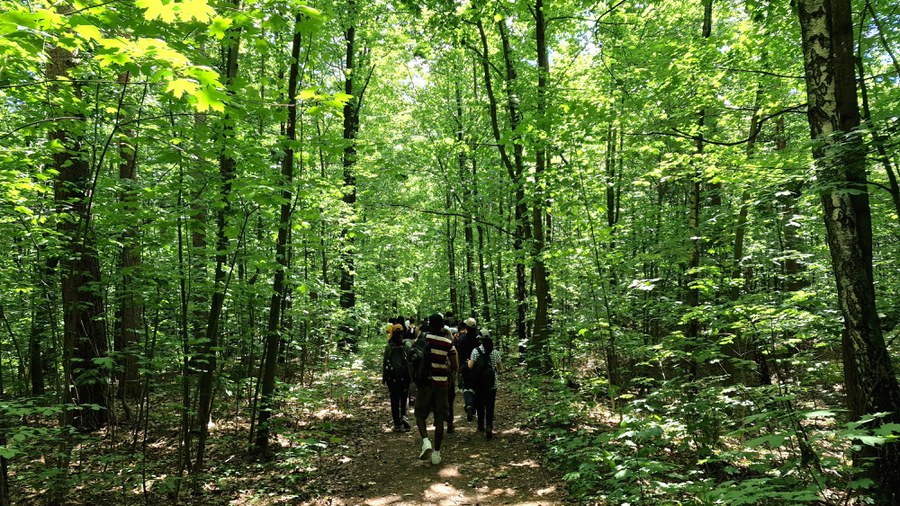
Figure 1: Conservation Area Windberg (Freital, Germany), example of forest restoration
Concept
This short course takes a multidisciplinary approach to forest restoration, combining ecological theory with field-based techniques, insights into policy, and community engagement. Participants explore passive and active restoration methods, gain an understanding of socio-political challenges, and develop critical evaluation skills for restoration projects.
Key topics include: planetary boundaries and resilience thinking, succession dynamics and landscape ecology, ecosystem services and restoration benefits, innovative financing mechanisms (carbon markets, Payments for Ecosystem Services), and systems-thinking approaches to integrated restoration planning.
The course emphasizes that forest restoration is not an isolated process—it is linked to land tenure systems, governance structures, traditional knowledge, market forces, and community engagement. Through interdisciplinary topics, participants learn to navigate these dimensions and integrate them into effective restoration planning.
Learning Targets
Upon completion of the course, participants will be able to:
- Explain the ecological principles underpinning forest restoration
- Identify and evaluate the drivers and consequences of forest degradation
- Conduct site assessments to diagnose ecological conditions
- Design comprehensive forest restoration plans
- Implement monitoring frameworks and apply adaptive management
- Critically analyse case studies from diverse regions and forest ecosystems
- Analyse innovative financing mechanisms for forest restoration, including carbon markets and Payments for Ecosystem Services, and evaluate their context-specific benefits and challenges.
- Communicate restoration goals and strategies effectively to diverse stakeholders.
- Develop Post-Training Action Plans for implementation in their professional context
Target groups
This course is aimed at experts who prepare and implement political decisions and practical measures in ministries, authorities, local government, and non-governmental institutions of developing countries (including emerging economies) working on forest restoration, resource sustainability, as well as sustainable societal development.
We expect a strong motivation to explore concepts for forest restoration and commitment to implementing them. A first university degree (BA, BSc) in a related field is essential. Adequate English communication skills and formal nomination by the delegating are mandatory.
Why participate?
- Extensive experience of the CIPSEM team in delivering high-quality, impactful training programmes that address the specific challenges faced by professionals in developing countries and emerging economies.
- An intensive four-week, full-time learning experience that combines classroom sessions, field excursions, collaborative group work, and guided self-study units.
- Instruction by renowned international and German facilitators with strong academic and practical expertise.
- Increased motivation and professional inspiration through experience sharing, peer learning, and strong cohort bonding in a diverse group of 21 experts.
- Integration into a large and active international network of environmental professionals and leaders, supported by ongoing alumni activities.
- Practical transfer of knowledge and skills through the mentored development of Post-Training Action Plans (PTAPs) for implementation in participants’ professional contexts.
- Eligibility for course alumni to apply for Training-to-Action Fellowships of €2,000 each to support the implementation of their post-training action plans.
How to apply?
- Qualified professionals are welcome to apply from 21 January until 24 February 2026 via CIPSEM’s online application portal.
- The Steering Committee selects 21 participants by May 2026; successful participants are awarded a Certificate of Proficiency in Restoring the Green: Sustainable Principles and Practices in Forest Restoration.
Application link:https://crm.bu.tu-dresden.de/ausschreibung?call=CIPSEM2026-SC94
Before applying, please also take a look at our hints on application, explanations regarding the application portal and answers to frequently asked questions. For information on other courses, please visit https://tud.de/cipsem/upcoming.
► If you have an important question that is not addressed on our website or in the help texts within the application form, please contact us at . Before reaching out, we ask you to check the resources provided thoroughly.