
Ariane Schneider
Digital storytelling in the context of sustainability in geographical education
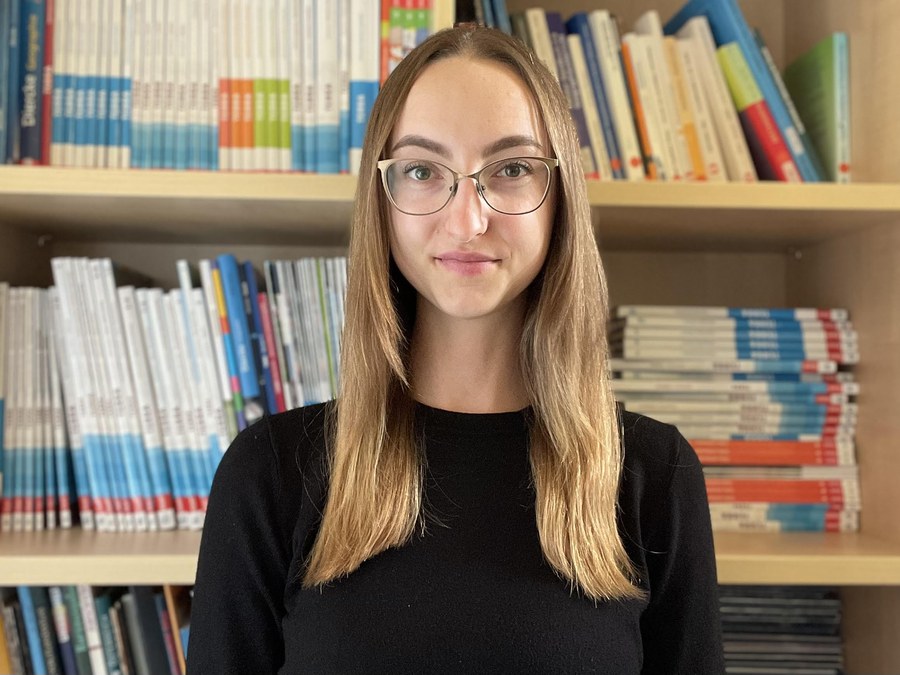
Ariane Schneider is currently doing her doctorate at the Faculty of Environmental Sciences at the TU Dresden.
As part of the lernen:digital joint project ReTransfer, Ariane Schneider is doing her doctorate on digital storytelling in the context of sustainability in geographical education. The starting point of the doctoral project is the observation that teaching and learning are changing fundamentally under the conditions of a culture of digitality: Knowledge is increasingly networked, multimodal, dynamic and publicly negotiated, while participation in social discourses is increasingly tied to the ability to use digital media critically, reflexively and creatively. Against this backdrop, the doctorate examines how digital stories and, in particular, story maps can be used as narrative, multimodal and linguistically framed learning environments for geographical education processes. The focus is on the question of how complex sustainability topics can be prepared in digitally mediated teaching-learning contexts in such a way that they are technically sound, multi-perspective, language-sensitive and at the same time emotionally connectable without unduly reducing complexity.
The cumulative doctoral project combines conceptual, higher education didactic and professional perspectives: on the one hand, digital formats for teacher training are developed and theoretically substantiated, such as a training concept on "Digital Storytelling in the Context of Sustainability", which combines narrative, journalistic and geographical didactic approaches. On the other hand, in a geography didactics seminar on the design of digital sustainability stories, student reflections and peer reviews are qualitatively evaluated in order to reconstructively work out what characterizes a "good" digital story in subject teaching. The work aims to develop design principles for digital story maps and narrative sustainability communication that combine technical accessibility, symmetrical media coherence, responsible representation, reflective normativity and target group-oriented learning guidance. In this way, the doctoral project contributes to designing geographical teaching-learning processes in a culture of digitality in such a way that they promote digital sovereignty, critical participation and transformative educational processes.