
Instrumental Analysis
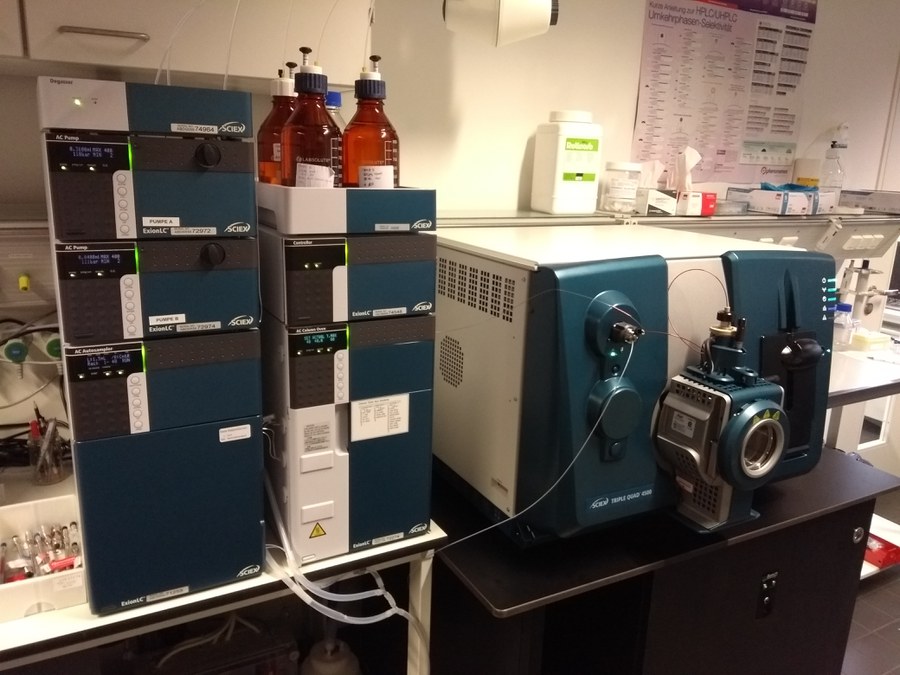
The Institute of Water Chemistry has extensive experience in the analysis of various water constituents and water quality parameters. A key focus is the determination of organic water constituents.
Our research on organic chemicals in the environment is based on comprehensive and state-of-the-art instrumental analysis, in which we utilize various LC-MS systems. These systems enable the precise determination of more than 150 organic trace substances as standard, including pharmaceutical residues, pesticides, toxins, and industrial chemicals—even at concentrations down to the ultra-trace range (ng/L). Our analyses cover not only tap water, groundwater, and surface water, but also other aqueous matrices such as (process) wastewater. In addition, we have specialized analytical methods for PFAS (per- and polyfluorinated alkyl substances) as well as ionic liquids, which are becoming increasingly important in environmental analysis. Using high-resolution mass spectrometry, we also perform non-target and suspect-target screenings, which, among other things, enable a detailed investigation of abiotic and biotic degradation pathways of chemicals.
Our instruments are primarily used for research; however, a wide range of analytical services is also available to external users through the Core Facility Environmental Analytics(CFEA), subject to available capacity.
Our expertise is complemented by the analysis of common water parameters, such as heavy metals, inorganic ions, dissolved and total organic carbon (DOC and TOC), and biochemical oxygen demand (BOD) (see also Sensors)
|
Substance Group / Parameter |
Equipment |
Relation to Current or Completed Projects |
|
Target screening, multi-method approaches for the quantification of selected trace substances, such as pharmaceuticals, pesticides, industrial chemicals, PCP, TPs, and sweeteners |
South Africa Partnership, BIONEWS sub-consortium (within the BIOSAM growth cluster), Contract Analyses |
|
|
PFAS (including 24 according to TVO) |
Contract Analyses |
|
|
Pesticides |
Contract Analyses |
|
|
Benzophenones (UV blockers) |
Contract Analysis |
|
|
Ionic liquids |
Sciex 6500+ QTRAP® LC/MS/MS system |
Early-Career Research Group |
|
HOC (PAHs, LOHCs, cycloalkanes) |
Early-Career Research Group |
|
|
Cyanotoxins |
UHPLC-ESI-MS/MS (QTRAP) |
|
|
Odor compounds (geosmin, 2-MIB, etc.) |
||
|
Non-target/suspected analysis Structural elucidation, substance identification, |
UHPLC-Q-TOF |
Contaminant Science Group(Young Researchers Group), ESF Young Researchers Group KOSYN |
|
Reserve Antibiotics and Inhibitors |
UHPLC-ESI-MS/MS (QTRAP) |
ESF Young Researchers Group KOSYN |
|
Signal peptides / pheromones (signaling molecules) from yeasts and bacteria |
UHPLC-ESI-MS/MS (QTRAP) |
ESF Young Researchers Group KOSYN |
|
Typical graywater components (including personal care products, corrosion inhibitors, and pesticides) |
UHPLC-ESI-MS/MS (QTRAP) |
|
|
Inorganic chloramines, free chlorine |
UV/VIS spectroscopy, |
|
|
Textile fibers (PET, polyethylene terephthalate) |
Fluorescence microscopy |
|
|
OH radicals |
UV/VIS spectroscopy, GC/MS, HPLC-FD |
Studies on the photooxidative removal of flavor and odor compounds from raw water |
|
Microbiological parameters (total bacterial count, coliform bacteria) |
including COLILERT |
|
|
Inorganic anions |
Ion chromatography, UV/VIS spectroscopy |
Various projects |
|
Total parameters, sensor development: DOC, SAK, TNb, COD, BOD, AOS |
TOC/TNb analyzer, UV/VIS spectroscopy |
and other projects (including NIRWINDU) |
|
Determination of heavy metals and other elements |
ICP/OES, UV/VIS spectroscopy |
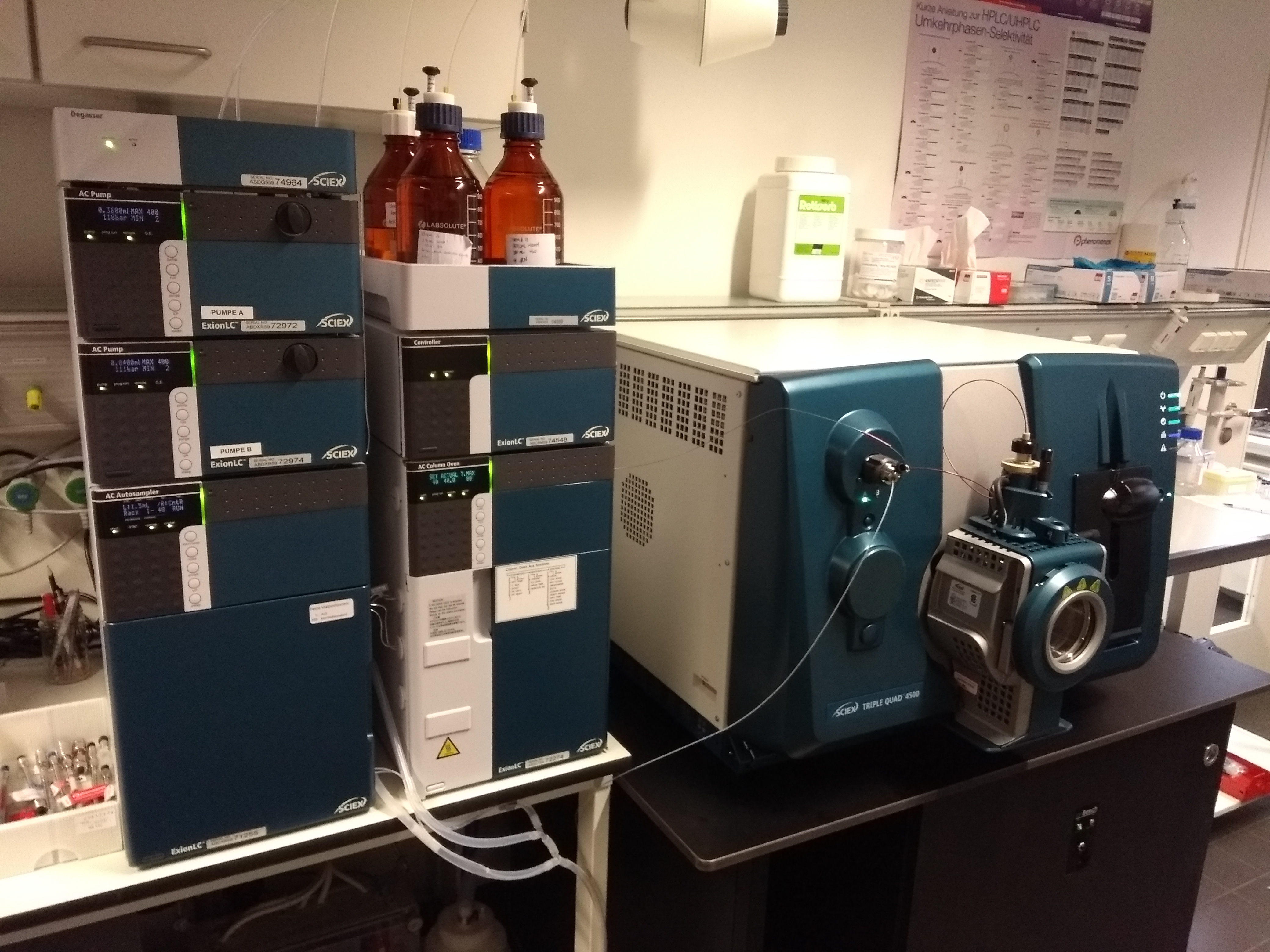
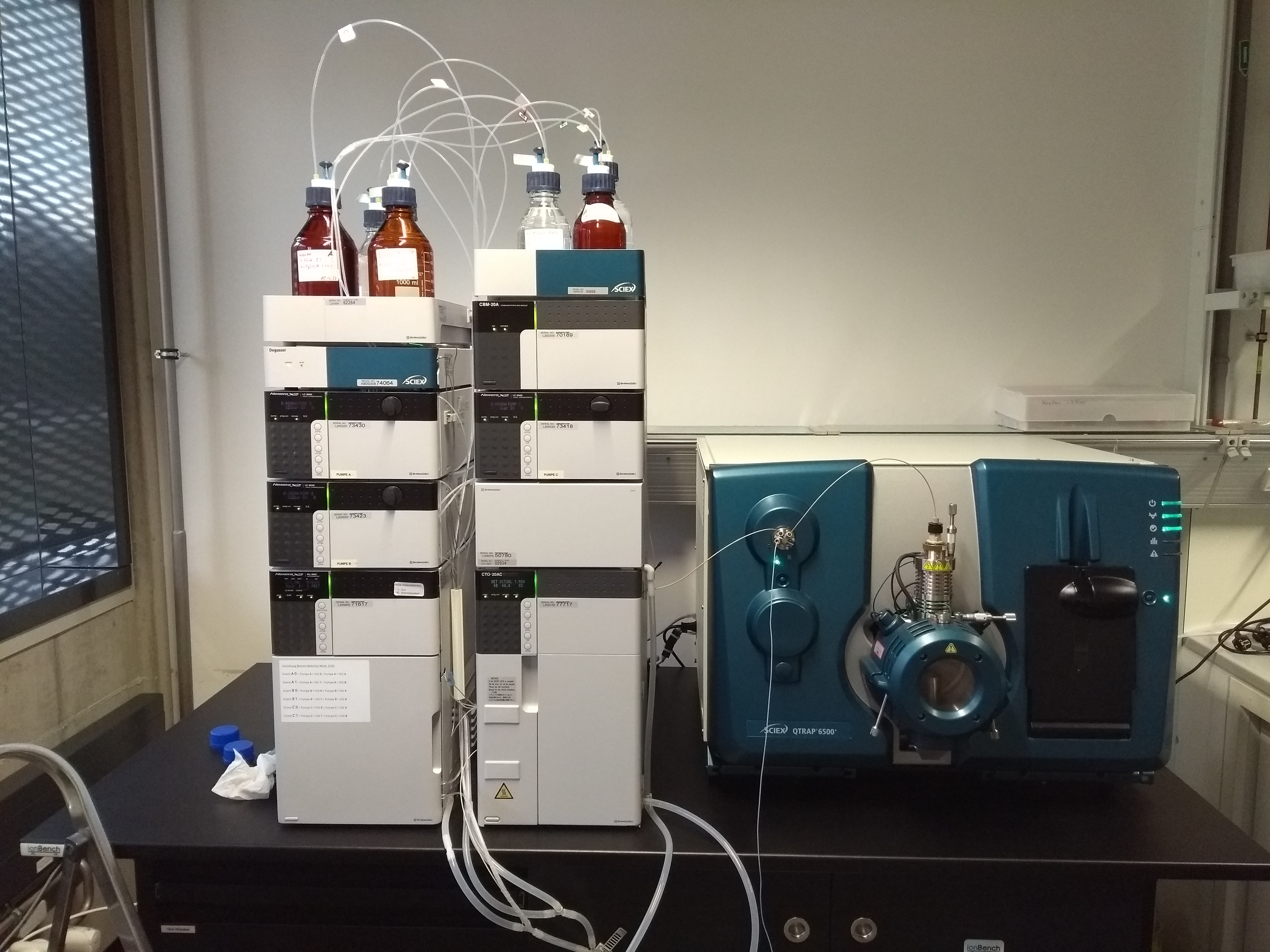
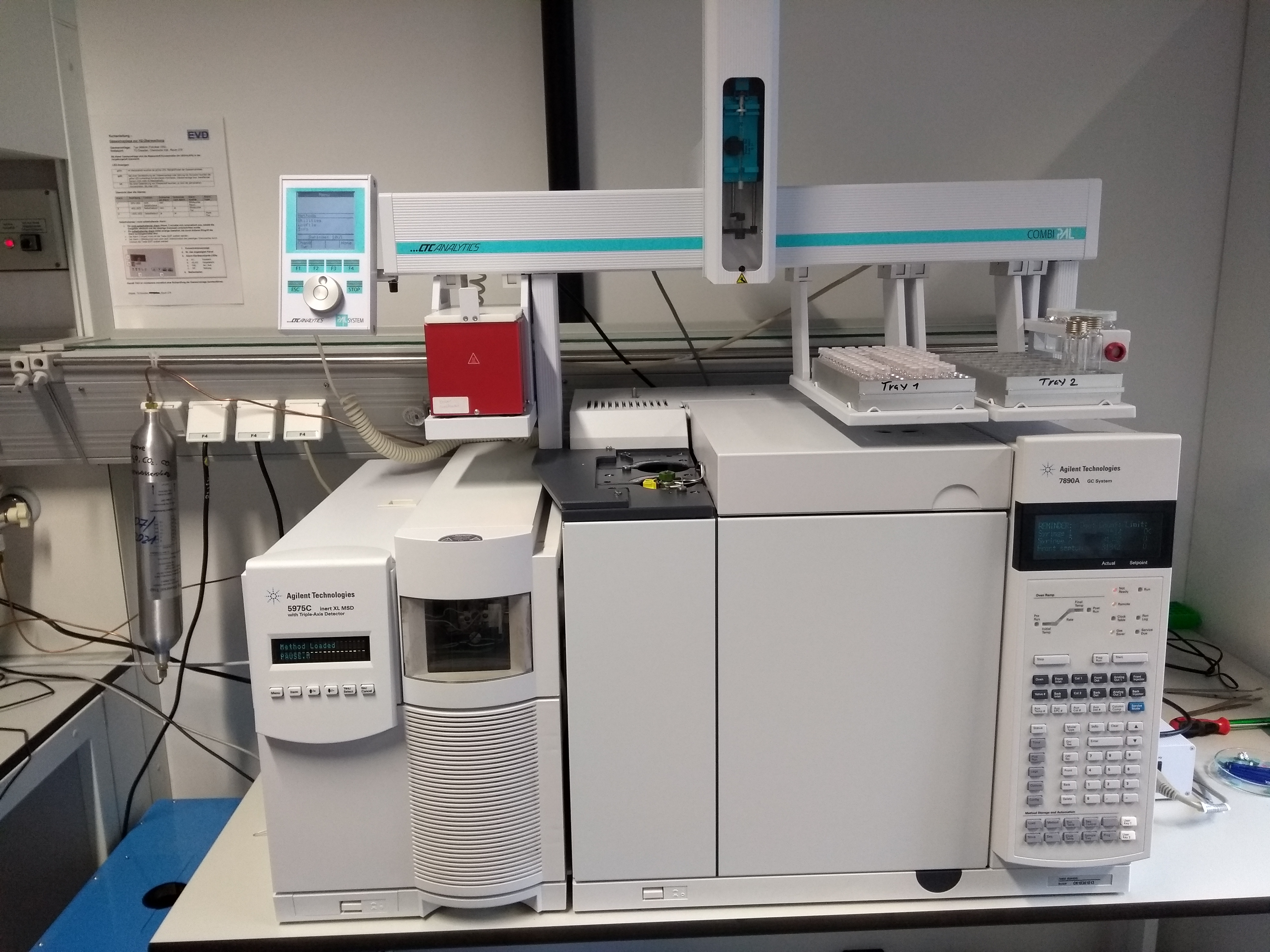

The relevant methods are either currently ready for immediate use or can, in most cases, be reactivated within a specific timeframe. As a rule, adaptation or validation to the respective water matrix must be performed prior to sample analysis. Establishing methods for trace substances not yet included in the method library requires time and technical effort (up to several months, depending on the substance and matrix) and involves, among other things, the procurement of standards/isotope-labeled references, adjustment of MS and LC parameters, calibration, and method validation.