
Aug 26, 2026
Summer in the City: Adapting to Heat Through Green Infrastructure
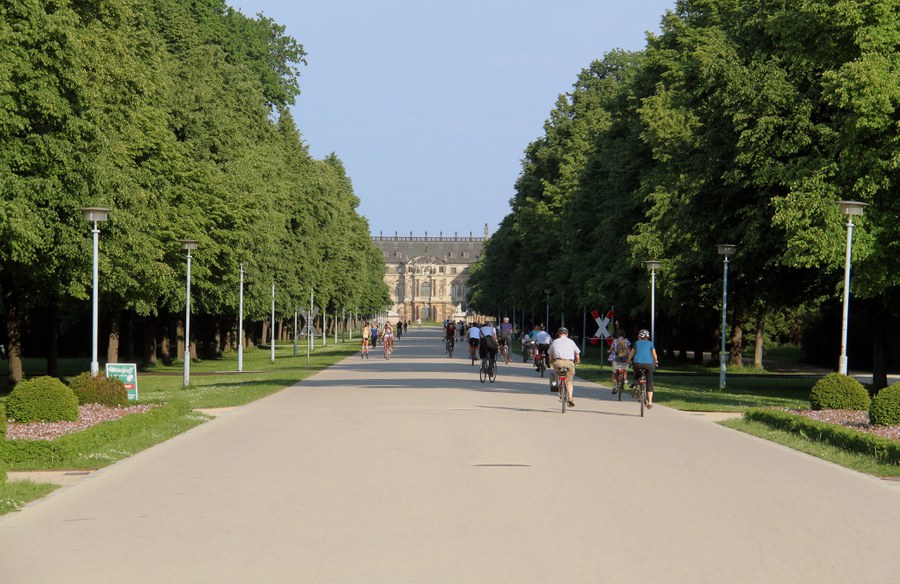
Summer in the city is bringing increasingly extreme heat stress, which can affect health, quality of life, and infrastructure. Green infrastructure—such as parks, green roofs, green facades, and urban trees—offers an effective way to adapt to heat by improving the microclimate, providing shade, and cooling through evaporation. Such measures not only help lower temperatures but also promote biodiversity and quality of life in urban areas. Planning and integration of green elements are carried out in a targeted manner, and this makes them a central component of climate-resilient urban development.
How can this be implemented in Dresden? And where might there already be successful examples? As part of the lecture series “Meet the Expert Under the Conifer,” Prof. Matthias Mauder from the Emerging Field Forest-Water Dynamics in Climate Change was a guest at the Botanical Garden of TU Dresden on August 23 and engaged with visitors on the topic “Summer in the City—Heat Adaptation Through Green Infrastructure.”
The talk will be released as a podcast shortly. Here you can already find talks by Prof. Andreas Hartmann on the topic “Groundwater and Forests” and by Prof. Matthias Forkel on the topic “Researching and Preventing Forest Fires with Satellites.”