
Research stay in Sydney
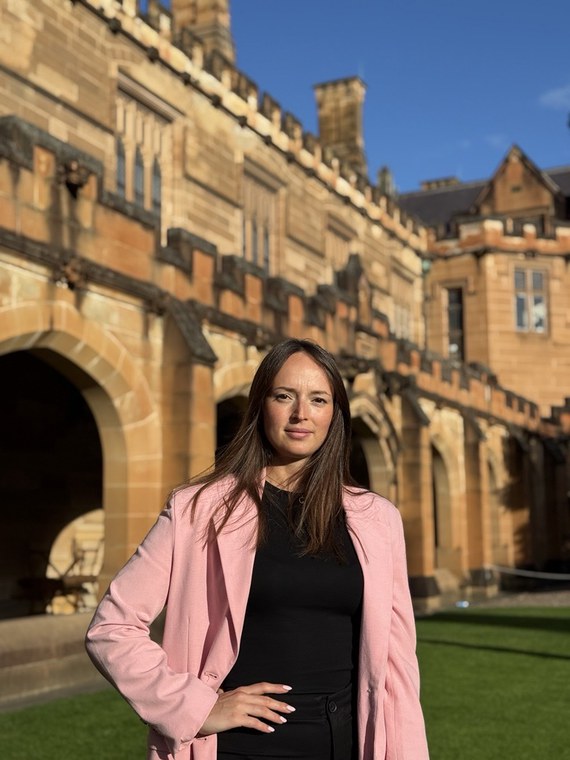
Katharina Bettig (Chair of Economics, specializing in Public Finance) spent a research fellowship at the University of Sydney in Australia from early February through late April 2026. She was invited by Gregor Pfeifer, a senior lecturer at the School of Economics at the University of Sydney. He is an applied microeconometrician and conducts research primarily on topics in health and education economics.
How did this research visit come about? How much time passed from the initial idea to its implementation? Were there any hurdles in planning the visit?
I first heard about Gregor Pfeifer during my master’s program. In a course on Health Econometrics, I not only learned about the difference-in-differences estimation method through one of his papers (co-authored with Mirjam Stockburger), but I was also fascinated by microeconometric research for the first time. In the paper, the authors show that the introduction of over-the-counter access to the “morning-after pill” unexpectedly led to an increase in fertility. This combination of a socially relevant question, compelling empirical methodology, and a surprising result made a deep impression on me at the time.
During my doctoral studies, I had the opportunity to meet Gregor Pfeifer in person during his visit to TU Dresden. Even in our very first conversations, I was able to benefit greatly from his expertise for my own research projects. I was all the more delighted when the opportunity later arose to engage in regular exchanges with him and other colleagues on site during a research stay at the University of Sydney. The specific idea for the stay came about relatively late, about a good half a year before my departure. The fact that everything went so smoothly was primarily due to the highly professional organization at the University of Sydney and Gregor’s tremendous support. However, there was some uncertainty regarding the visa right up until shortly before my departure, as processing times for Australia can vary. Fortunately, everything worked out in time in the end. For future stays, however, I would definitely recommend applying for the visa as early as possible. I am also particularly grateful to my advisor, Prof. Marcel Thum, who fully funded the research stay and gave me the freedom to take advantage of this opportunity.
What can you tell us about your stay in Sydney? How did the collaboration go?

The three months in Sydney were one of the most productive and inspiring phases of my doctoral studies so far. My work on my paper was particularly shaped by the intensive exchange with the local researchers. The School of Economics at the University of Sydney is a very large department with around 80 professors. Many of them took a great deal of time—sometimes several hours—to discuss my work, ask questions, and offer specific suggestions for improvement. I also had the opportunity to present my paper at the Microeconometrics & Public Policy Seminar at the University of Sydney. The questions and the subsequent discussion really helped advance the paper. Precisely because I am in the final phase of my doctoral studies and am currently working intensively on my single-authored project, this detailed feedback was enormously helpful. The regular exchanges with Gregor Pfeifer throughout my stay were particularly valuable to me, as his feedback was very helpful in sharpening my argument and further developing my paper. In addition, the University of Sydney hosts several weekly seminars where international researchers present their current work. This led to many exciting conversations and new perspectives. And thanks to the eight-hour time difference, I received hardly any emails from Germany during the day—definitely a productivity booster.
What experiences are you taking back with you to Dresden?

I returned to Dresden with many new ideas and valuable feedback. The stay showed me once again how much good research thrives on exchange—on critical questions, new perspectives, and conversations that help sharpen one’s own line of reasoning. This was an important step for my dissertation: I was able to significantly advance my current paper and complete a first full draft. Sydney also had a profound personal impact on me. Almost always good weather and just a few minutes’ walk to the ocean contribute significantly to life satisfaction. I especially enjoyed the “early bird” lifestyle in Australia: the 5:30 a.m. Run Club at Bondi Beach, coastal walks accompanied by dolphins, or simply watching the sunrise in the morning. Making the most of the time before work—a routine I intend to maintain here in Dresden as well.