
Feb 25, 2026
A New Research Consortium from TU Dresden and Saarland University to Investigate Inflammatory Processes on the Inner Walls of Blood Vessels
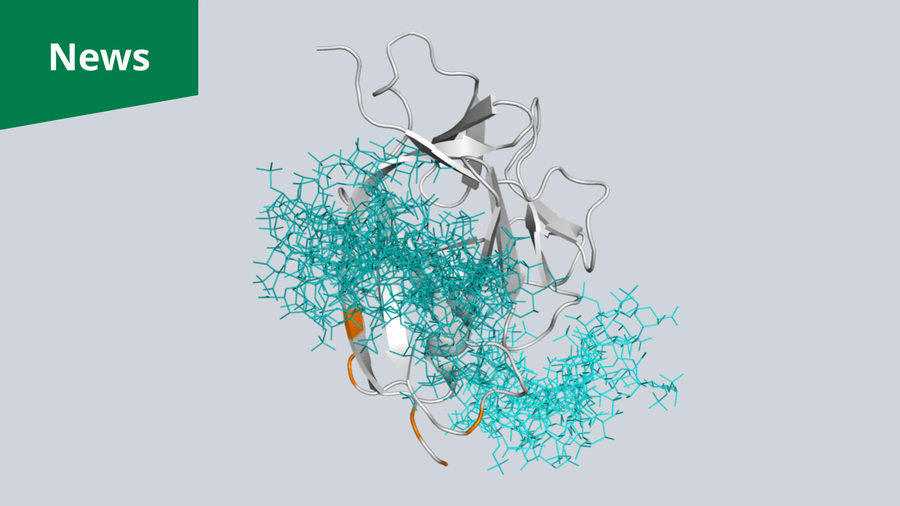
Molecular structure of IL-1α (gray) binding to different glycosaminoglycan molecules (in cyan)
Interleukin-1 alpha (IL-1α) is a key signaling molecule primarily responsible for controlling inflammatory responses in the human body. A research consortium from Saarland University and TU Dresden aims to uncover and modulate the precise mechanisms of vascular inflammation, taking a closer look at the role of IL-1α on the inner walls of blood vessels. The project starts in autumn 2026 with approximately 500,000 EUR funding from the German Research Foundation (DFG).
Inflammation is the body's response to pathogens or degenerate cells. However, if these reactions get out of control, they can lead to life-threatening conditions such as tumors. These inflammatory responses are fundamentally intended to keep the body healthy and they are regulated by crucial immune system messengers like IL-1α. As is so often the case, the dose makes the poison: if the body releases too much of the protein, it can cause chronic inflammatory diseases such as rheumatism or chronic pericarditis (inflammation of the heart muscle). Therefore, it is vital to understand exactly how IL-1α is kept in balance.
A key to understanding it may lie on the inner lining of the blood vessels. "Glycosaminoglycans play a decisive role on the endothelial glycocalyx – a protective layer on the inside of blood vessels. Initial findings suggest that these sugar structures specifically modulate the effect of IL-1α, thereby influencing cell-cell interactions and inflammatory processes," explains Sandra Rother, Junior Professor of Molecular Signaling at Saarland University.
Together with Professor Emmanuel Ampofo from the Clinical-Experimental Surgery at Saarland University and Professor María Teresa Pisabarro from the Biotechnology Center (BIOTEC) at TU Dresden, the researchers are launching a new project funded by the DFG. They aim to discover how glycosaminoglycans at the endothelial glycocalyx manage to release IL-1α precisely and in exactly the right amount and to establish a rationale for functional intervention.
"The goal is to gain a better understanding of how inflammatory processes are regulated at the vessel wall and to what extent these mechanisms can be specifically influenced in the future to control inflammatory reactions in a more nuanced way," Prof. Rother explains.
“An in-depth atom-level understanding of the molecular mechanisms involved will allow us to apply structure-based design strategies to develop molecular leads for the future development of new therapies against inflammatory diseases,” explains Prof. Pisabarro.