Apr 20, 2026
3D exhibition "Meissen Porcelain in Virtual Focus": A seminar project of the Digital Humanities and Art History departments
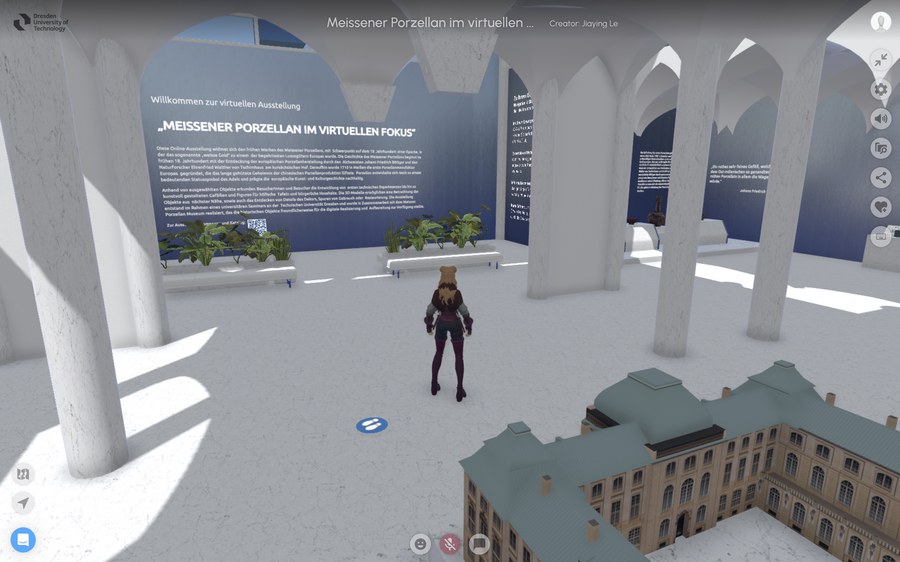
General view of the virtual exhibition
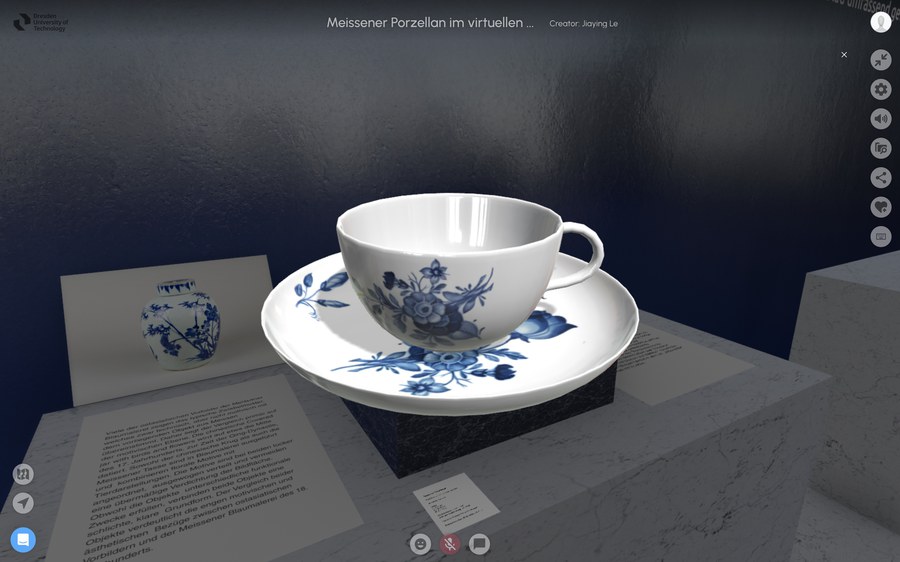
The creation of 3D models of artworks is an increasingly widespread practice in art education that opens up new approaches to objects. As part of the master's seminar in the winter semester 2025/26 "Introduction to the conception of 3D objects and exhibitions", led by PD Dr. Angela Dreßen, the students captured 3D scans of selected objects from the Meissen Porcelain Museum. Thematically prepared, they can now be experienced by visitors from all over the world in the immersive exhibition "Meissen Porcelain in Virtual Focus".
Exhibition concept
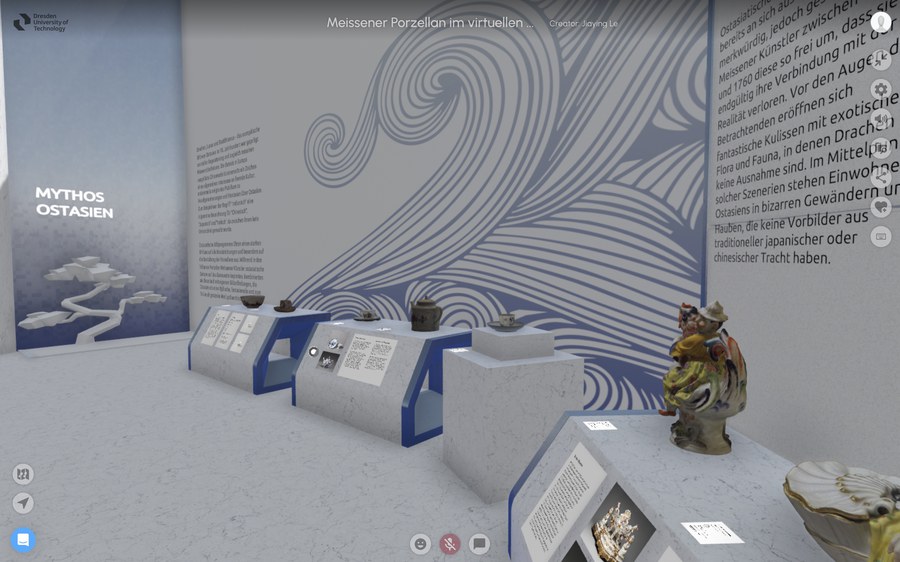
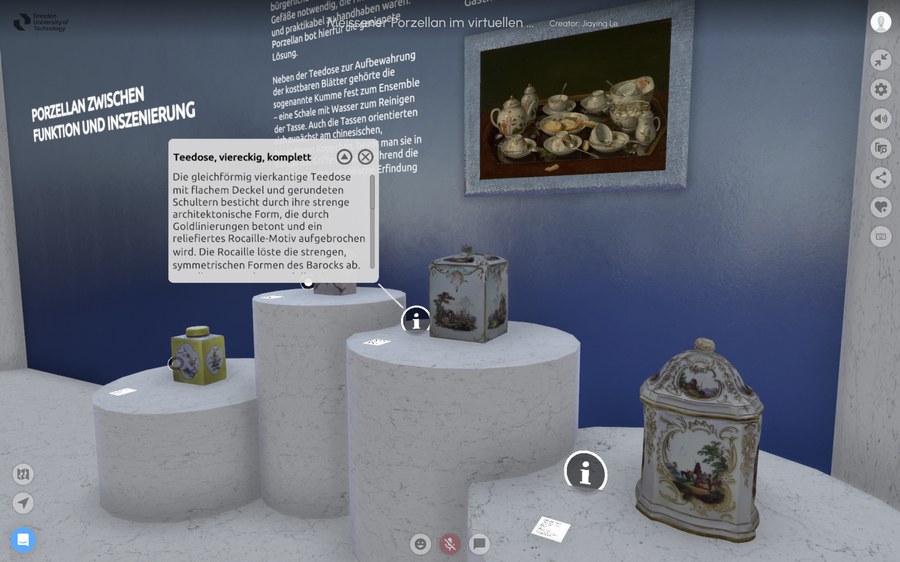
Böttger stoneware, onion patterns and chinoiseries - the exhibition offers a virtual journey through Meissen porcelain in the 18th century. Four thematic areas guide visitors through the history of the first European porcelain, from its beginnings to its development into the most influential porcelain manufactory in Europe. The "Table Culture" section focuses on porcelain as a means of displaying the power of the nobility at table and shows the most beautiful ceremonial services and tableware. The "Myth of East Asia" section is dedicated to the subject of Chinese fashion and the imitation of East Asian porcelain in Meissen. The "Workshop" provides an insight into the methods of restoration and provenance research. The chapter "Porcelain between function and staging" presents a variety of luxury objects, including the famous monkey chapel by Johann Joachim Kändler (1706-1775), which provide an introduction to Rococo court culture. For particularly interested visitors, a comprehensive exhibition catalog offers an in-depth examination of the subject matter. The exhibition features numerous objects from the Meissen Porcelain Museum 's collection as well as a specimen from the porcelain collection of the Staatliche Kunstsammlungen Dresden (Dresden State Art Collections ) and a 3D model of the Japanese Palace owned by the state capital of Dresden. The exhibits can be viewed from all sides and up close.
Technical realization
Photogrammetry
Nowadays, 3D objects can be created using various methods such as laser scanning, photogrammetry and 3D modeling. Within the given time frame of the seminar, the photogrammetric method was an obvious choice.
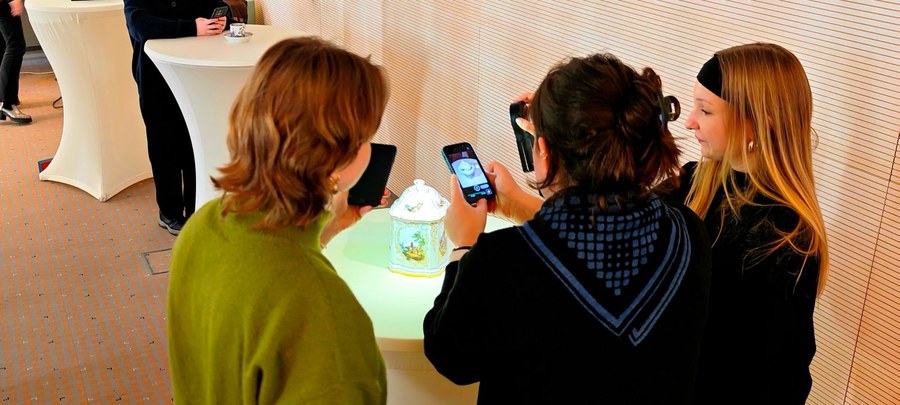
Photogrammetry is a process in which measured values are used to generate a 3D model of an object from two-dimensional photographs. A 3D scan can be easily created by taking a set of photos around the object.
Nowadays, there are a number of mobile applications with an integrated camera that process the photos into a 3D model in real time. The students used KIRI Engine and Polycam and took the photos directly with their cell phones. No special technical equipment was required, apart from a few lamps and white sheets. With the kind support of the Meissen Porcelain Foundation team, who carefully moved the exhibits for the photo shoot, around forty 3D models were created in the morning.
Processing in the 3D graphics software Blender and Meshlab
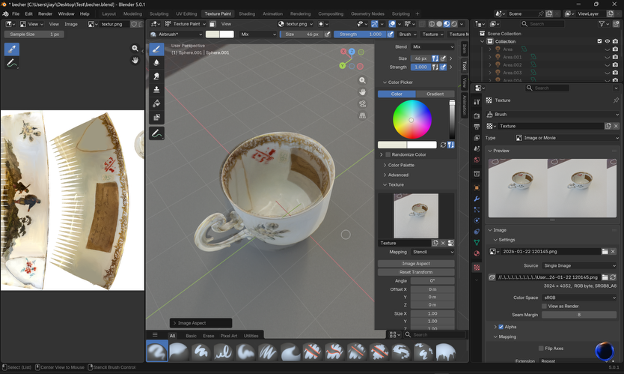
The photogrammetric process, as simple as it may sound, is not always flawless. The shiny and reflective surface of the porcelain caused distortions: As a result, some 3D scans showed holes and artifacts. In the next step, the defects could be rectified and corrected in the 3D programs Blender or MeshLab . The students themselves learned how to use the programs according to their specific needs. One of the objects was even remodeled by a student in Blender. Among other things, working with the editing software provided deeper insights into the objects, which could now be viewed in detail. The pictorial motifs and ornamental patterns of some cylindrical objects, such as vases and cups, could be subjected to digital processing, which transferred the decorations into a two-dimensional representation.
Design of a virtual exhibition environment
On the web-based platform Metasteps, 3D environments can be easily set up and designed like in a computer game. The development and design of the exhibition space was realized by Digital Humanities student Jiaying Le. The groined vaults and the blue and white color palette of the rooms are intended to evoke Albrechtsburg Castle, the former branch of the Meissen porcelain manufactory, as well as the blue and white porcelain that was so popular in the 18th century. Other students also worked intensively with Metasteps to develop the possibilities of the tool for the purposes of a virtual exhibition. Together, they developed a uniform style for the exhibition texts, illustrations and object labels. Another important decision concerned the size of the objects: Their original size was adjusted in favor of better visibility.