
Sep 17, 2026
Is Politics a Matter of Emotion? – How Psychology Shapes Our Political Decisions
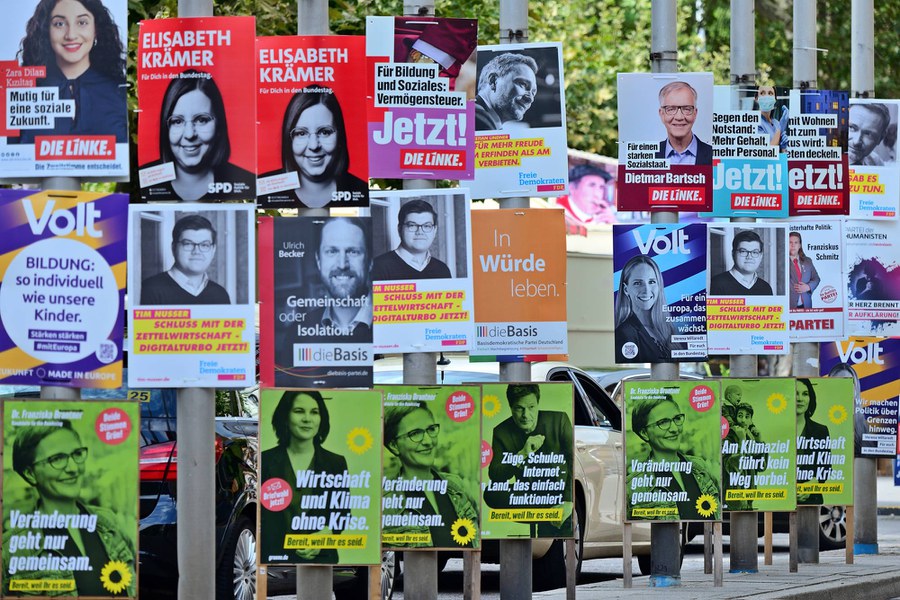
Election Posters
What emotions do we feel when we cast our vote? Disappointment? A sense of not being heard or seen? Or the hope that we can bring about change? The key: emotions!
Emotions influence what we perceive, whom we trust, and which messages reach us. Far-right parties appeal to emotions in a targeted manner, such as anger, fear, exclusion, and a sense of belonging. Psychological mechanisms play an important role here. They shape our perceptions and influence how we evaluate political messages—and ultimately, who we choose to support. How can we still manage to stay in dialogue when opinions are increasingly drifting apart?
When:
October 7, 2026, 6:00 p.m.
Where:
Robotron Cafeteria, Dresden
Our Speakers
Prof. Dr. EvaWalther,Chair of Social Psychology, University of Trier
PD Steffen Kailitz, Hannah Arendt Institute for the Study of Totalitarianism
Robert Ritter, “Democracy Under Pressure” Research Group
Moderator:
Friedemann Brause, Saxon State Agency for Political Education
The TUD Lectures+ series “Democracy Under Pressure, ” which will launch in October 2026, aims to initiate an interdisciplinary dialogue to shed light on these developments. Organized jointly by the“Together for Democracy” working group of the Faculty of Psychology, the Center for Demography and Diversity (CDD), the podcast series “YOU ask we explain,” and the Directorate University Culture, TUD Lectures+ brings together experts from a wide range of disciplines, including psychology, political science, sociology, communication studies, and other fields.
The TUD Lectures+ are recorded as podcasts and can be listened to here. Recordings take place during in-person events, which are held in the format of panel discussions. Questions from the audience are brought to the stage during the events. The events take place at locations in Dresden and the surrounding area selected based on the event’s theme, such as the Kulturpalast Dresden, market squares, churches, or beer gardens. More information about the TUD Lectures+ is available on this page