
Feb 27, 2026
Students design the "school of the future" - future workshop in the block seminar "Research at the university school"
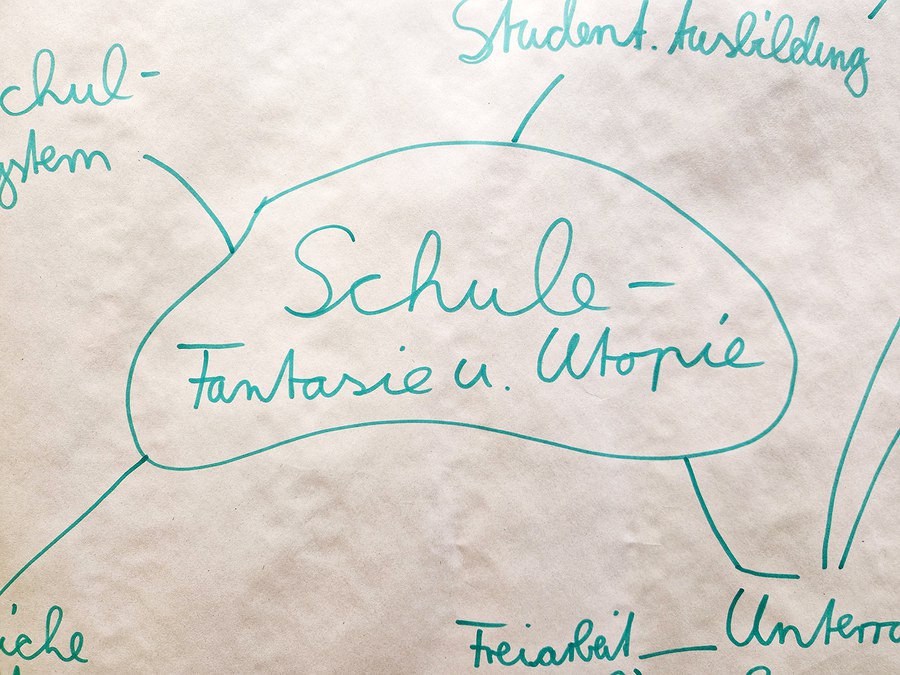
Die Universitätsschule Dresden kennenlernen und selbst eine „Schule der Zukunft" entwerfen. Das stand im Mittelpunkt des Blockseminars im Wintersemester 2025/26.
What can a school of the future look like in concrete terms and what role does educational research play in school development? Teacher training students at TU Dresden answered these questions over two weekends in the winter semester 2025/26. They completed the block seminar "Research at the university school" by submitting a school concept including a research concept and research plan.
Empirical educational research in the university school real-world laboratory
What is an experimental school? How do school practice and educational research work together here? In answering these questions, the seminar leaders were able to share their insights and experiences from the University School Dresden pilot project, as both are research associates at the University School ForUS research unit. Wiebke Bergjürgen is involved in the joint project GoFlexi, which deals with flexible lesson planning in the upper school, and Hannah Bartels is investigating the quality of learning process support with colleagues from other universities in the QualiPro project.
Other school experiments in Germany were also presented. A work shadowing opportunity at the University Community School during the current semester gives students a personal impression of the real-life laboratory for the "School of the Future" in Dresden.
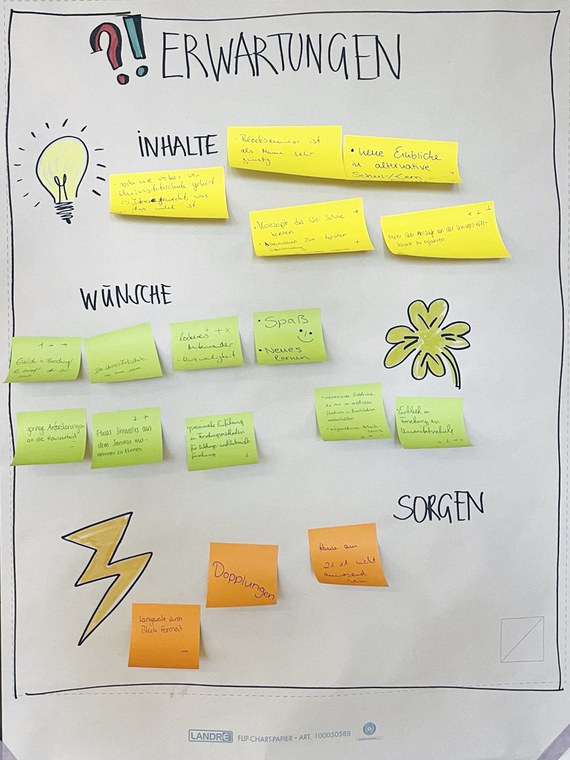
Das Seminar startete mit der Benennung der Erwartungen an die Veranstaltung. © Wiebke Bergjürgen
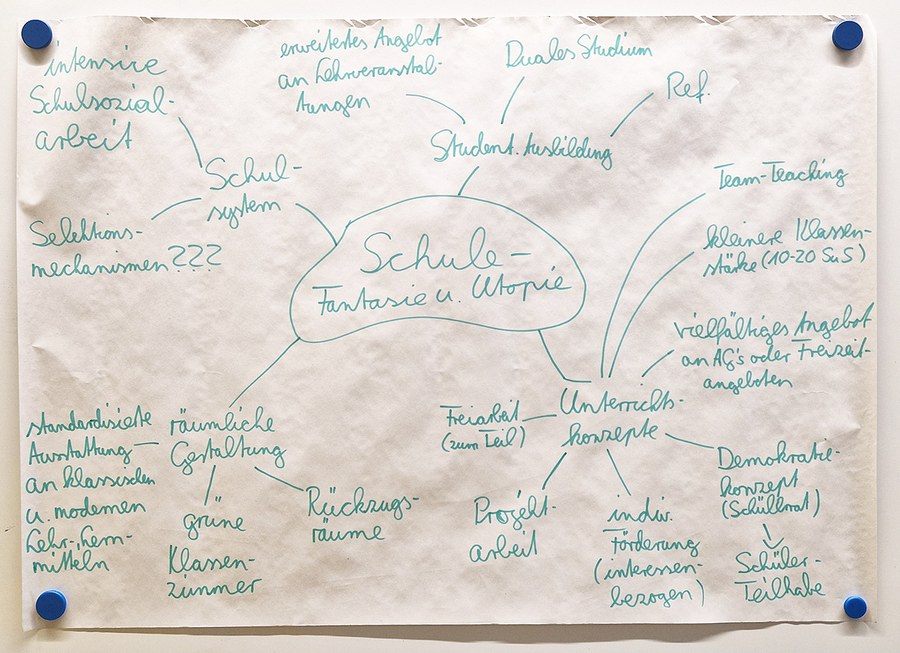
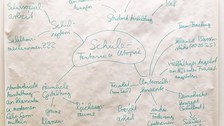
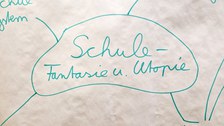
In der Utopiephase der Zukunftswerkstatt sammelten die Seminarteilnehmer:innen ihre Anforderungen an eine besser Schule. © Wiebke Bergjürgen
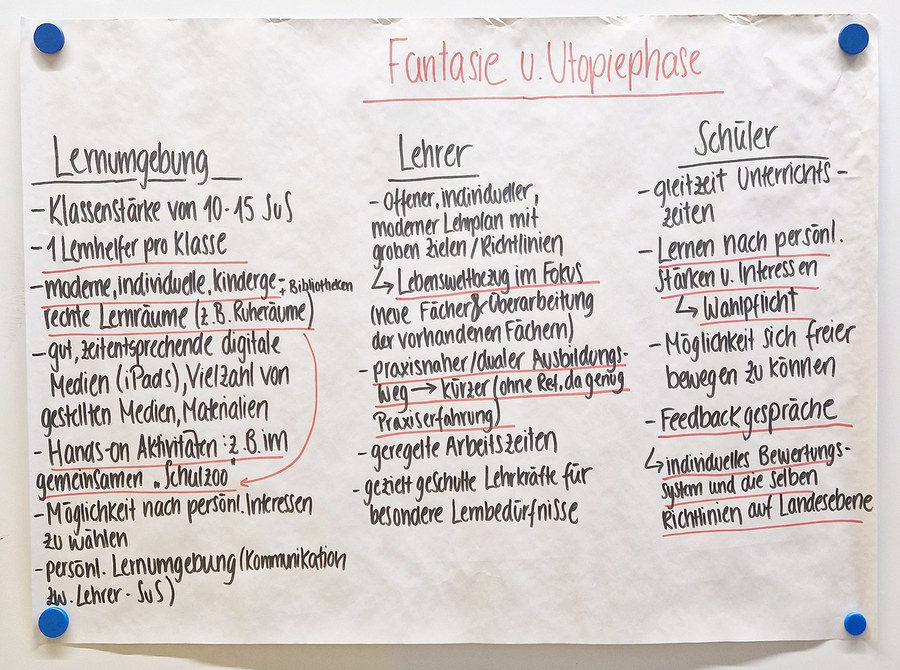
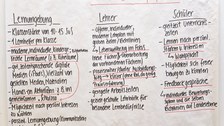
Auch die Einbindung der Lehrkräfteausbildung in einer „Schule der Zukunft“ stand im Fokus des studentischen Interesses. © Wiebke Bergjürgen
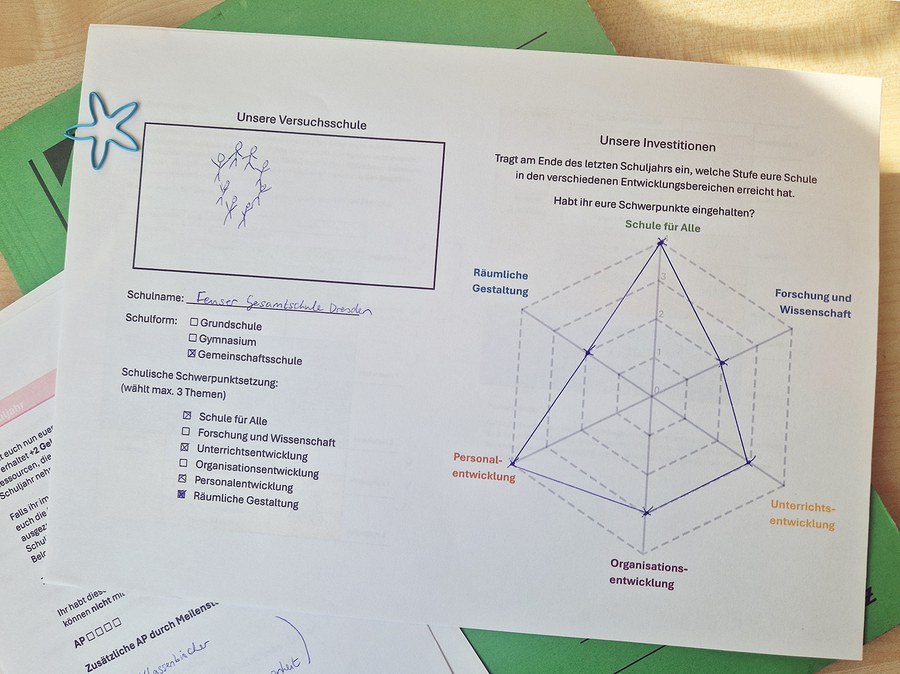
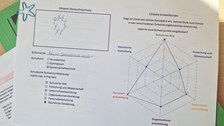
Die von Studierenden entworfene Versuchsschule „Feuser Gesamtschule Dresden“ ist wie die Universitätsschule Dresden eine Gemeinschaftsschule. © Wiebke Bergjürgen
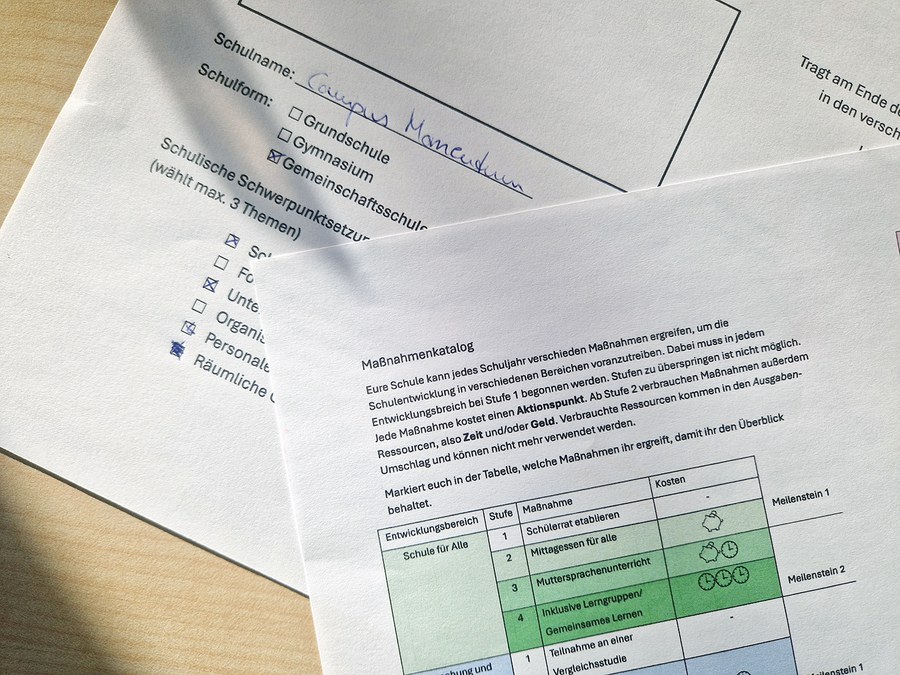
Beim Planspiel „Schulentwicklung“ kamen verschiedene Materialien zum Einsatz. © Wiebke Bergjürgen
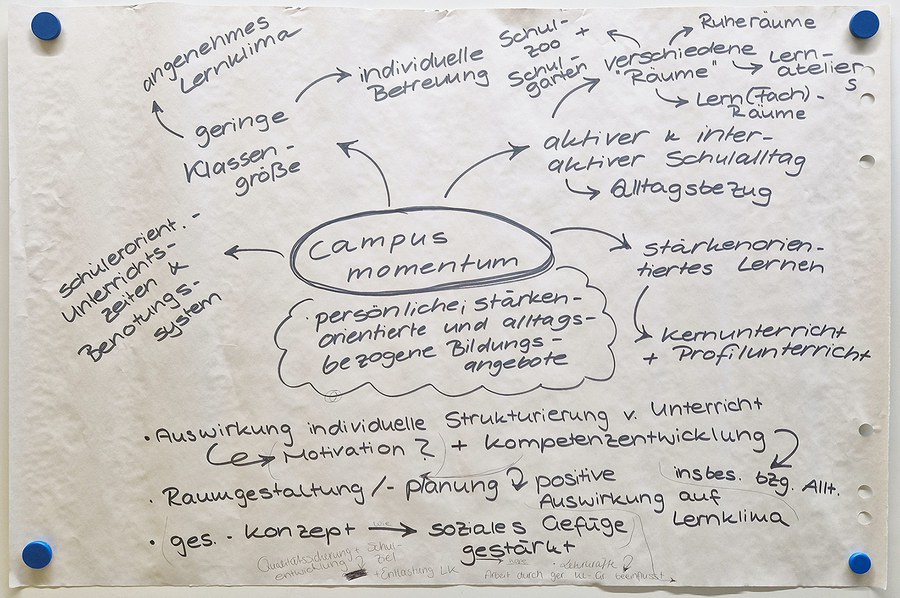
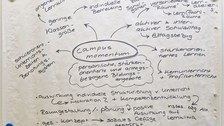
Das von Seminarteilnehmer:innen entwickelte Konzept des „campus momentum“ setzt auf individuelle Lernwege und Lernen mit starkem Lebens- und Arbeitsweltbezug. © Wiebke Bergjürgen
Die Universitätsschule Dresden kennenlernen und selbst eine „Schule der Zukunft" entwerfen. Das stand im Mittelpunkt des Blockseminars im Wintersemester 2025/26. © Wiebke Bergjürgen

Our school of the future - students develop concepts
But how does school currently work and what do the seminar participants find disturbing about it? In a future school workshop, after collecting "disruptive moments", the focus was on possible solutions, always bearing in mind the role of educational research. In the utopia phase, they came up with a variety of ideas for schools: How could democratic learning work in conjunction with a student parliament? Or how can learning be organized if it consistently focuses on project-based learning or life-world learning? Another recurring topic was how theory and practice can be better combined in teacher training.
During the second weekend block, the future teachers worked out the main features of a school concept in a simulation game in small groups and simulated school development processes. On paper, the Feuser Comprehensive School Dresden and Campus Momentum were among the experimental schools created. The simulation also included debates on current challenges facing schools as an organization. These included how to deal with the shortage of teaching staff, how to handle investment funds for accessibility, as well as cooperation between schools and academia.
On the last day of the seminar, the school and research concepts of their pilot schools were further developed, presented and discussed. The block seminar ended with an overview of how school development can work in concrete terms and which models of practical implementation exist.
About the University School Dresden
Dresden University School is a joint project of the state capital of Dresden and the TUD Dresden University of Technology. It is a public and free community school run by the city, where innovative forms of teaching and learning are tested under academic supervision. In addition, it is a training school for future teachers and, in the future, a further education school for teachers. The school trial is being scientifically supported by the ForUS - University School Research Unit at TU Dresden.
Information on the research project at TU Dresden: https: //tu-dresden.de/gsw/unischule
Information on the Dresden University School: http://universitaetsschule.org
You can find insights into the research project and everyday school life on various social media channels under @unischuleTUD: Facebook, Instagram, YouTube and LinkedIn. News from the University School Dresden project can be found regularly in the GSW newsletter.