
The "Scroll & Reflect" Project
[IMAGE 01] (Can this go next to the table of contents? Otherwise, feel free to put it next to the text.)
Table of contents
1. The Concept
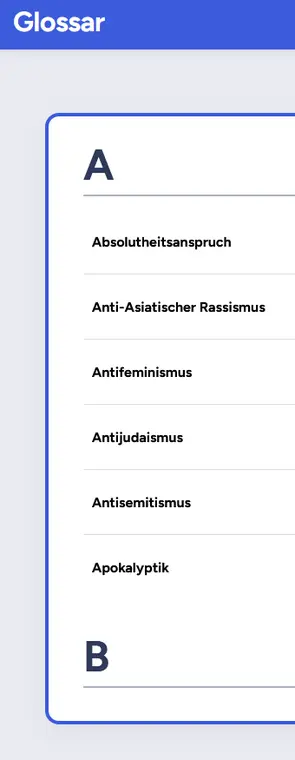
Scroll&Reflect is an interactive, educational, multimedia website developed within the context of Open Educational Resources. The concept is inspired by the“Swipeaway” application, which was created as part of the Amadeu Antonio Foundation’s “re:set” project. The problem context is the so-called “post-digital” lifeworld—that is, a society in which the digital and analog spheres are no longer clearly distinguishable, “because the digital, which was once new, has already become an inherent prerequisite” (Schmidt 2020, 57f.). In this context, it remains an educational task to “adequately grasp the sociocultural and media configurations” (Nothelfer 2024, 132) and thus “not to ignore the interweaving of digital media cultures into our everyday practices, but rather to reflect on them consciously and critically, while also employing them in a productive and creative manner within educational contexts” (Nothelfer 2024, 134). Scroll&Reflect uses this starting point and problem context as an opportunity to connect, from the perspectives of media education and—specifically—religious education, to intersectional prejudice research, fundamentalism research, and gender studies.
Specifically, the website displays social media content in the form of AI-generated videos and so-called “text tiles.” These reproduce common anti-LGBTQ+, anti-Semitic, fundamentalist, racist, and populist narratives. Using the “Reflect” feature, key passages are decoded or deconstructed. Technical terms and further information are explained in the comprehensive, interactive glossary. On this website, you’ll also find specific suggestions on how to integrate Scroll&Reflect into your lessons.
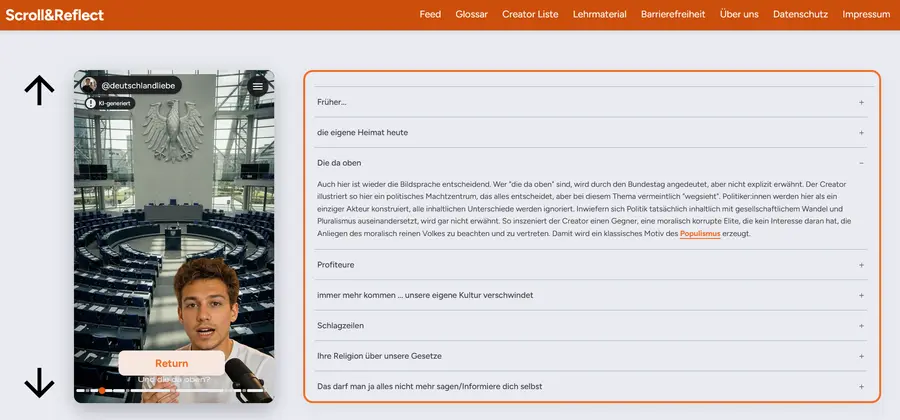
2. Phase I – Building the Website
Over the course of one semester, students in the Chair of Human-Computer Interaction followed the steps of user-centered design—that is, developing software based on users’ needs—to create the software. First, the requirements for the website were identified through interviews with faculty and an analysis of the usage context. The students then created mockups for the application for both mobile devices and desktops. These were refined iteratively based on feedback from faculty and an interim presentation.
Finally, the front end, back end, database, and user management system were developed, based on the TUD’s ZIH login system.
3. Phase II – Content
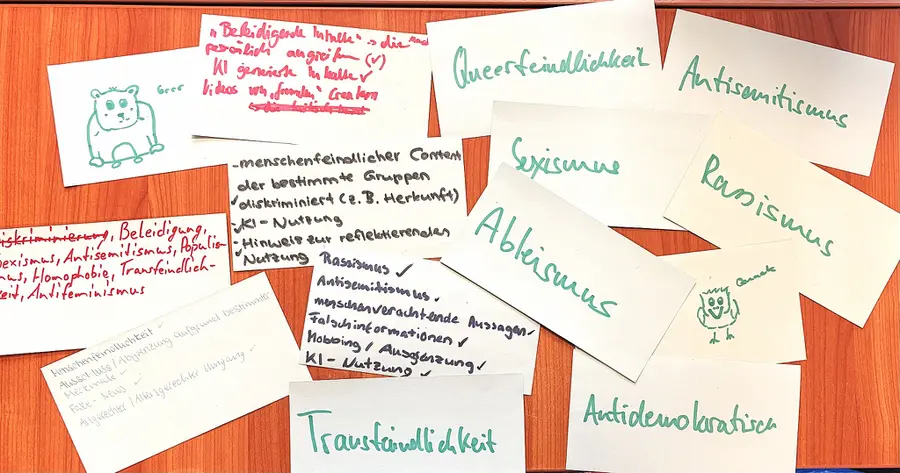
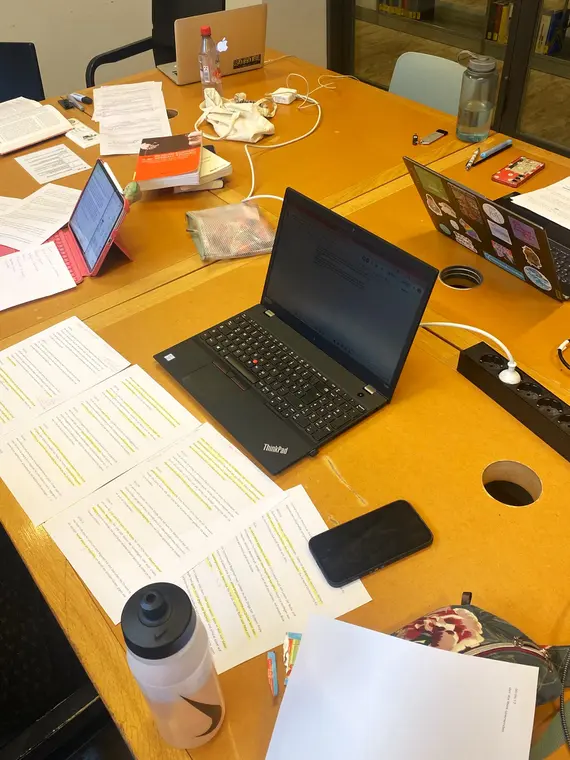
As part of the seminar “Where Did Uncle Torsten Take a Wrong Turn? Developing a Web Tool for Reflecting on Discriminatory Content,” a group of teacher education students developed the website’s content during the summer semester of 2026. The seminar group collaboratively drafted the disclaimer and, in their first joint sessions, focused on general theoretical foundations such as open educational resources and the analysis of algorithmic mechanisms.
In focus groups on queerphobia (Neumann), fundamentalism and biblicism (Briese), as well as racism, populism (Buchheim), and antisemitism, participants acquired basic knowledge of the research discourses, formulated glossary entries, and created content drafts based on an analysis of existing social media content.
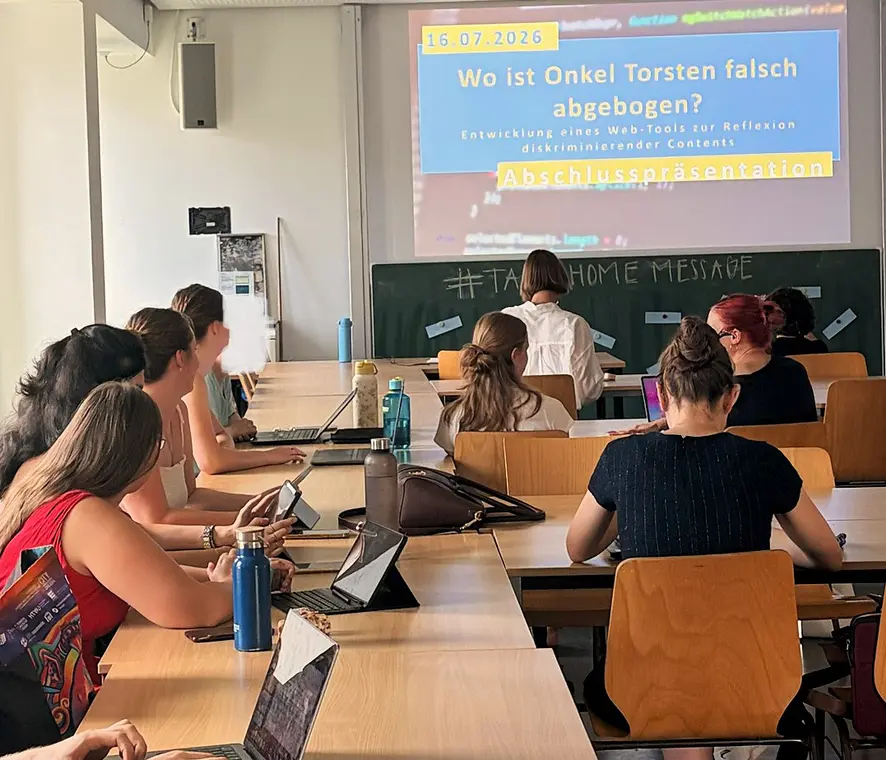
During the final session, all focus group results were presented, and the seminar was evaluated.
4. Phase III – Project Completion
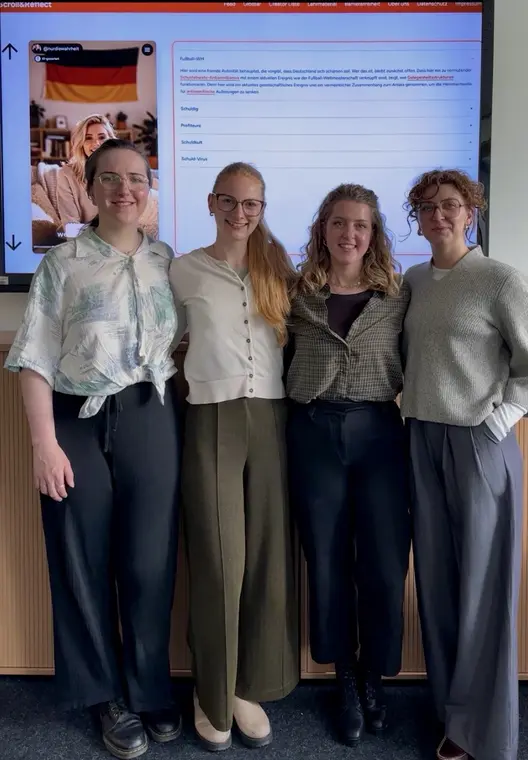
Over the following months, the content and glossary entries were edited, videos were created using a licensed AI website, and a peer review of the website was initiated. The legal notice and privacy policy were drafted, and the final bugs on the website were fixed. In October 2026, the “watch party” took place. This gave all project participants the opportunity to properly celebrate the results of their work. The website went live that same month.
5. Related Links
- Teaching materials and lesson plans related to Scroll&Reflect
- Scroll&Reflect
- Feedback to: send mail
6. Project Participants
The following individuals contributed to the project (in no particular order):
- Tabita Schubert (M.Sc.), a Research Associate at the Chair of Human-Computer Interaction, supervised the interdisciplinary internship and provided expert guidance on the development of the website
- Sarah Marie Neumann, as a Research Associate at the Chair of Religious Education, as well as...
- ...Laura Buchheim, a Research Assistant at the Chair of Religious Education, and...
- ...Marie Briese, a research fellow at the Schaufler Lab@TU Dresden, coordinated and supervised the entire project, jointly led the focus groups for content creation, and were responsible for the final editing of the website
- Steve Lang, as a Student Assistant, continued to maintain the website even after the students from the Chair of Human-Computer Interaction had completed their comprehensive internship
- Tom Aulhorn, as a Student Assistant, created the questionnaires for the peer review of the website.
- Students from the Chair of Religious Education participated in the focus groups on the respective required elective topics, developed various basic ideas for the content, and drafted the disclaimer and glossary entries.
- Students from the Chair of Human-Computer Interaction created the basic structure of the website (back-end and front-end) as well as a dashboard for uploading content
References
Schmidt, Robert (2020). “Post-Digital Education.” In M. Demantowksy et al. (Eds.), What Is Digitalization Doing to Higher Education? Designs and Provocations (pp. 57–70). De Gruyter Oldenbourg.
Nothelfer, Anna-Maria (2024). “(Post-)Digital Education: Paths to Media Aesthetics.” In M. Pieper & T. Neuhaus (Eds.), Education and Digitality: Defining Relationships and (Re)Perspectivizing (pp. 131–151). Springer Vieweg.