
Nov 10, 2026
Social Inequalities and Higher Education After German Reunification: A New Essay by Aron Schulze in the GHI Washington Bulletin
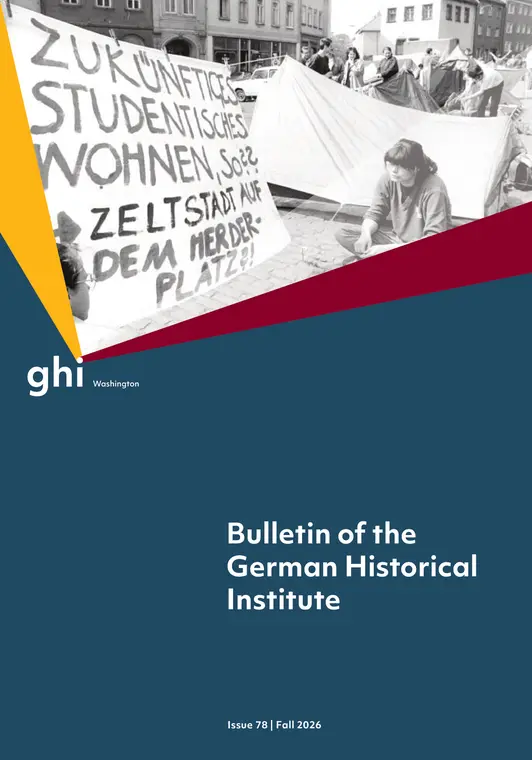
How have social inequalities shaped access to higher education and academic careers? The latest issue of * *, published by the German Historical Institute in Washington (Open Access), addresses this question. Under the special theme “The Campus and Beyond,” the issue examines the history of social inequalities in higher education in Europe and the United States since the 1870s.
In his article“From Old to New Inequalities: The East-West Gap in Post-Unification German Higher Education,” Aron Schulze examines how existing inequalities changed in the wake of the transformation of the East German higher education system after 1990 and how new disparities emerged. The focus is on two areas: student financial aid and academic staff. The essay traces how the introduction of the “BAföG” replaced the GDR’s scholarship system and which differences in student financial aid between East and West Germany initially persisted. With regard to higher education faculty, it examines the predominantly West German appointments to chairs in the humanities and social sciences, as well as the particular challenges that East German “professors under the new legal system” faced with regard to their salaries and retirement benefits. The article argues that the institutional harmonization of the higher education system was linked to a reconfiguration of social inequalities.