
Research
Research at the professorship contributes to the Sociology of Technology and Science, Environmental Sociology, Micro-Sociology, as well as Science and Technology Studies (STS). We analyze, e.g., how lay people and experts use data and technology, how they cooperate to transform infrastructures (of traffic, information, and energy), and what it means to be "sustainable" or become "green."
Table of contents
Research Projects
Responsible Electronics in the Climate-Change Era (REC2)
Excellence Cluster, Speaker: Prof. Dr. Yana Vaynzof
Duration: 01.01.2026 - 31.12.2032
Funding: DFG
Infrastrukturelle Disuption? Energiewende und Wasserstoffversorgung in soziologischer Perspektive (InDis)
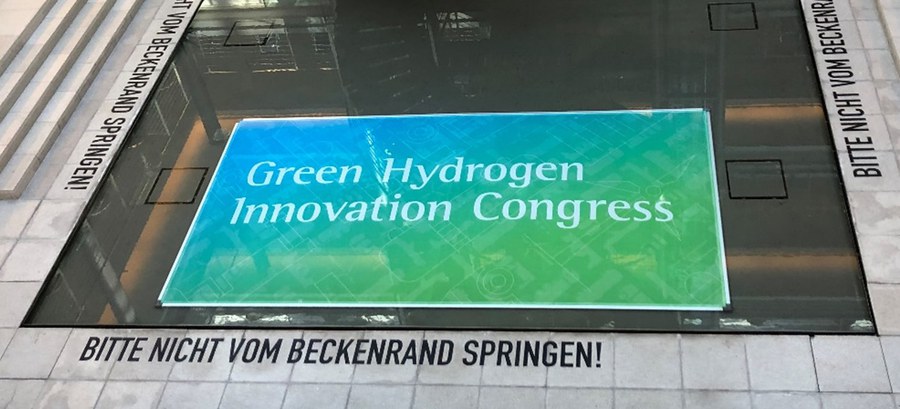
InDis studies the development of a hydrogen infrastructure in Saxony. The aim of the project is to develop an empirically based understanding of the coordinative dynamics associated with profound infrastructural changes in industrial energy supply. As efforts to implement a CO2-neutral hydrogen circular economy, the restructuring of infrastructures poses complex problems of cooperation and coordination. The project analyses how these problems, and their solutions, are attended to: Which logics or conventions are recurred upon in these negotiations and which strategic actors are involved in them, and how? Subject to negotiation is both the integration of technological innovations into existing infrastructure—as well as the justification of efforts, costs, and changes that infrastructural reconstruction entails. The project examines how the disruptive potential inherent in infrastructural restructuring is negotiated and, if necessary, contained. With the Saxon hydrogen economy (in its national and international interconnectedness) as its case, the project relies upon multi-sited ethnography, expert interviews, and practice transfer workshops.
- Duration: 42 months (01.07.2022-31.12.2025)
- Principal investigator: Jun.-Prof. Susann Wagenknecht, PhD (sole PI)
- The project is associated with the TUD research initiative on “Disruption and Societal Change” (TUDiSC) and (in preparation) with the Centre for Sustainability Assessment and Policy (PRISMA, contact: Prof. Dr. Edeltraud Günther, TUD/UNU-FLORES).
- more information
Disruptions of networked privacy (DIPCY)
DIPCY investigates disruptions of privacy in the Internet of Things. The project aims to conceptually research on disruptions and disruptive changes both conceptually and empirically. The project focuses on privacy infringements involving third parties—infringements, we argue, that harbour a particularly high potential for disruption as they affect, disturb, or even destroy existing orders of privacy. Taking its cue from current privacy research, the project pursues a context-sensitive, relational, interdisciplinary, and methodologically plural approach. It combines sociological, communication, media and technology perspectives on privacy with cutting-edge research in computer science. Project partners interweave and complement subject-specific expertise by means of three studies, i.e., (1) an ethnographic situation analysis, (2) a semi-automatic content analysis, and (3) the development and evaluation of prototypes.
- Duration: 48 months (01.09.2021-31.08.2025)
- Principal investigators: JProf. Susann Wagenknecht, PhD, Dr. Johanna E. Möller (Communication Science, TUD), Dr. Stefan Köpsell (Privacy and Security, Computer Science, TUD), Prof. Dr. Sven Engesser (Communication Science, TUD)
- Project staff, as of October 2022: Lukas Schmitz (work package 1/Wagenknecht), Katrin Etzrodt (work package 2), Stephan Escher (work package 3)
- Note: The project is funded by the TUD excellence measure “Disruption and Societal Change”.
Publications by the Chair
2022
-
Ungewissheit als praktisches Phänomen, 23 Nov 2022, Praxis und Ungewissheit: Zur Alltäglichkeit sozial-ökologischer Krisen. Altstaedt, S., Fladvad, B. & Hasenfratz, M. (eds.). Frankfurt: Campus Verlag, p. 29-54Electronic (full-text) versionResearch output: Contribution to book/conference proceedings/anthology/report > Chapter in book/Anthology/Report
-
From Sustainable Urban Transport to Responsible Urban Mobility: Function, Form, Fairness, Forever., 2022, Encyclopedia of Sustainable Technologies. Abraham, M. A. (ed.). London: Elsevier, Oxford [u.a.], p. 379-391Research output: Contribution to book/conference proceedings/anthology/report > Chapter in book/Anthology/Report
-
Queere KI als materiell-diskursive Apparate, 2022, Queere KI : Zum Coming-out smarter Maschinen. transcript Verlag, Bielefeld, p. 39-55Research output: Contribution to book/conference proceedings/anthology/report > Chapter in book/Anthology/Report
2020
-
The moral work of timing mobilities: ‘limited insight’ and truncated worth in municipal traffic management, 4 Sep 2020, In: Mobilities. 15, 5, p. 694-707, 8 p.Electronic (full-text) versionResearch output: Contribution to journal > Research article
-
On time: temporal and normative orderings of mobilities, 2 Sep 2020, In: Mobilities. 15, p. 635-646Electronic (full-text) versionResearch output: Contribution to specialist publication > Special issue article/Contribution
-
Kunst und Kultur in der polarisierten Stadt: Dresdner Kultureinrichtungen als Vermittelnde zwischen ‚Diversität‘ und ‚Ethnopluralismus‘?, 2020, Zentrum für Integrationsstudien, TU DresdenElectronic (full-text) versionResearch output: Book/Report/Anthology > Monograph
-
"Raus aus dem Labor!" Rezension zu „Keeping Autonomous Driving Alive. An Ethnography of Visions, Masculinity and Fragility“ von Göde Both, 2020, In: SoziopolisResearch output: Contribution to journal > Book/Film review (Recension)
-
Zur Normativität von Praktiken, 2020, In: Berliner Journal fur Soziologie. 30, p. 259-286Research output: Contribution to journal > Research article
2018
-
Making Cases: On the Processuality of Casings in Social Research, 30 Nov 2018, In: Zeitschrift fur Soziologie. 47, 5, p. 289-305, 17 p.Electronic (full-text) versionResearch output: Contribution to journal > Research article
-
Caring for IT Security: Accountabilities, Moralities, and Oscillations in IT Security Practices, Nov 2018, In: Proceedings of the ACM on Human-Computer Interaction. p. 1-20Electronic (full-text) versionResearch output: Contribution to journal > Conference article
 This information is provided by the FIS.