
Forschung
Die Professor beschäftigt sich mit technik-, wissenschafts- und umweltsoziologischen Fragen aus mikrosoziologischer Perspektive. Sie verbindet dabei soziologische Herangehensweisen mit den Science and Technology Studies (STS). Wir untersuchen z.B. wie Laien und Expert:innen Daten und Technologien benutzen, in welchen Kooperationen sie Infrastrukturen verändern (etwa für Mobilität oder Energieversorgung) und was es bedeutet, "ökologisch" zu denken und "nachhaltiger" zu werden.
Inhaltsverzeichnis
Geförderte Forschungsprojekte
Responsible Electronics in the Climate-Change Era (REC2)
Exzellenzcluster, Sprecherin: Prof. Dr. Yana Vaynzof
Laufzeit: 01.01.2026 - 31.12.2032
Drittmittelgeber: DFG
Infrastrukturelle Disruption? Energiewende und Wasserstoffversorgung in soziologischer Perspektive (InDis)
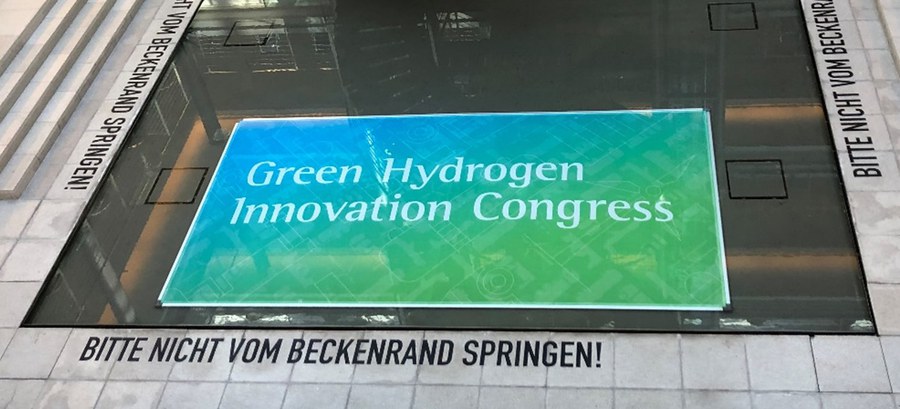
Mehr Informationen finden Sie auf der Projekt-Website
Laufzeit: 01.07.2022 – 31.12.2025
Drittmittelgeber: SAB/SMWK RL TG 70
Das beantragte Vorhaben will den Aufbau einer sächsischen Wasserstoffinfrastruktur in soziologischer Perspektive und mit qualitativen, insbes. ethnografischen Methoden beforschen. Ziel des Vorhabens ist es, ein empirisch fundiertes Verständnis der koordinativen Dynamiken zu entwickeln, die mit einem tiefgreifenden infrastrukturellen Umbruch in der industriellen Energieversorgung einhergehen. Denn wie sich an Bemühungen um eine CO2-neutrale Wasserstoff Kreislaufwirtschaft im Rahmen einer ökologischen „Energiewende“ zeigt, stellt der Umbau von Infrastrukturen ein komplexes Kooperations- und Koordinationsproblem dar. Das beantragte Vorhaben will verstehen, in welchen Aushandlungen dieses Problem adressiert wird: Welche gesellschaftlichen Logiken bzw. Konventionen werden in diesen Aushandlungen mobilisiert und welche strategischen Akteure sind an ihnen auf welche Weise beteiligt? Ausgehandelt werden muss dabei zum einen die Einpassung sachtechnischer Innovationen in bestehende infrastrukturelle Gegebenheiten und zum anderen die Rechtfertigung der Anstrengungen, Kosten und u.U. gravierenden Veränderungen, die infrastruktureller Umbau nach sich zieht. Zu beobachten ist hier, wie jenes disruptive Potenzial verhandelt und ggf. abgesichert wird, das infrastrukturellem Umbau innewohnt. Für die Analyse dieser Aushandlungen macht das beantragte Vorhaben die sächsische Wasserstoffwirtschaft (in ihrer nationalen und internationalen Verwobenheit) zu seinem Fallbeispiel. Das Vorhaben kombiniert den Ansatz einer multi-sited ethnography mit Impulsen aus der qualitativen Interviewforschung (Expert*inneninterview) und führt sog. Praxis-Transfer-Workshops durch.
Projektleitung:
- Jun.-Prof. Susann Wagenknecht, PhD
Disruptionen vernetzter Privatheit (DIPCY)
Laufzeit: 2021-2025
Geldgeber: EXU-Maßnahme der TUD, Förderprogramm "Disruptions and Societal Change (TUDiSC)"
DIPCY ("Disruptions of networked Privacy") ist ein interdisziplinäres Projekt, das Störungen von und durch Privatheit im Kontext des Internet of Things untersucht. Ziel ist, die Disruptionsforschung konzeptionell zu stärken und empirisch zu fundieren. Der Fokus liegt auf der Verletzung der Privatheit Dritter, die durch Handlungen anderer Personen zustande kommt und an denen die betroffenen Personen nicht direkt beteiligt sind. Solche Verletzungen bergen ein besonders hohes Disruptionspotenzial, da damit bestehende Privatheitsordnungen ge- oder gar zerstört werden. Entsprechend dem aktuellen Stand der Privatheitsforschung verfolgt das Projekt einen kontextsensiblen, relationalen, interdisziplinären und methodenpluralen Ansatz. Es kombiniert soziologische, kommunikations- und medienwissenschaftliche sowie technikwissenschaftliche Perspektiven auf Privatheit. Mittels dreier Teilstudien, (1) einer ethnografischen Situationsanalyse, (2) einer teil-automatischen Inhaltsanalyse und (3) der Entwicklung und Evaluation von Prototypen verschränken und ergänzen die jeweiligen Projektpartner:innen fachspezifische Expertise und Theorie.
Projektleitung
-
Jun.-Prof. Susann Wagenknecht, PhD (Juniorprofessur für Mikrosoziologie und techno-soziale Interaktion)
-
Dr. Johanna E. Möller (Institut für Kommunikationswissenschaft)
-
Prof. Dr. Sven Engesser (Professur für Kommunikationswissenschaft mit dem Schwerpunkt Wissenschafts- und Technikkommunikation)
-
Dr. Stefan Köpsell (Professur für Datenschutz und Datensicherheit)
Publikationen an der Professur
2025
-
Widerhall und Widerspruch: Zur Verknüpfung ökologischer, ökonomischer und feministischer Auseinandersetzungen bei Mary Mellor und Anna Lowenhaupt Tsing, Okt. 2025, in: Freiburger Zeitschrift für GeschlechterStudien : FZG. 31, 1, S. 49-64Elektronische (Volltext-)VersionPublikation: Beitrag in Fachzeitschrift > Forschungsartikel
-
Mobility as a Resource (MaaR) for resilient human-centric automation - a vision paper, 1 Jan. 2025, in: Data Science for Transportation. 7, 1, S. 3-11, 8 S., 1Elektronische (Volltext-)VersionPublikation: Beitrag in Fachzeitschrift > Forschungsartikel
2024
-
„Da drück ich dann aufs Mikro, wenn’s hier mal um Dinge geht…“: Kreative Privatisierung. Der Umgang mit Privatheitsansprüchen in der Smart Speaker-Nutzung. , Okt. 2024, Data Sharing – Datenkapitalismus by Default?. Friedewald, M., Roßnagel, A., Geminn, C., Karaboga, M. & Schindler, S. (Hrsg.). Nomos-Verlagsgesellschaft, S. 215-242, 28 S.Elektronische (Volltext-)VersionPublikation: Beitrag in Buch/Konferenzbericht/Sammelband/Gutachten > Beitrag in Buch/Sammelband/Gutachten
-
Valuing Data: Attaching online data to stakes, selves, and other data, 2 Mai 2024, in: Valuation Studies. 11, 1, S. 60-90, 31 S.Elektronische (Volltext-)VersionPublikation: Beitrag in Fachzeitschrift > Forschungsartikel
-
Evaluation of Sustainability in Basic Research - Insights from an interdisciplinary research initiative, 2024, 15 S.Elektronische (Volltext-)VersionPublikation: Vorabdruck/Dokumentation/Bericht > Arbeitspapier
-
Kunst- und Kulturinstitutionen in der polarisierten Stadt: Projekteinblicke, 2024, Kulturproduktion in der Migrationsgesellschaft: Herausforderungen für Kulturinstitutionen und Kulturpolitik. Schneider, J., Oltmer, J., Pott, A. & Schmiz, A. (Hrsg.). transcript Verl, S. 141-154Elektronische (Volltext-)VersionPublikation: Beitrag in Buch/Konferenzbericht/Sammelband/Gutachten > Beitrag in Buch/Sammelband/Gutachten
2023
-
Domestic Discords: Frictions in Smart Speaker Valuation, 1 Dez. 2023, in: Digital culture & society. 9, 2, S. 207-226, 20 S.Elektronische (Volltext-)VersionPublikation: Beitrag in Fachzeitschrift > Forschungsartikel
-
Situating machine learning: On the calibration of problems in practice, 25 Feb. 2023, in: Distinktion : scandinavian journal of social theory. 24, 2, S. 315-337, 23 S.Elektronische (Volltext-)VersionPublikation: Beitrag in Fachzeitschrift > Forschungsartikel
-
Die produktive Kraft der Polarisierung und ihre Auswirkungen auf Kunst und Kultur, 2023, Konfliktuelle Kulturpolitik. Schad-Spindler, A., Landau-Donelly, F., Fridrik, S. & Marchardt, O. (Hrsg.). Wiesbaden: Springer VS/Springer Fachmedien, S. 113-135Publikation: Beitrag in Buch/Konferenzbericht/Sammelband/Gutachten > Beitrag in Buch/Sammelband/Gutachten
-
Heim TÜV 4.: Die Unterbringungssituation in Sachsens Aufnahmeeinrichtungen, 2023, Der Sächsische Ausländerbeauftragte Publikation: Vorabdruck/Dokumentation/Bericht > Projekt (-abschluss und -zwischen) bericht
 Diese Informationen werden durch das FIS bereitgestellt.