
Research
Research at the professorship contributes to the Sociology of Technology and Science, Environmental Sociology, Micro-Sociology, as well as Science and Technology Studies (STS). We analyze, e.g., how lay people and experts use data and technology, how they cooperate to transform infrastructures (of traffic, information, and energy), and what it means to be "sustainable" or become "green."
Table of contents
Research Projects
Responsible Electronics in the Climate-Change Era (REC2)
Excellence Cluster, Speaker: Prof. Dr. Yana Vaynzof
Duration: 01.01.2026 - 31.12.2032
Funding: DFG
Infrastrukturelle Disuption? Energiewende und Wasserstoffversorgung in soziologischer Perspektive (InDis)
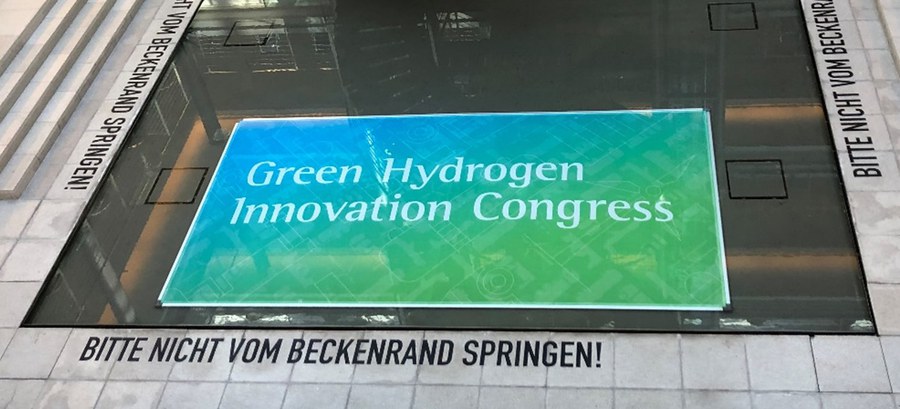
InDis studies the development of a hydrogen infrastructure in Saxony. The aim of the project is to develop an empirically based understanding of the coordinative dynamics associated with profound infrastructural changes in industrial energy supply. As efforts to implement a CO2-neutral hydrogen circular economy, the restructuring of infrastructures poses complex problems of cooperation and coordination. The project analyses how these problems, and their solutions, are attended to: Which logics or conventions are recurred upon in these negotiations and which strategic actors are involved in them, and how? Subject to negotiation is both the integration of technological innovations into existing infrastructure—as well as the justification of efforts, costs, and changes that infrastructural reconstruction entails. The project examines how the disruptive potential inherent in infrastructural restructuring is negotiated and, if necessary, contained. With the Saxon hydrogen economy (in its national and international interconnectedness) as its case, the project relies upon multi-sited ethnography, expert interviews, and practice transfer workshops.
- Duration: 42 months (01.07.2022-31.12.2025)
- Principal investigator: Jun.-Prof. Susann Wagenknecht, PhD (sole PI)
- The project is associated with the TUD research initiative on “Disruption and Societal Change” (TUDiSC) and (in preparation) with the Centre for Sustainability Assessment and Policy (PRISMA, contact: Prof. Dr. Edeltraud Günther, TUD/UNU-FLORES).
- more information
Disruptions of networked privacy (DIPCY)
DIPCY investigates disruptions of privacy in the Internet of Things. The project aims to conceptually research on disruptions and disruptive changes both conceptually and empirically. The project focuses on privacy infringements involving third parties—infringements, we argue, that harbour a particularly high potential for disruption as they affect, disturb, or even destroy existing orders of privacy. Taking its cue from current privacy research, the project pursues a context-sensitive, relational, interdisciplinary, and methodologically plural approach. It combines sociological, communication, media and technology perspectives on privacy with cutting-edge research in computer science. Project partners interweave and complement subject-specific expertise by means of three studies, i.e., (1) an ethnographic situation analysis, (2) a semi-automatic content analysis, and (3) the development and evaluation of prototypes.
- Duration: 48 months (01.09.2021-31.08.2025)
- Principal investigators: JProf. Susann Wagenknecht, PhD, Dr. Johanna E. Möller (Communication Science, TUD), Dr. Stefan Köpsell (Privacy and Security, Computer Science, TUD), Prof. Dr. Sven Engesser (Communication Science, TUD)
- Project staff, as of October 2022: Lukas Schmitz (work package 1/Wagenknecht), Katrin Etzrodt (work package 2), Stephan Escher (work package 3)
- Note: The project is funded by the TUD excellence measure “Disruption and Societal Change”.
Publications by the Chair
2015
-
Empirical philosophy of science: introducing qualitative methods into philosophy of science, 2015, Studies in Applied Philosophy, Epistemology and Rational Ethics. Springer International Publishing, p. 1-10, 10 p.Electronic (full-text) versionResearch output: Contribution to book/conference proceedings/anthology/report > Chapter in book/Anthology/Report
-
Empirical Philosophy of Science - Qualitative methods, 2015, Empirical Philosophy of Science - Qualitative methods. Springer, p. 1-10Electronic (full-text) versionResearch output: Contribution to book/conference proceedings/anthology/report > Chapter in book/Anthology/Report
-
Feeling with the Organism: A Blueprint for an Empirical Philosophy of Science, 2015, Empirical Philosophy of Science – Qualitative methods . Andersen, H., Wagenknecht, S. & Nersessian, N. (eds.). Springer, p. 37-61Electronic (full-text) versionResearch output: Contribution to book/conference proceedings/anthology/report > Chapter in book/Anthology/Report
2014
-
Opaque and translucent epistemic dependence in collaborative scientific practice, 12 Sep 2014, In: Episteme : a journal of individual and social epistemology. 11, 4, p. 475-492, 18 p.Electronic (full-text) versionResearch output: Contribution to journal > Research article
-
Facing the Incompleteness of Epistemic Trust: Managing Dependence in Scientific Practice, 12 Feb 2014, In: Social epistemology : a journal of knowledge, culture and policy. 29, 2, p. 160-184, 25 p.Electronic (full-text) versionResearch output: Contribution to journal > Research article
-
Four Asymmetries Between Moral and Epistemic Trustworthiness, 2014, In: Social epistemology review & reply collective : SERRC. 3, 6, p. 82-86Research output: Contribution to journal > Research article
2013
-
Epistemic dependence in interdisciplinary groups, Jul 2013, In: Synthese : an international journal for epistemology, methodology and philosophy of science. 190, 11, p. 1881-1898, 18 p.Electronic (full-text) versionResearch output: Contribution to journal > Research article
2012
-
Debating Troy in the Mass Media – The Catalytic Impact of Public Controversy on Academic Discourse, 2012, The Sciences’ Media Connection – Public Communication and its Repercussions: Sociology of the Sciences Yearbook. Roedder, S., Franzen, M. & Weingart, P. (eds.). Springer, p. 291-306Electronic (full-text) versionResearch output: Contribution to book/conference proceedings/anthology/report > Chapter in book/Anthology/Report
 This information is provided by the FIS.