
Jun 19, 2026
YVA Future Congress 2026: Young Perspectives on the Three-Country Region
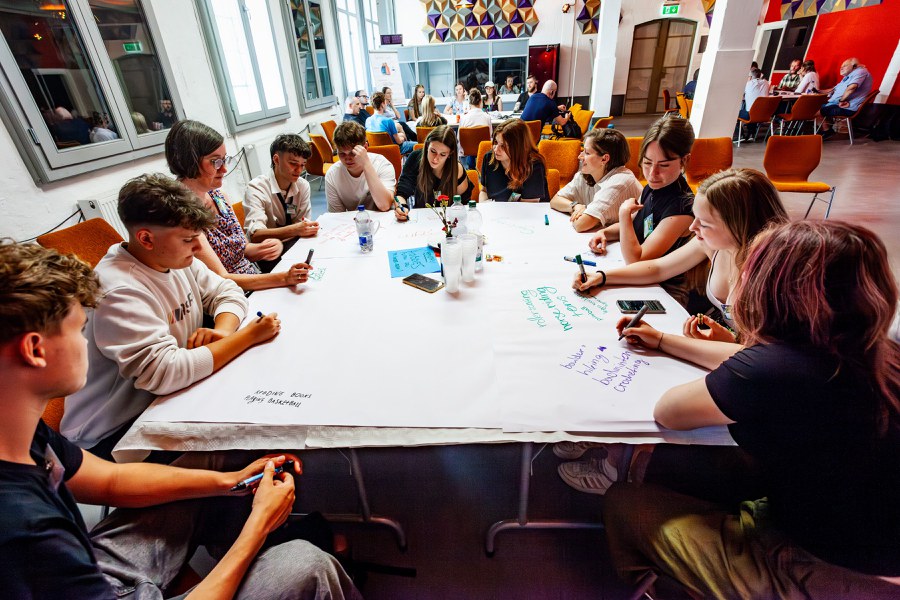
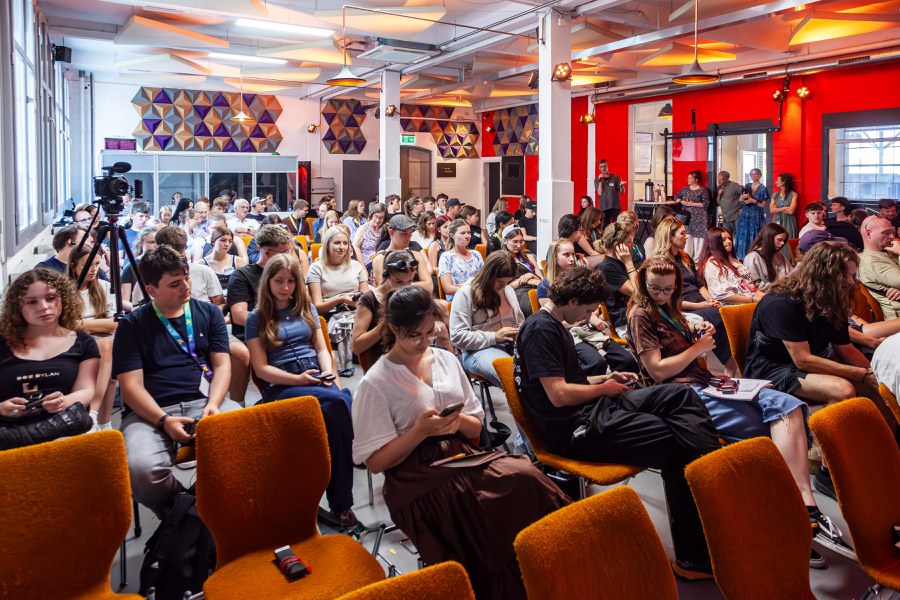
On June 18, 2026, the YVA Future Congress 2026 took place at TELUX Weißwasser. Approximately 150 young people, students, and guests from the worlds of politics, public administration, and professional practice from Germany, Poland, and the Czech Republic participated. The congress is part of the Youth Vision Action project —“Youth Moves the Region, Region Moves Youth”—which is being implemented at the IHI Zittau in collaboration with its partners Hillersche Villa, TELUX Weißwasser, and the Zittau/Görlitz University of Applied Sciences.
The event was opened by Katja Dietrich, Mayor of Weißwasser/O.L., Franziska Schubert, member of the Saxon State Parliament, and Prof. Dr. Thorsten Claus, Director of IHI Zittau.
The focus was on young people’s perspectives on the tri-border region. In idea workshops, knowledge workshops, and World Cafés, they spoke with experts as well as representatives from politics and administration in the PL-D-CZ tri-border region about mobility, environmental and nature conservation, social cohesion, meeting places, and opportunities for participation. Some of the World Café sessions were moderated by students from the Zittau/Görlitz University of Applied Sciences.
The congress marked the conclusion of the project’s second year. Prior to this, young people from Germany, Poland, and the Czech Republic had developed their own topics during multi-day workshops, met with experts from the region, and created artistic contributions. In Weißwasser, these works were presented and discussed with a wider audience.
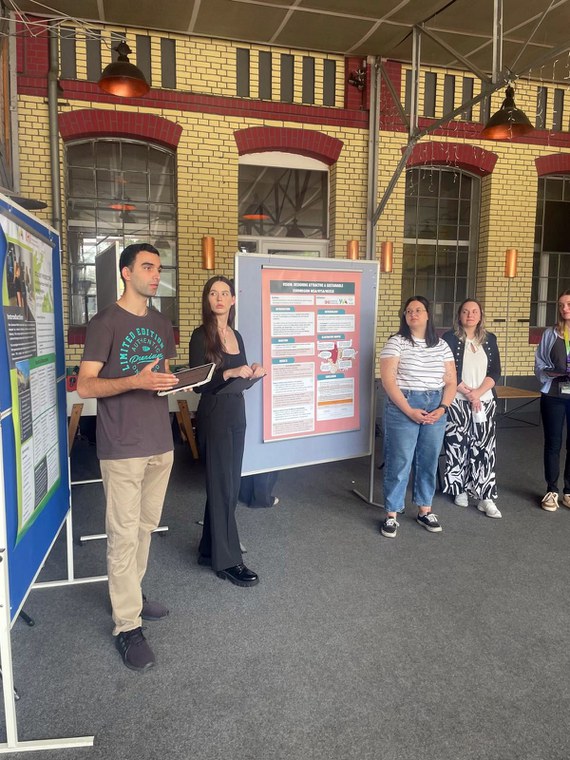
Students from the IHI Zittau also participated in the program. In the “Intercultural Competencies” course offered at IHI, under the guidance of Oliver Tettenborn and Sinziana Schönfelder, they explored the question of how international students perceive the German-Polish-Czech border region. To this end, they conducted interviews with fellow students and presented the results on posters.
The presentations highlighted both the advantages and the challenges of living in the border region. Respondents mentioned the proximity to three countries, the landscape, and the opportunity for cross-border interactions. At the same time, those interviewed reported long commutes, language barriers, limited career prospects, and a lack of connections outside the university environment.
At the Congress, the students explained their posters and engaged in conversation with young people, project partners, and guests from politics and administration. The students’ work thus served as a building block in a program that brought together diverse perspectives on the region.
Emilia Socha and Sinziana Schönfelder at the IHI Zittau are providing academic support for the project. They are examining which topics young people and students address in the individual project phases, how these topics are further developed, and what reactions they elicit from representatives in politics, administration, and regional practice. At the Congress, supplementary discussions were held with participants from all three countries.
The next project cycle will take place in Zittau, where the concluding Future Congress is scheduled to be held in 2027.
The project is funded by the STARK funding program —“Strengthening Transformation Dynamics and New Beginnings in Mining Regions and at Coal-Fired Power Plant Sites” —of the Federal Ministry for Economic Affairs and Energy (BMWE).