
Cultural Fit - Mitarbeiter finden, binden und zurückgewinnen
Das Konzept Cultural Fit beschreibt die kulturelle Passung zwischen Arbeitgebern und Arbeitnehmern – also die Übereinstimmung von Werten, Haltungen und Arbeitsweisen. Unser Projekt überträgt dieses wissenschaftlich fundierte Konzept in die Praxis. Wir bieten Ihnen daher kostenfreie und auf Sie zugeschnittene Weiterbildungen in den Regionen Görlitz, Zittau und Löbau an.
Das Ziel: Ein Fundament für langfristige, tragfähige und für alle Seiten zufriedenstellende Mitarbeiterbeziehungen schaffen.
Die Wirkung – belegt durch Forschung:
- Stärkere Mitarbeiterbindung
- Höhere Arbeitszufriedenheit
- Geringere Fluktuation und weniger Krankenstand
- Ein Arbeitsklima, das Innovation fördert und Sie voranbringt
Wir haben Ihr Interesse geweckt? Kontaktieren Sie uns gern unverbindlich!
Kontaktieren Sie uns per Mail oder Telefon!
Sie haben Interesse an unserem Newsletter? Bleiben Sie auf dem Laufenden:
Mehr Informationen zu unseren Weiterbildungen finden sie hier.
Für wen ist unser Angebot?
Unser Angebot richtet sich konkret an Führungskräfte und Personalverantwortliche – also Personen mit Personalentscheidungskompetenz von Unternehmen (KMU) aus dem Landkreis Görlitz.
Was ist das Ziel unseres Projekts?
Wir möchten mit unseren Weiterbildungen einen Beitrag für die Region leisten. Unser Hauptziel liegt in der Unterstützung eines gelingenden Strukturwandels durch die Entwicklung eines soliden Fundaments für starke Mitarbeiterbeziehungen, um so die Handlungs- sowie Zukunftsfähigkeit der Unternehmen im Landkreis Görlitz durch geeignetes und motiviertes Personal zu fördern.
Wie übertragen wir die Forschung in die Praxis?
Der Transfer erfolgt über praxisorientierte Weiterbildungen, welche auch eine integrierte Praxisphase beinhalten. In dieser werden die teilnehmenden Unternehmen – unterstützt durch unsere Mentoren – das Gelernte an den unternehmensspezifischen Problemstellungen an. Somit sichern wir den gelingenden Transfer in besonderem Maße. Uns ist wichtig, dass die Weiterbildung so konzipiert ist, dass diese auch weitestgehend neben dem Tagesgeschäft realisiert werden kann. Zum Einsatz kommen hier z.B. Lernhappen (kleine Minilerneinheiten), digitale Selbstlernelemente sowie kürzere Präsenzworkshops zum Austausch.
Wie wird das Projekt ablaufen?
Insgesamt werden drei Weiterbildungsblöcke durchgeführt. Nach einer Pilotphase und der Überarbeitung des Angebotes können in den Weiterbildungsdurchgängen jeweils etwa 10 Unternehmen teilnehmen.
Projektplan
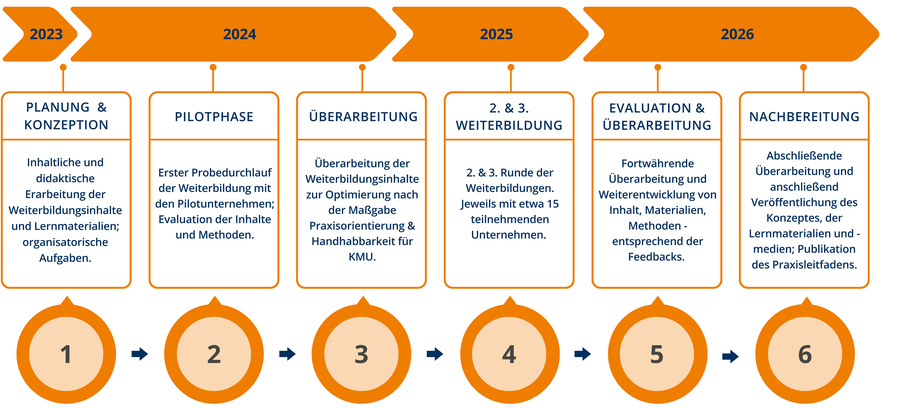
Klicken zum Vergrößern
Wer sind unsere Unterstützer?
Verschiedene Akteure der Region unterstützen unser Vorhaben, insbesondere die:
Warum kann das Projekt unserer Region helfen?
Im Landkreis sinkt der Anteil an Personen im erwerbsfähigen Alter weiterhin, zudem sind wir damit konfrontiert, dass viele junge Menschen die Region verlassen. Fachkräfteengpässe, Fachkräftemangel (War for Talents) aber auch ein allgemeiner Arbeitskräftemangel sind in einigen Bereichen bereits jetzt akut. Gleichzeitig führt die Abkehr vom Kohleabbau zu freigesetztem Personal in dieser Industrie. Hinzu kommen zahlreiche weitere Herausforderungen für Unternehmen: der Wandel der Arbeitswelt (Globalisierung, Digitalisierung mit Wandel der Arbeitsabläufe, Wandel geforderten Qualifikationen und der Geschäftsmodelle); der Einstellungswandel der Arbeitnehmer (Wertschätzung, Work Life Balance, Sinnhaftigkeit gewinnen an Bedeutung, ein lockeres Bindungsverhalten zu Arbeitgebern); die Corona Pandemie (u.a. digitales Arbeiten in verteilten Teams); hohe Energiepreise; Inflation; fehlende Personal- und Finanzressourcen. Bei der generell schon multiplen Krisensituation und den fehlenden bzw. zum Teil stark überlasteten Personalressourcen, ist es ein sprichwörtlicher Drahtseilakt, sich all diesen Herausforderungen mit der nötigen Aufmerksamkeit und entsprechender Fachkompetenz zu widmen. Genau hier setzen wir an. Wir möchten eines der wichtigsten Handlungsfelder und Herausforderungen - den Personalmangel - angehen, und hier Hilfe zur Selbsthilfe geben.
Weitere Projektinformationen
Projektkoordination & -leitung:
Hedwig Kaszycki (M.A.) und Martha Adolphi (M.Sc.)
Projektinitiation und Schirmherrschaft
Herr Prof. Dr. rer. pol. habil. Thorsten Claus
Herr Prof. Dr. rer. pol. habil. Remmer Sassen
Kontakt
Bei Fragen zu den Weiterbildungen oder Interesse am Projekt kontaktieren Sie uns gern über .
Weitere Kontaktmöglichkeiten finden sie hier.
Finanzierungseinrichtung:
Das Bundesministerium für Wirtschaft und Klimaschutz BMWK über das Förderprogramm STARK: Stärkung der Transformationsdynamik und Aufbruch in den Revieren und an den Kohlekraftwerkstandorten. Das STARK-Programm fördert Projekte, die den Transformationsprozess zu einer ökologisch, ökonomisch und sozial nachhaltigen Wirtschaftsstruktur in den Kohleregionen unterstützen.
Förderzeitraum: 1.03.2023 bis 28.02.2027