
27.03.2026
Fliegendes Testlabor für klimafreundliche Luftfahrt: TU Dresden weiht Forschungsflugzeug ein
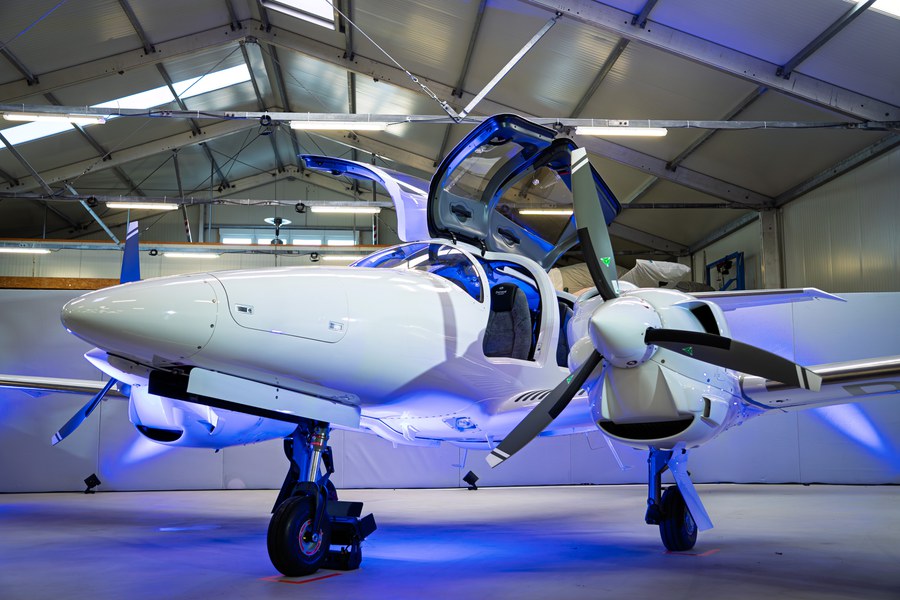
Das Institut für Leichtbau und Kunststofftechnik (ILK) und das Institut für Luft- und Raumfahrttechnik (ILR) der Technischen Universität Dresden (TUD) haben heute, 26. März 2026, ihr neues Forschungsflugzeug am Flugplatz Kamenz in Dienst gestellt und dabei erstmals der Öffentlichkeit präsentiert. Das Flugzeug dient als fliegendes Testlabor zur Erforschung fossilfreier Luftfahrtantriebe.
Klimafreundliche Antriebssystem – anwendungsnahe Leistungsdaten
Im Fokus der Forschung stehen neue klimafreundliche Antriebssysteme, etwa elektrische, wasserstoffbasierte oder hybride Konzepte. Diese können künftig unter realen Flugbedingungen getestet und miteinander verglichen werden. Gleichzeitig lassen sich Energiesysteme, Sensorik und Strukturkomponenten im Zusammenspiel analysieren. Die gewonnenen Betriebs- und Leistungsdaten werden helfen, Technologien aus dem Labor für die praktische Anwendung weiterzuentwickeln.
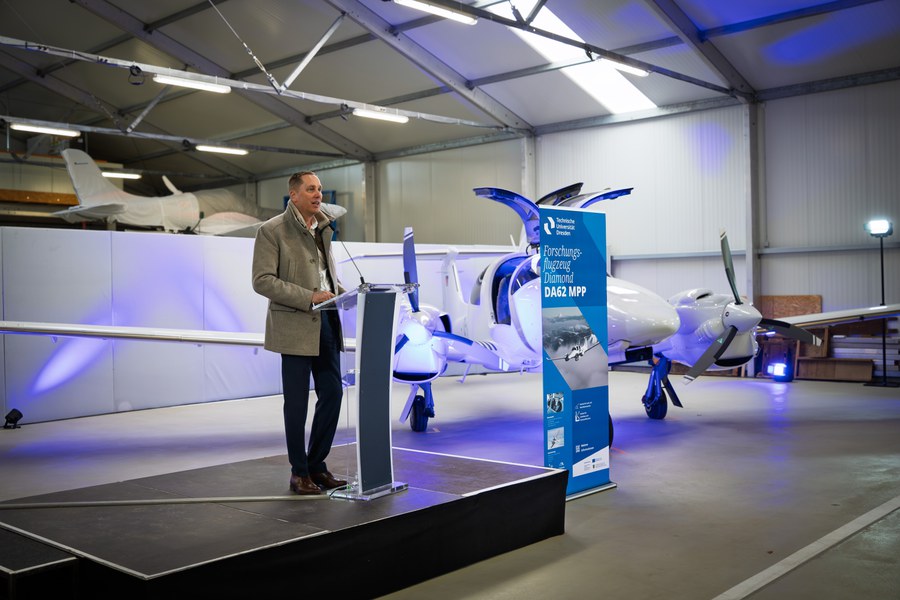
„Mit dem Forschungsflugzeug schließen wir die entscheidende Lücke zwischen Theorie und praktischer Anwendung. Denn bei der nachhaltigen Luftfahrt geht es nicht nur um das Triebwerk, sondern um die ganzheitliche Integration von Antriebssystemen in das Flugzeug. Wir erhalten nun die einmalige Gelegenheit zu zeigen, wie sich etwa leichte Tanksysteme und komplexe Strukturkomponenten unter den dynamischen Belastungen des realen Flugbetriebs bewähren“, sagt ILK-Institutsdirektor Prof. Maik Gude.
Praxistest für neuartige Messsysteme und Antriebskomponenten
Die Testplattform basiert auf einer Diamond Aircraft DA62 MPP, einem zweimotorigen Spezialflugzeug für Forschungs- und Vermessungsmissionen. Dieses Flugzeug zeichnet sich durch ihre außergewöhnliche Effizienz, Modularität und geringe Signatur aus. Dank ihrer sparsamen Jet-A1-Kolbentriebwerke erreicht sie eine Flugdauer von bis zu zehn Stunden bei gleichzeitig minimalen Betriebs- und Wartungskosten. Ihre besondere Stärke liegt in der flexiblen Konfiguration. In modular austauschbaren Gehäusen (Pods) an der Flugzeugnase, im Rumpf oder unter den Flügeln lassen sich unterschiedlichste High-Tech-Sensoren und Kamerasysteme integrieren. Typische Einsatzszenarien umfassen neben der Grenz- und Seeüberwachung sowie Such- und Rettungseinsätzen (SAR) vor allem das Umweltmonitoring und – wie im Projekt „FoFlu“ – die Nutzung als fliegendes Labor für die Luftfahrtforschung. Mit einer Nutzlast von über einer Tonne bietet die Maschine ausreichend Raum für wissenschaftliche Messsysteme und experimentelle Antriebskomponenten.
Luftfahrt-Forschungsregion Ostdeutschland vorantreiben
Der Standort Kamenz in der Lausitz entwickelt sich dabei zu einem Knotenpunkt einer wachsenden Luftfahrtregion in Ostdeutschland. Das Forschungsflugzeug ist fester Bestandteil der neu gegründeten Wissenschafts.- und Wirtschaftsplattform OST4Aviation, die den Aufbau einer leistungsfähigen Luftfahrtforschungsregion in Ostdeutschland vorantreibt, um Kompetenzen aus Wissenschaft und Industrie enger zu verzahnen. Ein entscheidender Meilenstein für das Testgelände ist der geplante Ausbau der lokalen Infrastruktur. Künftig wird am Standort Kamenz eine eigene Tankstelle für nachhaltige Flugkraftstoffe (SAF) und Wasserstoff zur Verfügung stehen. Damit wird die notwendige logistische Basis geschaffen, um fossilfreie Antriebstechnologien direkt vor Ort unter Realbedingungen zu erproben und wegweisende Innovationsimpulse für eine klimaneutrale Luftfahrt zu setzen.
Hintergrund: Projekt FoFlu
Das Forschungsflugzeug wird im Rahmen des EU-geförderten Projekts FoFlu (Modulares Forschungsflugzeug als Experimentalplattform zur Erforschung zukünftiger fossilfreier Antriebssysteme im realen Flugbetrieb; Kosten des Flugzeuges inkl. Erstinbetriebnahme und Einfuhrumsatzsteuer rund 3 Mio EUR; weitere Investitionen in Wasserstoff-Flugmotoren, Infrastruktur und Sensorik bis zum Ende des Projektzeitraumes) betrieben. Das Vorhaben wird aus Mitteln der Europäischen Union und des Freistaates Sachsen im Programm JTF InfraProNet mit einem Gesamtfördervolumen in Höhe von 4,6 Mio EUR im Förderzeitraum 08/24 bis 06/27 gefördert.
Kontakt
 © ILK/TUD
Dr.-Ing. Sebastian Spitzer
Leiter Leichtbauweisen
Eine verschlüsselte E-Mail über das SecureMail-Portal versenden (nur für TUD-externe Personen).
Institut für Leichtbau und Kunststofftechnik
Besucheradresse:
DÜR, Etage 2, Raum 250 Holbeinstr. 3
01307 Dresden
Deutschland