
OdyZeuS
Optimization of the cooling lubricant supply from the inside to save energy and CO2 in highly dynamic machining processes with geometrically indeterminate cutting edges Sub-project: Mechanical and tribological material investigation and rotordynamic component analysis
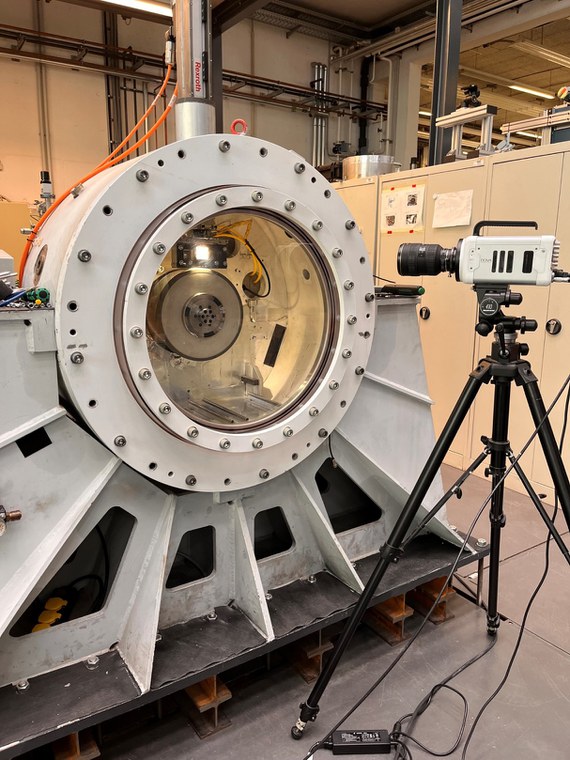
Fig. 02: Experimental investigation of the phenomena in the grinding contact zone using a high-speed camera at ILK’s rotor test rig.
With global challenges such as the scarcity of natural resources and the rising demand for semiconductor components driven by increasing digitalisation across all areas of life, there is an urgent need to review long-established processes and methods and make them more energy-efficient. The starting materials for the semiconductor industry can consist of, for example, monocrystalline silicon, silicon carbide (SiC) or silicon nitride (SiN), as well as gallium nitride or gallium arsenide. Such hard materials are finished to a thickness of up to 180 µm using, amongst other methods, the flat grinding process with diamond grinding wheels. Currently, the grinding process takes place at a peripheral speed of just 23 m/s, resulting in a comparatively long machining time with a correspondingly high energy consumption. To meet the growing demand for semiconductors, a reduction in machining time is essential in terms of productivity and energy efficiency. However, increasing grinding speed and feed rate is not advisable for machining hard materials (carbide and ceramics) due to inadequate cooling conditions, as the higher friction causes the workpiece temperature to rise sharply, which can lead to warping, cracking or breakage of these very expensive workpieces. The aim of the ODYZEUS joint project is therefore to adapt and optimise the supply of cooling lubricant at high machining speeds. To achieve this, it is necessary to feed the cooling lubricant through the interior of the tool system directly into the contact zone in order to significantly improve cooling conditions and, as a result, achieve substantial energy and CO2 savings.
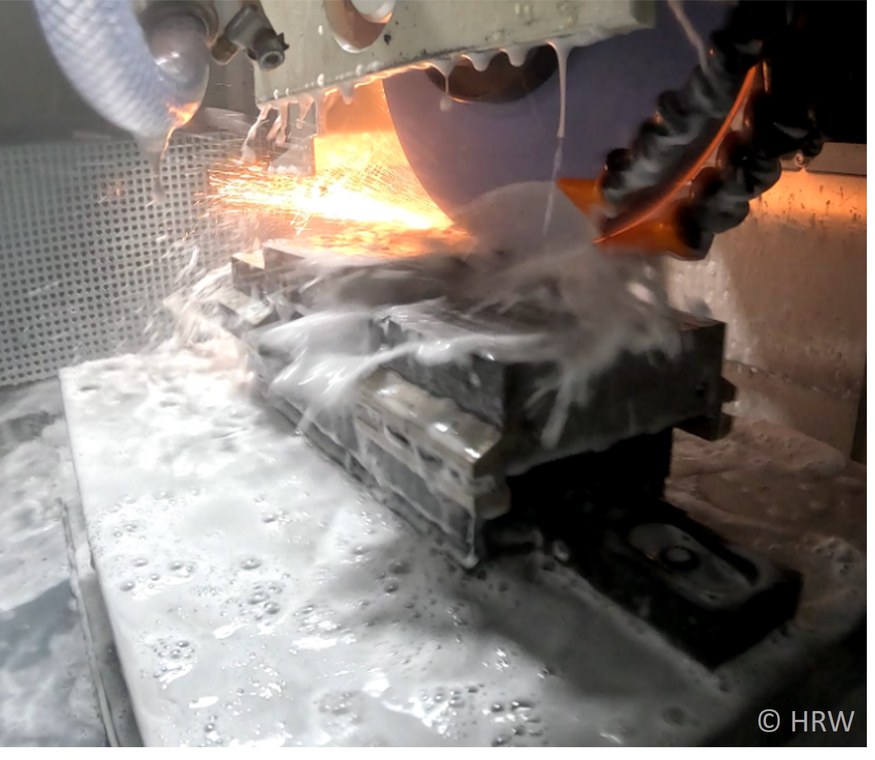
Fig. 01: Conventional grinding of hard materials using ‘flood lubrication’.
01.02.2025–31.01.2028
- STEREON Ceramics Frankenblick GmbH (QSIL Ingenieurkeramik GmbH)
- LIGHTWAY GmbH
- Spreyer Werkzeug- Technik GmbH
- esgemo GmbH & Co. KG Schmierstofftechnik
- Innomax AG - Wasserstrahlschneiden
- PMB - Präzisionsmaschinenbau Bobertag GmbH
-
Institute of Mechanical Engineering at the University of Applied Sciences Ruhr West (HRW)
Associated partners
 © Diana Wolfrum/ILK
Dr.-Ing. Jörn Jaschinski
Chair of Function-Integrative Lightweight Engineering
Send encrypted email via the SecureMail portal (for TUD external users only).
- Thomas Behnisch (Novel Materials and Special Processes)
Publikationen Thomas Behnisch | TU Dresden