KeraSpray
Low-wear ceramic spray nozzles produced using additive manufacturing for the automated application of building materials
| Funding: | Co-funded by the European Union |
| Funding Code: | 100783985 |
| Duration: | October 2026 – September 2027 |
| Contact: |
Project Description
Robotic spraying systems for walls, ceilings, and floors only work well when every pass is consistent. The challenge is the material itself. Practical coatings like heavy emulsion paints, mineral fillers, and specialty mortars are packed with abrasive particles like quartz and corundum. When pumped and atomized under high pressure, these minerals act like sandpaper on standard metal nozzles. Over time, the nozzle opening widens, the edges wear down, and hydraulic pressure falls off. That leads to uneven spray patterns, messy overspray, unpredictable coating thickness, and constant downtime to swap out worn parts. Because painting robots follow preset paths, this slow, hidden wear quietly wrecks application quality.
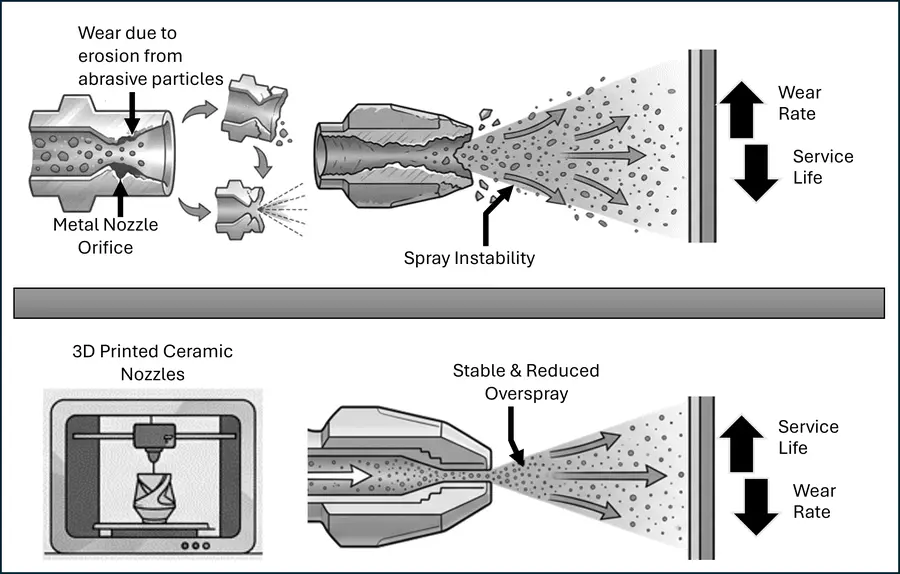
KeraSpray builds on findings from the earlier AutoSpritzBau initiative by tackling this issue right at the nozzle tip. The research involves developing and testing 3D-printed ceramic nozzles built to withstand tough construction site application process conditions. Ceramic additive manufacturing makes it possible to work with extremely hard materials like aluminium oxide without the shape limitations of traditional metal machining. To print complex, flow-optimized internal passages straight to near-final shape and evaluate them with testing. Using an automated test bench, the project aims to measure real gains in spraying applications at construction industry.