
Aug 01, 2023
Refiba
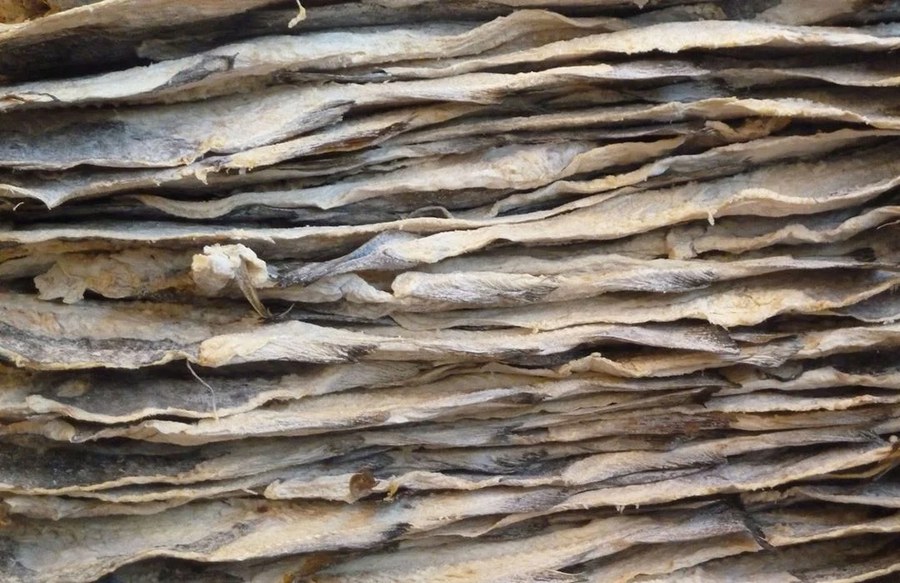
Klipfish
Recyclable cardboard packaging for frozen seafood and conventional fish products
| Duration | August 2023 – May 2026 |
| Funding |
FHF – Norwegian Seafood Research Fund |
| Grant ID | 901856 |
| Contact | |
| Keywords | Recyclable packaging, seafood, fish products, barrier coating |
Objective
The Refiba project, funded by the FHF, aims to develop recyclable packaging made from competitive materials for frozen seafood, as well as klipfish and salted fish. At the same time, the project seeks to preserve the positive characteristics of existing packaging solutions.
A Globally Traded Product
Frozen seafood, as well as clipfish and salted fish, are predominantly packaged in wood-fiber-based packaging such as cardboard boxes and corrugated cardboard crates. In 2022, Norway exported approximately 820,000 metric tons of frozen seafood (pelagic fish, cod, shrimp, etc.) as well as about 120,000 metric tons of conventional fish products (dried fish, salted fish, and stockfish).
Significant quantities of packaging material are also transported worldwide along with these seafood products. Due to its relatively short lifespan, packaging consumes large amounts of raw materials and places a strain on recycling and waste disposal systems.
Norwegian seafood is a globally traded export commodity. Between 2012 and 2022, clipfish was exported to 92 countries. The same applies to frozen mackerel, herring, whitefish, and shrimp. However, there are significant differences among the recipient countries in terms of waste management and recycling capabilities.
Portugal, the Dominican Republic, and the Congo are among the most important markets for clipfish. Portugal is subject to the new EU Packaging and Packaging Waste Regulation (PPWR), which sets strict requirements for the recyclability of packaging. In the Dominican Republic and the Congo, on the other hand, there is a higher risk that used packaging—unless reused—will end up in landfills or be disposed of in an uncontrolled manner.
Current packaging typically features a PE barrier
Most packaging used today for frozen and conventional fish products is coated on one or both sides with a PE (polyethylene) barrier. This coating must be removed so that the paper fibers can be recycled and reused. In countries where cardboard packaging is disposed of in landfills or discarded in an uncontrolled manner, this can contribute to plastic pollution.
This project is investigating whether packaging without a barrier coating represents a better alternative for certain markets. Of particular interest is whether new barrier materials or completely barrier-free packaging can ensure the quality and shelf life of fish products just as reliably.
Partners
SINTEF Institutes
- Manufacturing
- Nordvest
- Ocean
- Industry
Universities
- TUD Dresden University of Technology, Chair of Wood Technology and Wood-Based Bioeconomy
- NTNU – Norwegian University of Science and Technology, Department of Design
Industry Clusters
- Woodworks! Cluster
Industry Partners
Seafood
- Brødrene Sperre
- Cold Water Prawns
- H.P. Holmeset
- Olav E Fiskerstrand
Packaging
- BEWI
- Molzau
- VPK Packaging
Recycling
- Attvin
- Fiskeby
Links
https://www.fhf.no/prosjekter/prosjektbasen/901856/
Funding Information
FHF – Norwegian Seafood Research Fund