Method Catalog for Soil Characterization
Table of contents
General Information
The aim of the method catalog is the targeted characterization of cleaning-relevant soil properties in the food industry. Based on the properties of the considered soil-liquid combination, the suitability of the cleaning liquid is evaluated. This makes it possible to adapt the cleaning liquid for the respective contamination and thus to adapt the cleaning process outside the production plant.
The practical applicability of the method catalog is a necessity for its actual use in an industrial environment. To ensure this, the project developed tools for the identification of suitable characterization methods. On the other hand, an industry-relevant structure of the documentation and evaluation of those characterization methods is essential. The characterization methods were described in specific method profiles and documented and evaluated with regard to their potential, restrictions and industrial applicability. The entirety of the entered method profiles forms the method catalog.
Diverse Soil Properties
Based on our own preliminary work, extensive literature and discussions with the companies involved in the project, cleaning-relevant dirt properties were identified and structured into property groups. This grouping is shown in Figure 1 and includes the chemical structure, visual appearance, thermal properties, wetting behavior, swelling behavior, rheological properties and adhesion properties.

Figure 1: Classification of cleaning-relevant properties
Application and Method Selection
Holistic Process Scheme
A holistic process scheme was developed to classify the available sampling options and their informative value via the actual cleaning process. The process scheme covers the entire production cycle consisting of food processing and the cleaning process. It is shown in Figure 2. The process diagram is structured as a rotating time axis. From the inside to the outside, it shows the machine surface, the machine interior of interest and finally the process boundary along the radius. At the start of the production cycle, only the clean machine surface is present. At the start of production, the raw food material to be processed is fed into the system and processed over time. This creates a layer of soil adhering to the machine surface. The processed food product exits the system and leaves a residual layer of soil on the machine surface. At the start of the cleaning process, cleaning fluid is introduced into the system and conveyed over the soiled machine surface. At this moment, the so-called cleaning system, i.e. the triad of machine surface, soil and cleaning fluid, is complete and the soil layer is removed over time. The cleaning fluid exits the system loaded with the removed soil and after successful cleaning, disinfection and sterilization processes may be carried out until the machine surface is clean again and a new production cycle can begin.

Figure 2: Holistic Process Scheme
Method Selection
The application of the method catalog and the identification of a suitable characterization method is shown in the flow chart in Figure 3. The decision tree developed in Kricke et al. (2025) and continued in the context of SMESA can form a starting point for identifying cleaning-relevant soil properties that are suitable for the characterization task. Based on the soil property of interest, further soil properties can be identified using the property diagram described in more detail in the following section, which potentially allow similar statements to be made about the target variables of interest and, in perspective, the cleaning behavior. The soil properties can be used to search for available characterization methods in the catalog of methods. The process diagram below is now used to check whether the available sampling options match the sample form required for the respective characterization method. If this is not the case, the possibility of using model soil should be evaluated. If model soil is also not suitable for determining the soil property of interest, the selection of the specific target variable of interest must be adjusted and the search for a suitable characterization method repeated. If suitable options for sampling or the use of model soil are available, the method profile can be selected and the characterization can be implemented.

Figure 3: Flow chart for use of the method catalog
The decision tree developed as part of the project Soil structure-based cleaning optimization 2 (IGF 20861 BR) and published in Kricke et al. (2025) is shown in simplified form in Figure 4. It was created using a data set of 55 cleaning systems (specific soil-cleaning liquid combinations) based primarily on carbohydrate-based thickeners as well as water and 2% caustic soda at 25 °C and 55 °C. For the specific cleaning systems swelling-based, rheological, and mechanical soil properties as well as the cleaning behaviour were recorded and analyzed using the statistical decision tree method and presented in a structured and prioritized form. This representation now makes it possible to make statements about the expected cleaning behavior based on the soil properties specified in the decision tree. For example, the complex shear modulus as rheological property was identified as a key target variable in order to identify cleaning systems with fast cleaning. In the next step, the fluid binding capacity of the cleaning system was determined as a decision node. In the third step, cleaning systems can be divided according to their cleaning behavior based on the target parameter of pull-off force. The soil properties are discussed in the rest of the report. As part of this project, the decision tree will be expanded on the basis of the data collected and supplemented to include milk- and plant-based soiling.

Abbildung 4: Entscheidungsbaum zur strukturierten und priorisierten Darstellung der Wechselwirkungen zwischen Schmutzeigenschaften und Reinigungsverhalten nach Kricke et al. (2025)
Evaluation of the methods
In order to further sharpen the suitability of a characterization method for the specific task at hand and practical framework conditions, evaluation criteria for method documentation and assessment were developed based on our own experience, extensive technical literature and discussions with the companies accompanying the project. These are listed in Table 1 in the three categories of information content, limitations and industrial applicability and were applied to each method implemented in the project. In terms of the information content that can be provided by the characterization method, the method itself as well as the determinable property and specific target value of the measurement are named. The holistic process scheme can be used to classify the analyzable samples according to the process points during sampling. The process scheme can also be used to identify the process step through which direct or indirect information can be obtained using the characterization method.
With regard to the category of limitations, the sample states that can be examined by the characterization method are further specified and divided into powder, fluid, wet layer, dry layer and particles. Special restrictions or requirements of the characterization method are documented. Possible applicable temperature ranges and cleaning liquids that can be integrated into the measurement are among the key evaluation features. Furthermore, the temporal resolution of the measurement signal of the characterization method is classified as discrete-time single, discrete-time multiple and continuous-time. The spatial resolution is classified as integral single, point single or spatially resolved. Aspects that allow the comparability of the measurement results with other measurement results of the method as well as dependencies of the measurement results on various influences are documented. If further characterization methods are required to prepare the measurement or fully interpret the results, these are also listed.
To classify the industrial applicability of a method, the necessary materials and equipment are specified in this category. In terms of availability, the characterization method is classified as commercially available, available as a service or available at research institutions. The time required to carry out the method is recorded and, if applicable, listed separately with regard to sample preparation, actual measurement and any post-processing. The necessary expertise is also important, which can range from basic knowledge to laboratory knowledge to expert knowledge and can also be broken down into the individual application steps of a method. The costs incurred are also broken down in terms of the material and equipment required and the application of the method. A key factor for assessing the industrial applicability is the classification of the state of standardization of the characterization method, which can range from available in standards to the general state of knowledge or available in isolated literature to a specific development of a research institution.

Tabelle 1: Evaluierungskriterien zur Dokumentation der Potenziale, Restriktionen und industriellen Anwendbarkeit der Methoden
The evaluation criteria already form an essential part of the method profile, in which the respective specific characterization method is documented. The method profile is introduced by a brief description of the method and a description of the principle of the method and is completed by the evaluation criteria.
Method catalog
The method profiles are at this time only available in German.
Product Composition
Download method profile product composition

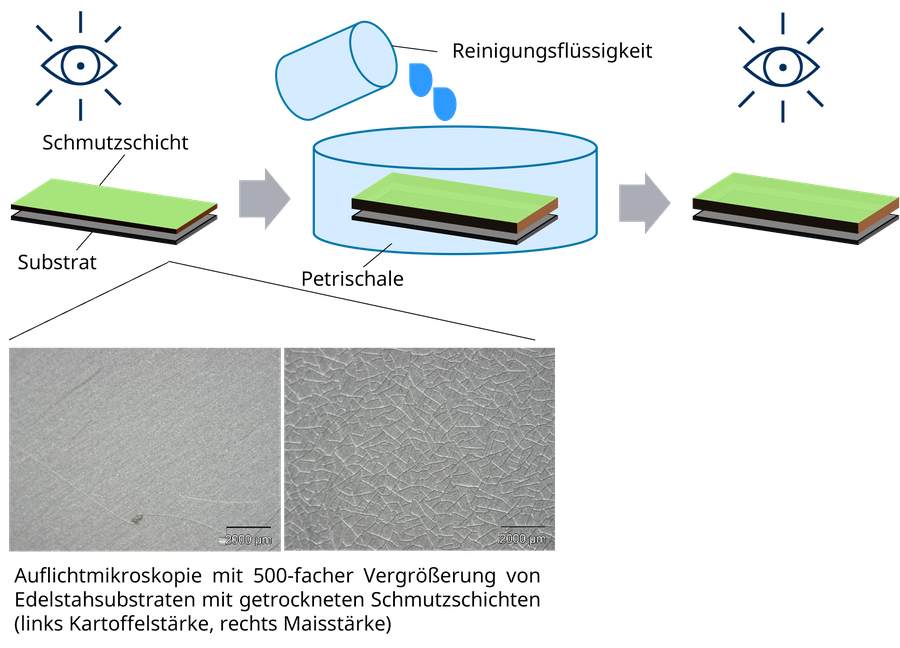
Visual Assessment
Download method profile visual assessment
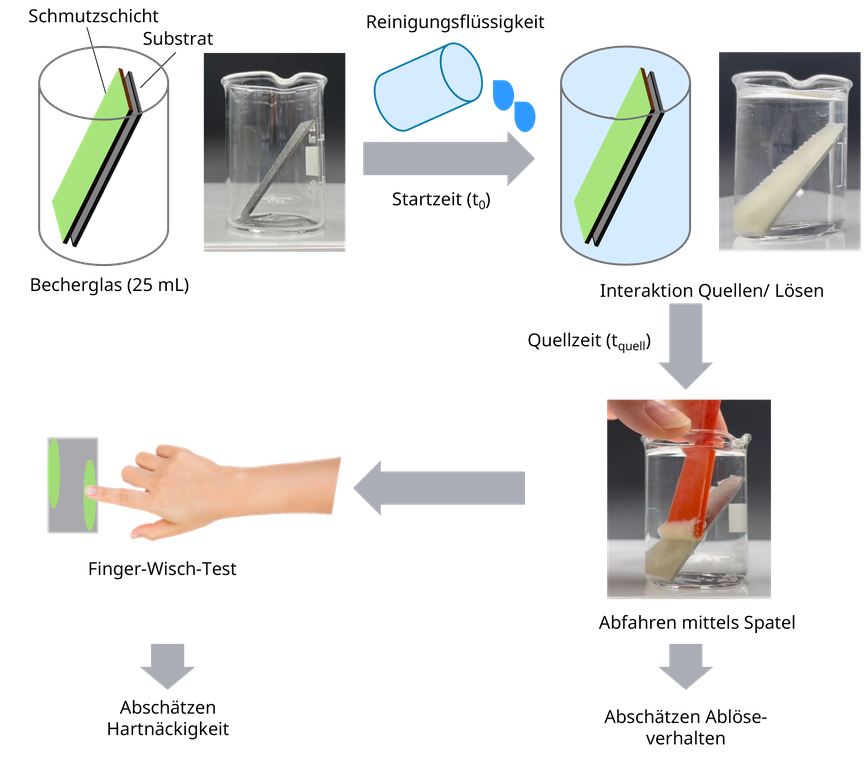
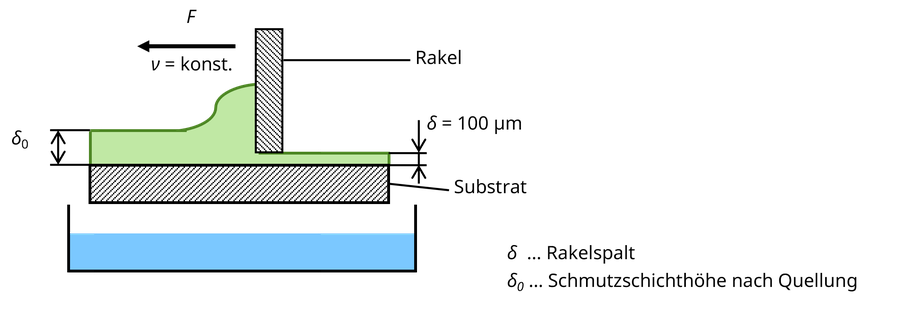
Swelling Spatula Wipe Test
Download method profile source spatula wipe test
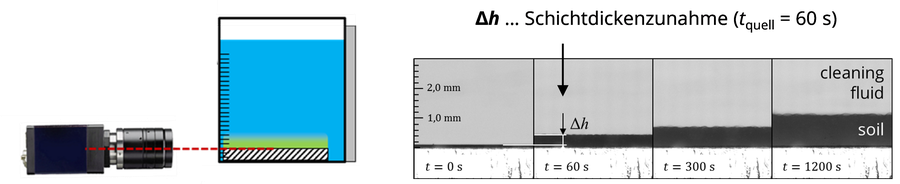
Layer Thickness Measurement
Download method profile coating thickness measurement
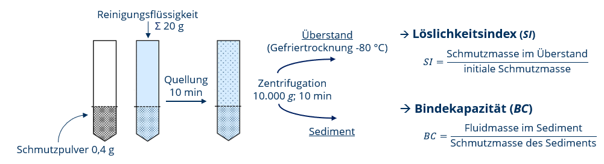
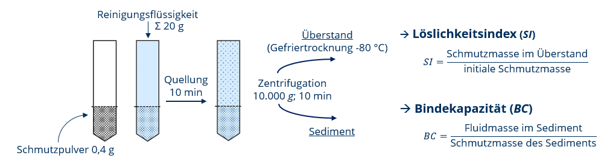
Centrifuge Test
Download method profile centrifuge test
Pull-off Force Measurement
Download method profile pull-off force measurement
Oscillation Rheometry
Download method profile oscillation rheometry

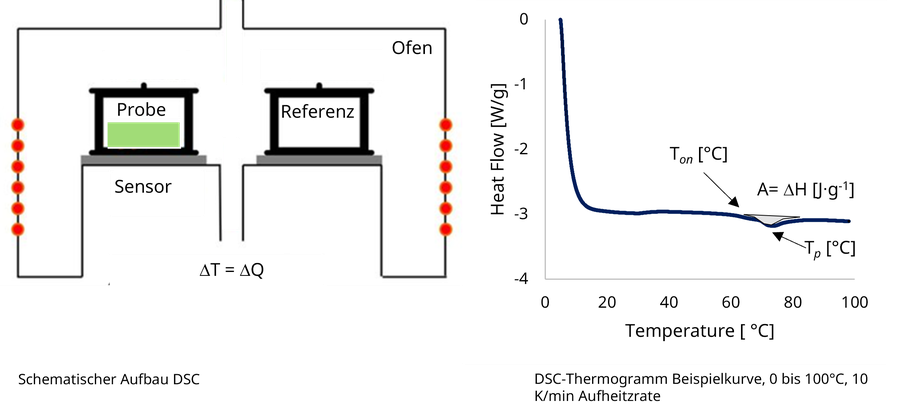
Thermal Properties
Download method profile thermal properties
Contact
TU Dresden
Chair of Processing Machinery/Processing Technology
Bergstraße 120, 01069 Dresden
Prof. Dr.-Ing. Jens-Peter Majschak
jens-peter.majschak@tu-dresden.de
TU Dresden
Chair of Food Engineering
Bergstraße 120, 01069 Dresden
Prof. Dr. rer. nat. Anja Maria Wagemans
anja.wagemans@tu-dresden.de
Contact Persons
 © Clemens Troll
Cleaning Technologies
NameDipl.-Ing. Sebastian Kricke
Send encrypted email via the SecureMail portal (for TUD external users only).
 © Sven Ellger
Research Assistant
NameDr.-Ing. Susann Zahn
Food Process Engineering, Product Development
Send encrypted email via the SecureMail portal (for TUD external users only).
Project Funding
This method catalog was developed as part of the research project "Standardized methods for an industry-oriented dirt analysis in food production for resource-saving plant cleaning (SMESA)" (DBU AZ 38191) funded by the German Federal Environmental Foundation.