Jun 01, 2026
Lecture with book presentation "Language technology in the GDR in its temporal and spatial context, or: On the attempt to ride a dead horse", 18.06.2026
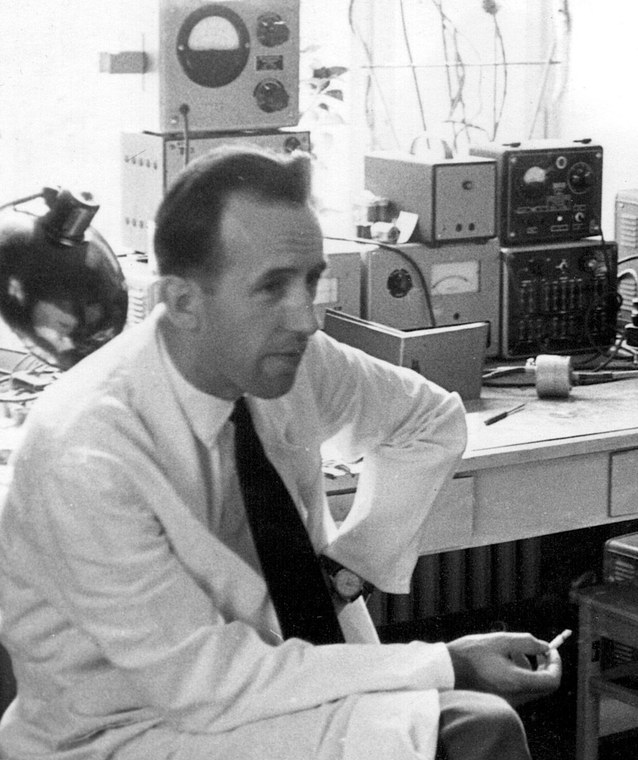
Prof. Walter Tscheschner at his workplace, 1961
Voice-controlled assistance systems are now an integral part of our communication culture: Siri, Alexa and co. are a natural part of our everyday lives. Among the many institutions worldwide that paved the way for natural language human-machine interaction in the 20th century was today's TUD Dresden University of Technology.
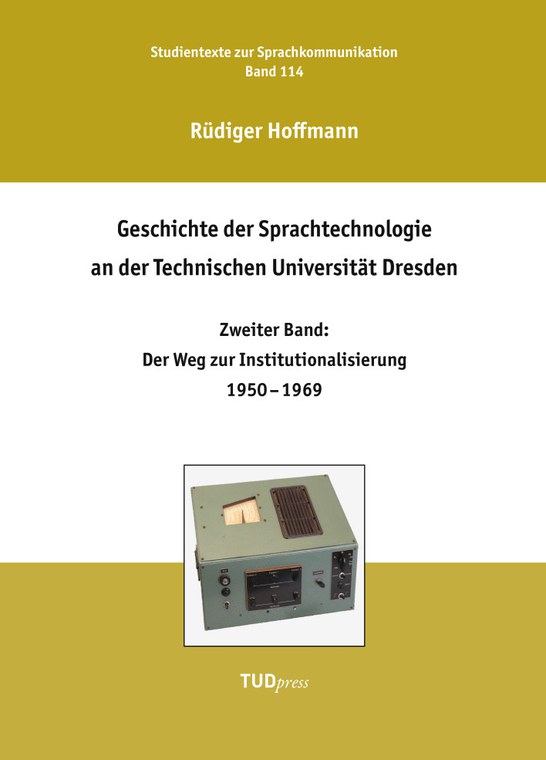
In his multi-volume publication on the history of language technology at TUD Dresden University of Technology, published by Thelem Universitätsverlag, Rüdiger Hoffmann sheds light on the multifaceted history of this field of science. Having himself been involved in the research described, the author now curates the Historical Acoustic-Phonetic Collection, a unique witness to the history of speech technology in Germany.
To mark the publication of the second volume, the Office for Academic Heritage , Scientific and Art Collections and the Faculty of Electrical and Computer Engineering at TU Dresden, together with Thelem Universitätsverlag, invite the interested public to a book presentation with a lecture by the author on Thursday, June 18, 2026.
In his lecture, Rüdiger Hoffmann will outline the overall project of the publication series and introduce the second volume in more detail. This is dedicated to the graduation work of communications engineer Walter Tscheschner and its contemporary context of the 1950s and 1960s. The volume locates Tscheschner's innovative research in a surprisingly dense network of scientific, technical and social relationships that extended far beyond the boundaries of engineering.
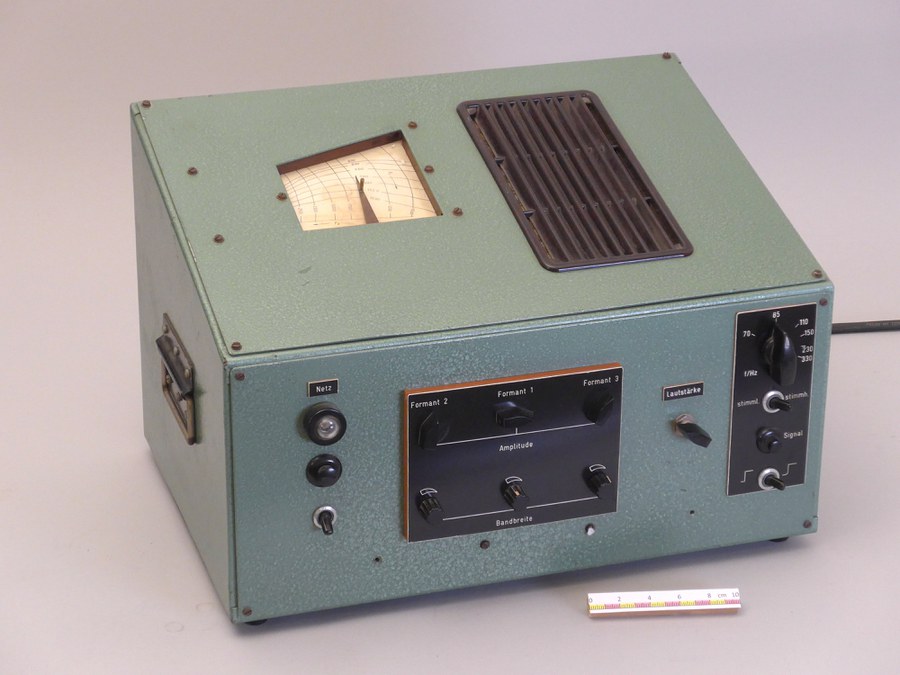
Vocal synthetisation machine (Vokalsynthetisator) by Walter Tscheschner and Gunnar Fant, ca. 1961 (TU Dresden, Historical Acoustic-Phonetic Collection, inv. no. AP30614-000)
Against the backdrop of Stalinism, cybernetization, economic and university reforms, connections unfold to humanities subjects such as linguistics and communication studies as well as to the burgeoning computer industry. This volume outlines a hitherto little-noticed period in the history of science in East Germany and its integration into the development of ideas whose consequences continue to shape our world today.
When
Thursday, June 18, 2026
5 p.m.
Where
TU Dresden, Barkhausen-Bau
Helmholtzstr. 18, 01069 Dresden
1st floor, lecture hall BAR 205
http://navigator.tu-dresden.de/etplan/bar/01/raum/141101.0710
Program
- Welcome address by Kirsten Vincenz, Director of the Office for Academic Heritage, Scientific and Art Collections at TU Dresden
- Greeting by Prof. Dr. Gerald Gerlach, former Dean of the Faculty of Electrical and Computer Engineering at TU Dresden
- Lecture by Prof. Dr. Rüdiger Hoffmann, Head of the Historical Acoustic-Phonetic Collection
After the lecture, the organizers cordially invite all participants to a drink.