
Jun 01, 2026
30 years of Psychosocial Medicine at Dresden University Medicine
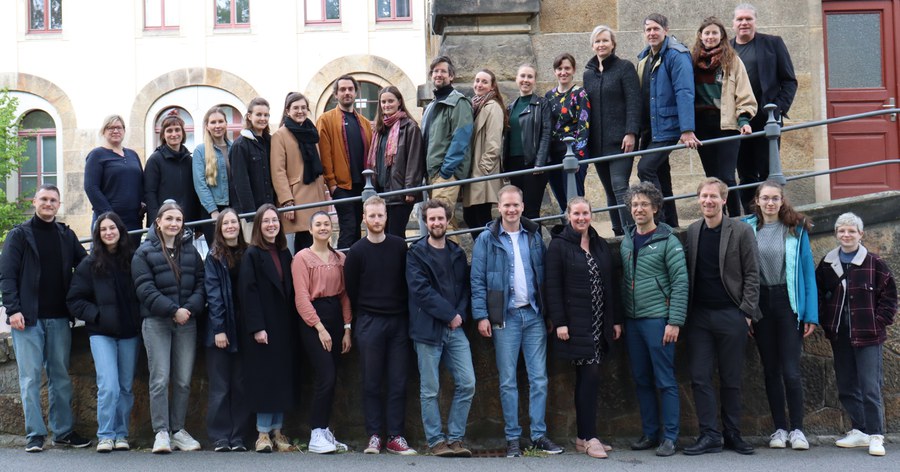
Das Team des Bereichs Psychosoziale Medizin.
The Department of Psychosocial Medicine at the TUD Medical Faculty and the Dresden University Hospital is celebrating two significant milestones this year. Thirty years ago, in 1996, Medical Psychology was established at the University Hospital. For the past ten years, it has operated as an independent unit, Psychosocial Medicine and Developmental Neurosciences. These anniversaries represent developments that have had a lasting impact on the profile of university medicine in Dresden.
In the early years under Prof. Friedrich Balck's direction, training medical students was a central task. Medical psychology taught the fundamentals of human experience and behavior in the context of health and illness, including disease processing and psychosocial influencing factors. Particular focus was (and still is) placed on practical training in doctor-patient communication.
From the outset, the institution evolved from being seen as a "teaching subject" to becoming a field of work encompassing teaching, research and patient care. By 2006, the department included a consultation service, team supervision and involvement in the psychosocial care of the University Cancer Center, as well as providing psychological care for students.
A notable structural change occurred in 2003 when Medical Sociology was integrated into the Department of Medical Psychology. The transformation of the human medicine curriculum in light of the new licensing regulations of 2003/2004 was also pivotal in terms of teaching history: the medical psychology and medical sociology curriculum was revised and expanded in terms of organisation and subject matter.
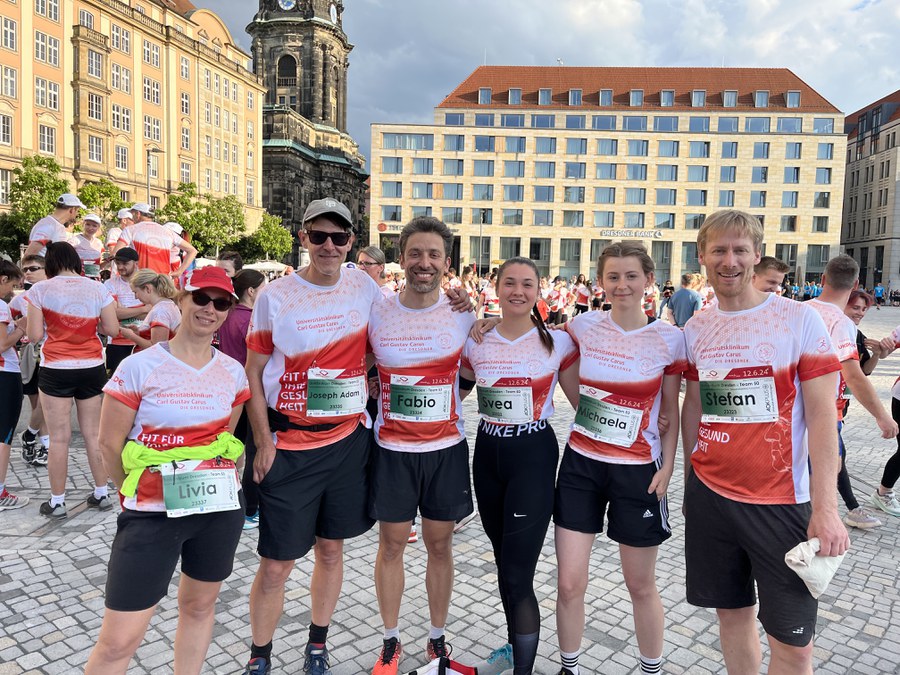
Mitarbeitende der PSM beim REWE Team Challenge 2024.
Since 1 June 2016, the department has existed as an independent School of Medicine and Developmental Neurosciences within the Centre for Mental Health, following the appointment of Prof. Stefan Ehrlich. Participation in the MEDiC model study programme, science literacy curricula, LCKomm, midwifery, and neuroscientific research issues (including collaborative research projects SFB940, IRTG2773, TRR393, DZKJ, EP PerMed and ENIGMA-ED), as well as the use of data-driven and AI methods, have become important additional parts of the department's work and range of topics.
'I am very pleased about the continuous development of psychosocial medicine at our faculty,' says Prof. Ehrlich, highlighting the greater integration of medical psychology and communication into the human medicine, MEDiC and midwifery sciences degree programmes in particular. 'This has significantly enriched the education of our students and promoted interdisciplinary cooperation. The expansion of research, especially in collaboration with the Center for Mental Health and the Faculty of Psychology, is also a great success that strengthens clinical care and scientific excellence in equal measure.'
Over the years, psychosocial medicine has evolved from a theoretical subject into a practical, interdisciplinary, research-oriented field. Prof. Ehrlich explains: 'In addition to the psychological and sociological foundations, the focus today is on communication skills, clinical application, interprofessional collaboration, and psychosocial care. Alongside the ongoing contributions to the psychosocial care of students and the consultation service, the scientific spectrum has significantly expanded to include neuroscientific issues, data-driven methods and AI-supported approaches."
Looking to the future, it is clear that mental stress, chronic illnesses, prevention and social factors will continue to present significant challenges in the field of medicine. Prof. Ehrlich therefore sees great potential in integrating psychosocial and communication skills more deeply and practically into teaching. In research, the future lies in combining clinical questions with neuroscientific, digital, and AI-supported methods to improve our understanding of diseases and enable more targeted care.