
Targeting the CX3CL1/CX3CR1 axis to attenuate neutrophil infiltration early after myocardial infarction
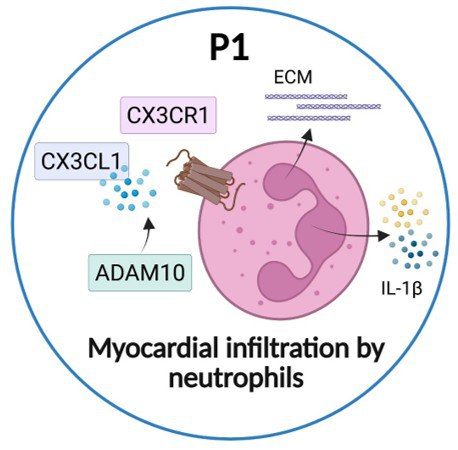
After a myocardial infarction, rapid reopening of the occluded vessel by percutaneous coronary intervention (PCI) is the most effective way to limit the size of the infarct scar. However, to date there are no adjunctive therapies that specifically modulate the immune response and thereby improve cardiac regeneration. The innate immune response after infarction is essential for the elimination of necrotic cells and initiation of repair, but excessive or dysregulated infiltration of inflammatory cells leads to damage of vital myocardium and favors maladaptive remodeling processes. Our current preliminary data identify a previously uncharacterized population of CX3CR1-expressing neutrophil-like cells that appear in cardiac tissue in the subacute phase (day 3-7) after infarction. These “late” neutrophils have a transcriptional profile that differs significantly from classic neutrophil granulocytes: Reduced expression of proinflammatory genes but increased expression of extracellular matrix (ECM) factors indicate a potential role in scar formation and maladaptive remodeling processes after MI. In addition, the number of CX3CR1+ neutrophil-like cells correlates with impaired cardiac function. We postulate that CX3CR1+ neutrophil-like cells are a pathologically relevant cell type in the inflammatory remodeling of the heart and can be therapeutically modulated by targeted therapy. Building on our comprehensive preliminary work, we are pursuing a translational research approach that ranges from cell typing and functional in vitro analyses to targeted in vivo modulation. The aim of our project is therefore to comprehensively characterize this cell population (phenotype, ontogeny, function) and to test whether this cell type plays a causal role in the impairment of cardiac function after myocardial infarction by means of neutrophil-specific CX3CR1 depletion and adoptive cell transfer. The relevance for humans will be tested via immune cell analyses in infarct patients and iPSC-based modeling. This will allow us to test a new, selective therapeutic approach that specifically modulates a pathogenic immune cell subtype in the early phase after myocardial infarction and potentially attenuates destructive immune responses. Our project combines basic mechanisms of immune modulation with translational target validation and thus lays the foundation for future targeted immune intervention in the early phase after myocardial infarction.
Participating persons
Applicants
Professor Dr. Ali El-Armouche • Dresden TU, Department of Pharmacology and Toxicology
Dr. Erik Klapproth • Dresden TU, Department of Pharmacology and Toxicology