
Microfluidic organ-on-a-chip system: Unravelling the function and therapeutic potential of macrophages in ischemia-reperfusion injury
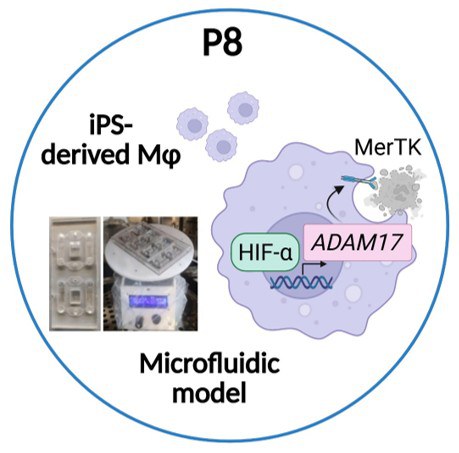
Despite numerous preclinical successes, no therapies targeting excessive inflammation have successfully translated into clinical practice following myocardial infarction (MI). There is an urgent need for advanced, human-relevant in vitro models that better recapitulate cardiac pathophysiology and complement traditional animal studies. To address this, we have developed a novel, gravity-driven microfluidic organ-on-a-chip platform composed of two chambers separated by a porous membrane. This system enables compartmentalized co-culture of human immune and cardiac cells, particularly those derived from human induced pluripotent stem cells (iPSCs), on a single chip. We will use this platform to model a simplified in vitro cardiac micromilieu and study the function and mechanisms of macrophage (Mφ) subsets under ischemia-reperfusion (I/R) injury conditions. Central to this project is the investigation of cardiac resident Mφ, an embryonically derived, self-renewing CCR2⁻ population essential for mitochondrial quality control in cardiomyocytes (CMs), inflammation resolution, and tissue repair. These protective Mφ are depleted post-MI and replaced by infiltrating CCR2⁺ monocyte-derived Mφ that drive chronic inflammation and fibrosis. We hypothesize that iPSC-derived Mφ (iPSC-Mφ) resemble reparative CCR2⁻ Mφ and can reduce I/R injury by enhancing efferocytosis, promoting CM survival, and limiting fibrosis. We will characterize iPSC-Mφ identity, efferocytic capacity, and dynamic behavior using spectral flow cytometry, Luminex assays, lipidomics, RNA-seq, and time-lapse microscopy. We will also explore how HIFα-driven ADAM17 activation regulates MerTK cleavage in Mφ subsets and impacts survival, efferocytosis, and inflammation resolution. Pharmacological inhibitors of ADAM17, PHD, and ferroptosis will be used to test therapeutic modulation. We will directly compare iPSC-Mφ to peripheral blood monocyte-derived Mφ (PBM-Mφ), focusing on their spatial and functional interactions with iPSC-derived CMs and fibroblasts in 3D cardiac organoids, analyzed via spatial transcriptomics. CM function including contractility, electrophysiology, metabolism, and ATP production, will be assessed using video analysis, multi-electrode arrays, and high-resolution respirometry. We further hypothesize that iPSC-Mφ supplementation post-I/R will enhance CM mitochondrial function and survival, effects potentially amplified by their self-renewing capacity, while PBM-Mφ from MI patients will favor CCR2⁺ Mφ accumulation and fibrotic remodeling. Lastly, we will integrate multi-omics data and functional assays to gain mechanistic insight into fibrotic activation and Mφ heterogeneity. These studies aim to advance the development of iPSC-Mφ as a clinically relevant cell therapy for controlling post-MI inflammation and improving cardiac outcomes.
Participating persons
Applicant
Professorin Dr. Kaomei Guan