
Rolle der Ferroptose von Macrophagen beim Myokardinfarkt
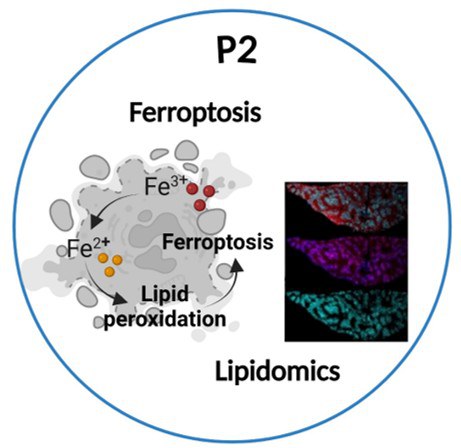
Der akute Myokardinfarkt (MI) und die sekundäre Herzinsuffizienz (HF) gehören zu den weltweit führenden Ursachen für Morbidität und Mortalität. Trotz therapeutischer Fortschritte bleibt die Inzidenz einer post-MI-HF unverändert hoch, so dass neue Strategien benötigt werden, um die Infarktgröße zu reduzieren und myokardiale Vernarbung zu verhindern. Die durch MI induzierte Ischämie führt zu ausgedehntem Zelltod mit einem nekrotischen Kern, der von einer Penumbra umgeben ist, welche geschädigtes aber noch vitales Myokard enthält. Während sich das Verständnis des Zelltods von Kardiomyozyten (CM) in den letzten Jahren deutlich vergrößert hat, wurde Zelltod im angeborenen Immunsystem unter hypoxischen Bedingungen und dessen Einfluss auf die Umbauprozesse des geschädigten Gewebes bislang weitgehend vernachlässigt. Unsere vorherigen Arbeiten haben gezeigt, dass die Nekrose von CMs während des MI durch Ferroptose vermittelt wird. Dies ist konkordant zur Literatur, dass Ferroptose-Inhibitoren die Myokardschädigung begrenzen und die Pumpfunktion erhalten. Die pharmakologische Hemmung der Ferroptose nach einem MI stellt somit einen vielversprechenden therapeutischen Ansatz dar. Die klinische Umsetzung gestaltet sich jedoch schwierig, da sich zunehmend zeigt, dass die Effekte der Ferroptose kontextabhängig und je nach Zelltyp diametral ausfallen können. Unsere Zielsetzung basiert auf der Hypothese, dass die Regulation der Ferroptose während des MI einen entscheidenden, jedoch ambivalenten Schlüsselpunk darstellt: Während eine übermäßige Ferroptose von CMs zu schädlicher Gewebsnekrose führt, könnte deren Unterdrückung wichtige Heilungsprozesse durch Alterationen im angeborenen Immunsystem beeinträchtigen. Daher werden wir untersuchen, wie Ferroptose das Überleben und die Aktivierung angeborener Immunzellen, insbesondere von Makrophagen, beeinflusst und somit die Immunantwort in den verschiedenen post-MI-Phasen moduliert. Ziel ist es, neue Einblicke in die Pathophysiologie des Myokardinfarkts zu gewinnen und gezielte präzisionsmedizinische Therapien zu ermöglichen. Eine spatiotemporal aufgelöste molekulare Karte des verletzten Myokards wird hierfür funktionelle Informationen über die Identität verschiedener Zelltypen und deren Anfälligkeit für ferroptotischen Zelltod in den verschiedenen Phasen nach einem MI (invasiv, destruktiv, reparativ) liefern. Weiterhin werden wir Zell(sub)typ-spezifisches Lipotyping mit mechanistischen Untersuchungen zur Regulation der Ferroptose in unterschiedlichen Makrophagen-Subpopulationen – einschließlich pro- und antiinflammatorischer Differenzierungen – kombinieren. Die Wirkung einer gezielten Modulation der Ferroptose in Makrophagen auf den post-MI-Verlauf wird translational im Mausmodell untersucht werden. Insgesamt wird dieses Projekt ermöglichen, ein therapeutisches „Zeitfenster“ für den gezielten Einsatz von Ferroptose-Inhibitoren als pharmakologische Strategie bei Patient:innen mit akutem MI zu definieren.
Beteiligte Personen
Antragsteller*innen
Professorin Maria Fedorova Ph.D. • Dresden TU, Zentrum für Membranbiochemie und Lipidforschung
Professor Dr. Andreas Linkermann • Dresden TU, Bereich Nephrologie
Dr. Wulff Tonnus • Dresden TU, Bereich Nephrologie