
Metabolic reprograming of sexually dimorphic macrophage responses after myocardial infarction
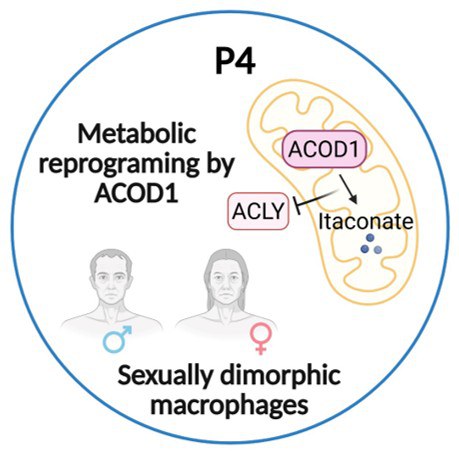
Myocardial infarction (MI) and heart failure (HF) manifests differently in males and females. Female mice have higher survival rates after left anterior descending artery (LAD) ligation-induced MI than male mice. However, the role of distinct immunological responses in sex-specific HF manifestations remains poorly understood. We found that female Mφ clear apoptotic neutrophils more efficiently than male Mφ. The switch of Mφ from a pro-inflammatory to a resolving state is orchestrated by their metabolic reprograming. However, sex dimorphism in the metabolic regulation of macrophage function is little explored. In this project, we will systematically study the sexual dimorphism in the metabolic adaptations and underlying epigenetic mechanisms of myeloid cells recruited to the infarcted heart in mice subjected to LAD ligation. We will decipher the role of sex hormones over sex-dependent inherent monocyte properties in the MI response by performing hormone cross-substitutions in gonadectomized MI mice and cross-sex monocyte transplantations in mice with MI. Moreover, we will examine sexual dimorphism in Mφ function in human models by using induced pluripotent stem cell-derived Mφ (iMφ), neutrophil-like cells (iPSC-neutrophils) and cardiomyocytes (iPSC-CMs). We will study the role of iMφ in the clearance of apoptotic/dead CMs and neutrophils, and in supporting the viability and function of human cardiac cell models after hypoxia-reoxygenation injury. Mechanistically, we found that aconitate decarboxylase 1 (ACOD1) is more strongly induced in female compared to male cardiac infarcted tissue. Hence, we will study the role of ACOD1 in sexual dimorphic immune responses to MI using Acod1-/- mice under treatment or not with dimethyl itaconate (DMI) or itaconate. Moreover, we found that ACOD1 deficiency increases ATP-citrate lyase (ACLY) activity in inflammatory resident Mφ, while ACLY inhibition diminishes their proinflammatory responses. Here, we will examine the role of ACLY in MI using mice with myeloid cell-specific ACLY deficiency or pharmacological inhibition with BMS303141 or bempedoic acid, the latter used in patients with high cardiovascular disease risk to lower low-density lipoprotein (LDL) levels. The role of ACOD1 and ACLY will be also studied in human co-culture models of iMφ, iPSC-neutrophils and iPSC-CMs. Finally, we will examine the metabolic and inflammatory profile of peripheral blood mononuclear cells (PBMCs) and serum of female and male patients following MI. Data from studies in mice and human iPSCs will be bioinformatically overlaid and compared to patient data to reveal the translational potential of our preclinical studies. These studies will dissect sex dimorphism in the MI immune response with focus on the immunometabolic regulation of cardiac Mφ, aiming to identify metabolic targets to promote inflammation resolution post-MI.
Participating persons
Applicants
Privatdozentin Dr. Vasileia Ismini Alexaki • Dresden TU, Institute of Clinical Chemistry and Laboratory Medicine
Dr. Mario Schubert • Dresden TU, Institut für Pharmakologie und Toxikologie