
Cell-based therapeutic strategies to invigorate resident cardiac macrophages
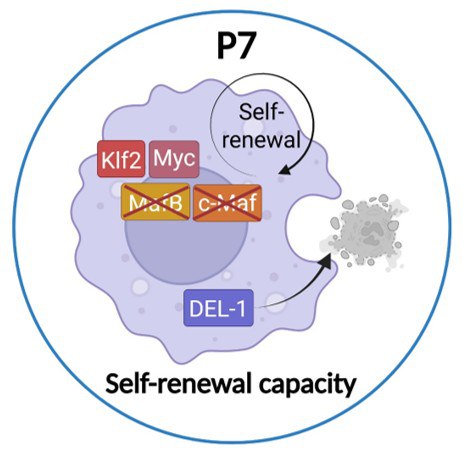
Myocardial infarction (MI) causes a rapid depletion of self-renewing resident cardiac macrophages, leading to a profound loss of regenerative capacity. This depletion is followed by an influx of monocyte-derived macrophages that drive inflammation, adverse remodeling, and fibrosis. Our central objective is to restore immune balance and promote cardiac repair after MI by either reactivating the homeostatic function of resident macrophages or delivering cell-based therapies using self-renewing macrophages engineered for enhanced anti-fibrotic and efferocytic activity. To achieve this, we pursue four major aims. First, we aim to activate macrophage self-renewal in the injured heart by inducing overexpression of Myc/Klf2 or Myc/Klf4. This inducible system allows temporal control, enabling us to test the hypothesis that boosting self-renewal preserves the regenerative function of resident macrophages while limiting inflammation and fibrosis. Second, we will evaluate the therapeutic potential of transplanting self-renewing Maf-DKO macrophages. We hypothesize that early delivery post-MI may attenuate excessive inflammation, whereas delayed administration may support tissue regeneration and reduce fibrosis. As male and female hearts exhibit distinct immune-metabolic gene expression despite sharing macrophage subsets, we will assess sex-specific responses in both donor cells and recipients. Where applicable, the underlying mechanisms will be further investigated. Third, we aim to translate this concept into a human model. We have generated iPSC-derived Maf-DKO macrophages from both male and female donors and will assess their self-renewal capacity. We will also enhance their efferocytic and anti-fibrotic properties in vitro using recombinant developmental endothelial locus 1 (DEL-1) with strong immunomodulatory, efferocytotic and anti-fibrotic properties. We hypothesize that the combination of enhanced self-renewal and efferocytosis will significantly improve their therapeutic potential. Finally, we will test whether recombinant DEL-1, administered acutely after MI, can mitigate inflammation and support cardiac healing. In parallel, we will generate genetically engineered Maf-DKO macrophages overexpressing DEL-1 and examine their capacity for self-renewal, efferocytosis, and fibrosis reduction in vitro. These engineered macrophages are expected to combine multiple beneficial functions into a single immunomodulatory cell therapy for cardiac repair. Taken together, our approach integrates cutting-edge genetic tools, human iPSC-derived models, and immunomodulatory strategies to restore the regenerative potential of the heart. This work lays the foundation for next-generation macrophage-based therapies that are both mechanistically precise and translationally viable—offering promising new avenues for treating heart failure after MI.
Participating persons
Applicants
Professor Dr. Irakli Kopaliani • Dresden TU, Institute of Physiology
Professor Dr. Michael Sieweke • Dresden TU, Center for Regenerative Therapies Dresden - CRTD