
Myeloid HIF Signaling as a Therapeutic Target in Post-Infarct Inflammation and Repair
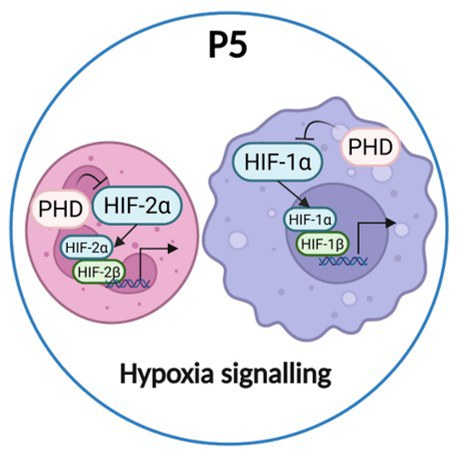
Myocardial infarction (MI) triggers a rapid and tightly regulated innate immune response that can promote tissue repair or exacerbate tissue damage and adverse remodelling. Although hypoxia-inducible factors (HIFs) orchestrate cellular adaptation to ischaemic stress, their isoform-specific roles in myeloid cells during the distinct phases of the inflammatory response following MI remain poorly understood. To address this knowledge gap, we have developed a powerful experimental toolbox enabling precise dissection of time- and cell-type-specific immune regulation in MI. This toolbox includes a comprehensive panel of conditional knockout mouse models targeting HIF1α, HIF2α and PHD enzymes in neutrophils, as well as in monocyte-derived and resident cardiac macrophages, distinguished via inducible lineage tracing. We will employ spectral flow cytometry (Cytek Aurora) for deep immunophenotyping. ¹⁹F-MRI with fluorinated nanotracers for in vivo neutrophil tracking, and high-sensitivity multiplex cytokine and metabolite profiling ((MSD, Olink, LC-MS/MS). Complementary transcriptomic (RNA-seq) and metabolic profiling (e.g. Seahorse) will provide mechanistic insights. To enhance translational relevance, we will analyse neutrophils from MI patients and cardiac co-culture models under hypoxic stress. Our research comprises three interrelated aims: Aim 1, will define the role of HIF2α in regulating neutrophil migration and functional responses during the acute inflammatory phase (hours to days post-MI). Using neutrophil-specific knockout models and the clinically approved HIF2α inhibitor belzutifan, we will distinguish immune cell intrinsic versus extrinsic effects. Aim 2 will investigate how HIF1α and HIF2α support the survival, differentiation and reparative function of cardiac-resident versus monocyte-derived macrophages using inducible lineage tracing and cell-type-specific stabilisation models. Aim 3 will evaluate the therapeutic impact and specificity of next-generation PHD inhibitors on immune activation, angiogenesis, and endocrine side effects. We hypothesize that HIF isoforms exert distinct effects on neutrophil and macrophage behavior, influencing the balance between beneficial repair and pathological remodeling. Together, this project will elucidate the spatiotemporal regulation of innate immune cells by HIF-pathways in the infarcted heart and help the development of targeted hypoxia-modulating therapies to enhance cardiac repair. In future funding periods, we plan to extend these studies to comorbidity-driven MI models to further increase clinical relevance.
Participating persons
Applicants
Professor Ben Wielockx Ph.D. • Dresden TU, Institute of Clinical Chemistry and Laboratory Medicine
Professor Dr. Peter Mirtschink • Düsseldorf HHU, Institute of Clinical Chemistry and Laboratory Diagnostics