
Latest news

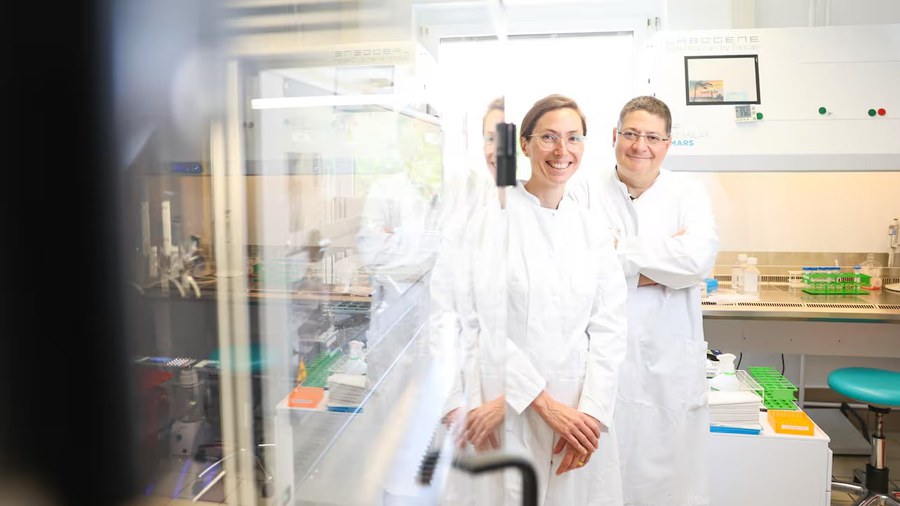
BioBank Dresden in the Sächsische Zeitung
The Sächsische Zeitung reports on the expansion of BioBank Dresden: In the future—with appropriate consent—biospecimen from children and adolescents can also be collected for research and stored long-term. This will provide an important foundation for conducting even more effective research in the future, particularly on rare diseases as well as infectious and immune disorders.
The article also highlights the BioBank’s high quality and safety standards, as well as the importance of cross-site collaboration. Through standardized biological samples and collaboration with national and international research partners, we are making a significant contribution to gaining new insights into the diagnosis and treatment of diseases in children and adolescents.
You can find the full article from the Sächsische Zeitung here
----------------------------------------------------------------------------------------------------------------------------
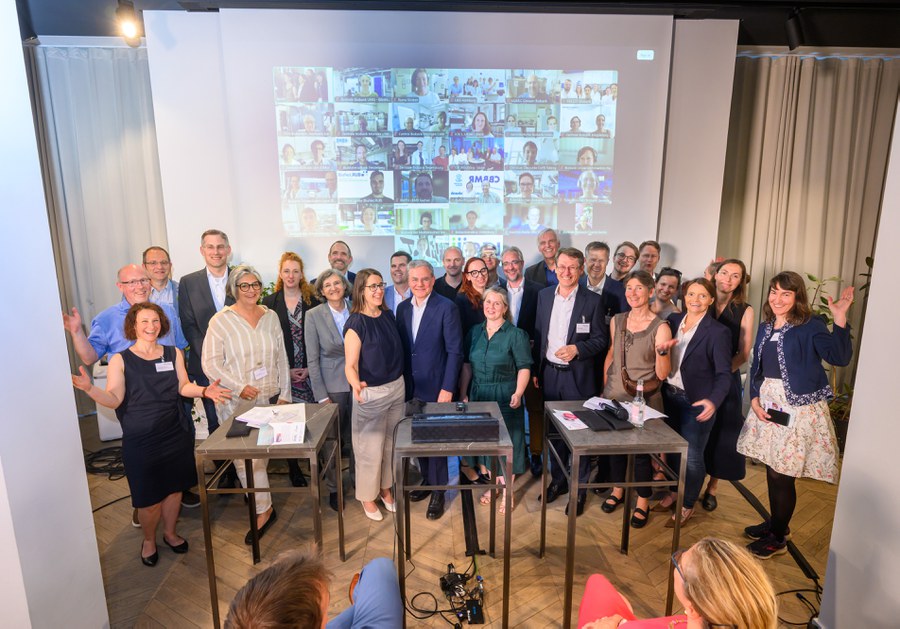
Kick-off meeting to establish a biobank platform
BioBank Dresden is participating in the development of the new “Biobank Platform for Germany.” Together with 37 other university biobanks, a nationwide research infrastructure is being created that facilitates access to biological samples and medical data, thereby supporting the development of innovative diagnostic and therapeutic approaches. Learn more about it here.
----------------------------------------------------------------------------------------------------------------------------------
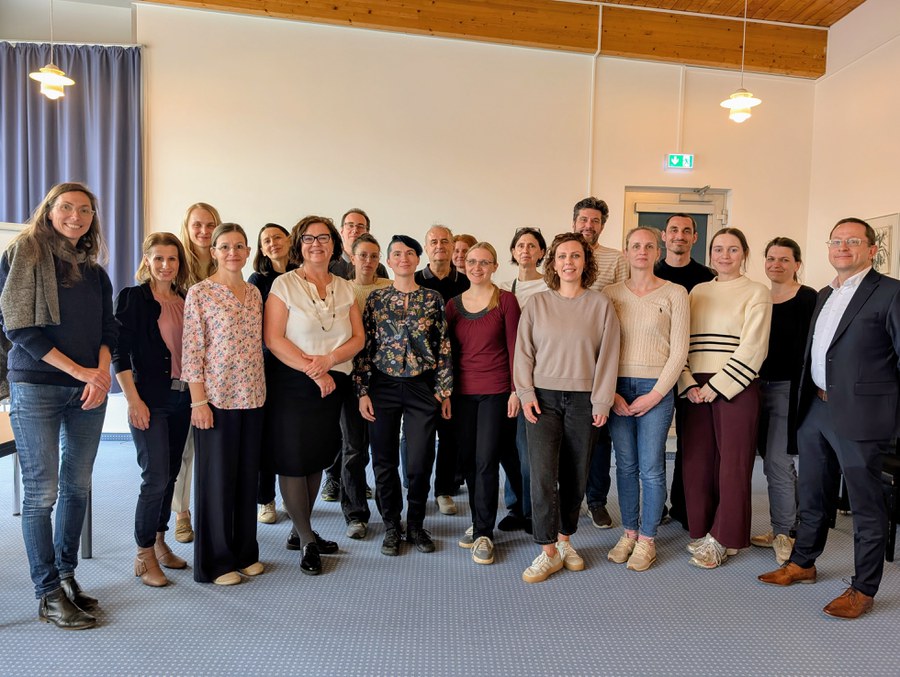
International Delegation Visits BioBank Dresden
On April 14, 2026, we welcomed a high-level international delegation from Slovakia and the Czech Republic. The group of visitors consisted of representatives from a total of seven academic institutions, including university hospitals, medical schools, and the national cancer institute.
The delegation was joined by industry partners from the biobanking sector. The group had previously stopped in Prague, and their journey continued on to Heidelberg, where they visited NCT-Liquid and the DKFZ Repository, among other sites.
During their stay in Dresden, our guests gained comprehensive insights into the structures and working methods of BioBank Dresden. In addition to the respective biobank directors, numerous staff members from various departments also participated, facilitating an intensive professional exchange. One of the goals of the visit was to gain inspiration for the further development and operation of professional biobanks in Slovakia and the Czech Republic. Although biobanks already exist in both countries, many processes are still largely manual and offer potential for further automation.
A special focus was placed on touring BioBank Dresden’s technical infrastructure. During an in-depth tour of the laboratory and storage areas, the existing automation solutions were presented in detail, and their integration into daily workflows was explained. Our guests showed great interest in the technologies used, particularly in cell isolation systems, modern pipetting robots, and automated cryogenic tanks for the long-term storage of samples.
In addition to simply presenting the equipment, the focus was primarily on its practical application, the underlying process chains, and aspects of standardization and quality assurance. This demonstrated the significant contribution automated systems can make to increasing efficiency, reducing errors, and ensuring scalability in biobank operations. The solutions presented clearly demonstrated how the use of modern technologies in a targeted manner can ensure a high degree of process reliability, traceability, and sample quality.
In addition, lively discussions took place on a variety of key topics related to biobank operations. Key topics included the range of samples, strategies for recruiting control samples, IT and database solutions, issues of broad consent and ethics, the linking of biosamples with clinical and analytical data, and various funding models. Aspects such as personnel structures, accreditation, and quality management were also examined in depth.
Another key point of the exchange was the role of the German Biobank Network (GBN) as well as potential collaboration opportunities at the European level. The discussions underscored the strong interest in closer international networking and collaboration. Plans for further exchanges, particularly with the GBN, are already being considered.
We would like to express our sincere thanks for the visit and the open, constructive dialogue. Such international encounters make an important contribution to the further development of biobanks and to strengthening shared research infrastructures in Europe.
-------------------------------------------------------------------------------------------------------------------------------------
BioBank Dresden Advances Research on Long COVID in Children
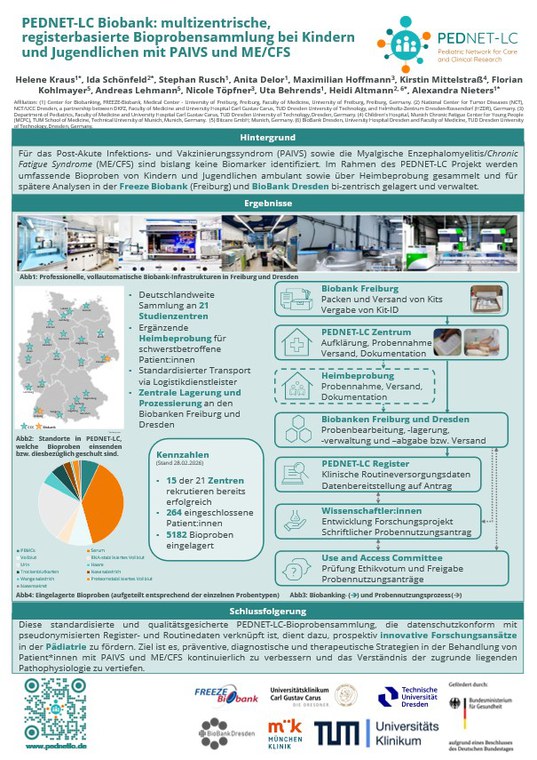
On March 13, 2026, Federal Minister of Health Nina Warken, Saxony’s Minister of State for Social Affairs, Health and Social Cohesion, Petra Köpping, and other political representatives visited the Carl Gustav Carus University Hospital in Dresden to gain insight into the PEDNET-LC project. This nationwide network brings together 65 hospitals and research institutions and aims to sustainably improve the diagnosis and treatment of children and adolescents with Long COVID and similar post-infectious conditions, as well as to establish and ensure comprehensive care. At the heart of the network are 20 specialized care centers that have been collaborating on an interdisciplinary basis since 2025—including the Department of Pediatrics and Adolescent Medicine in Dresden. The network is coordinated by Uta Behrends (Munich) and Nicole Töpfner (Dresden). The Federal Ministry of Health is funding PEDNET-LC with a total of 41 million euros over a four-year period.
We at BioBank Dresden are pleased to be part of this collaborative project and, as part of a work package, to handle biobanking for the network together with the Freeze Biobank in Freiburg. Together, we coordinate the provision of sample collection kits, sample collection and shipping, processing, storage, and the long-term management of pediatric biosamples. The biosamples include a broad range of blood, urine, hair, swab, and/or stool samples. To date, nearly 5,200 biological samples from 264 patients have been submitted; the goal during the funding period is to expand the collection to 40,000 biological samples from 2,000 patients. The goal is to continuously improve preventive, diagnostic, and therapeutic strategies for the treatment of patients with PAIVS (Post-Acute Infection and Vaccination Syndrome) and ME/CFS (MyalgicEncephalomyelitis/Chronic Fatigue Syndrome) and to deepen our understanding of the underlying pathophysiology. Our established infrastructure, which we were able to explain in a poster presentation, convinced the ministers.
-------------------------------------------------------------------------------------------------------------------------------------
New animated film explains biobanking to children and families
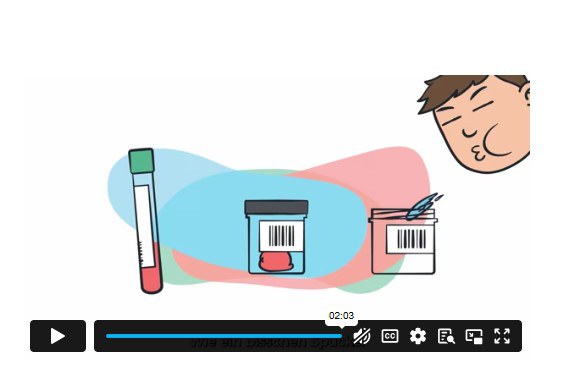
The German Biobank Network (GBN), in collaboration with the Carl Gustav Carus University Hospital at TU Dresden and the DZKJ Leipzig/Dresden, has released an animated informational film on biobanking for children and their guardians.
The video explains in a clear and child-friendly way why biological samples are important for research, how they are used, and how the protection of personal data is ensured. It helps families make an informed and voluntary decision.
Even if there is no direct personal benefit, donors make a valuable contribution to medical research and future patients.
The film is now available for public relations purposes and to support educational discussions.
-----------------------------------------------------------------------------------------------------------------------------
10 Years of NCT/UCC
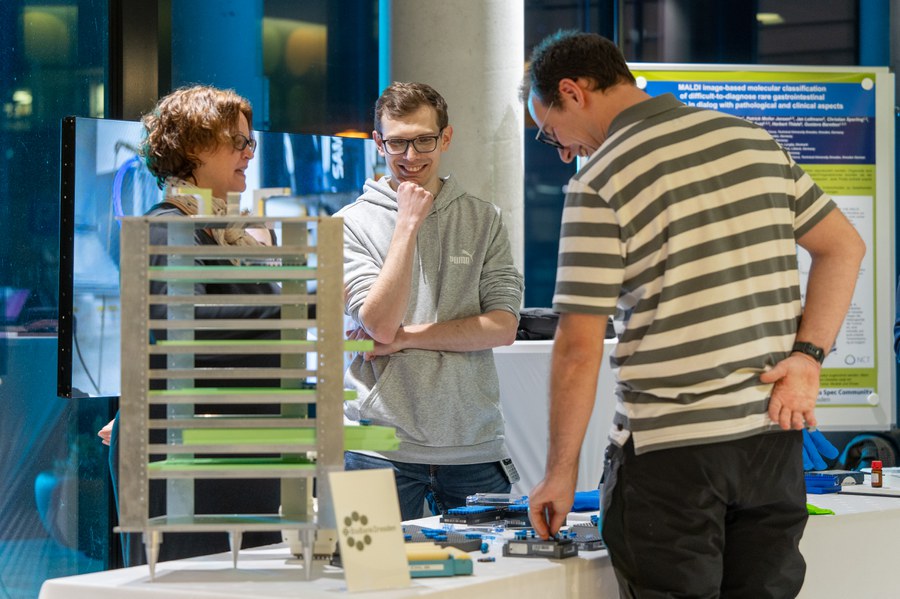
The NCT/UCC Dresden looks back on ten years of cutting-edge research, during which modern cancer medicine, innovative technologies, and patient-centered care have been closely integrated. To mark the anniversary on December 15, Minister President Michael Kretschmer and numerous representatives from politics, science, and the participating partner institutions visited the center and recognized its outstanding role as a beacon of cancer medicine. The visit underscored the center’s national significance and the success of the Dresden model in rapidly and effectively translating research findings into patient care.
BioBank Dresden was also represented with its own information booth and generated great interest among the numerous visitors to the anniversary event. In many in-depth and stimulating discussions—including with the Minister President, representatives of patient advocacy groups, staff from the BMFTR, legal experts, as well as researchers and physicians—the central role of biobanks in innovative, patient-centered cancer research became clear. The lively exchange impressively demonstrated how important close dialogue between research, clinical practice, politics, and society is for further strengthening the conditions necessary for future advances in personalized medicine.
----------------------------------------------------------------------------------------------------------------------------------
Visit to Lifelines Biobank and LvL on October 13
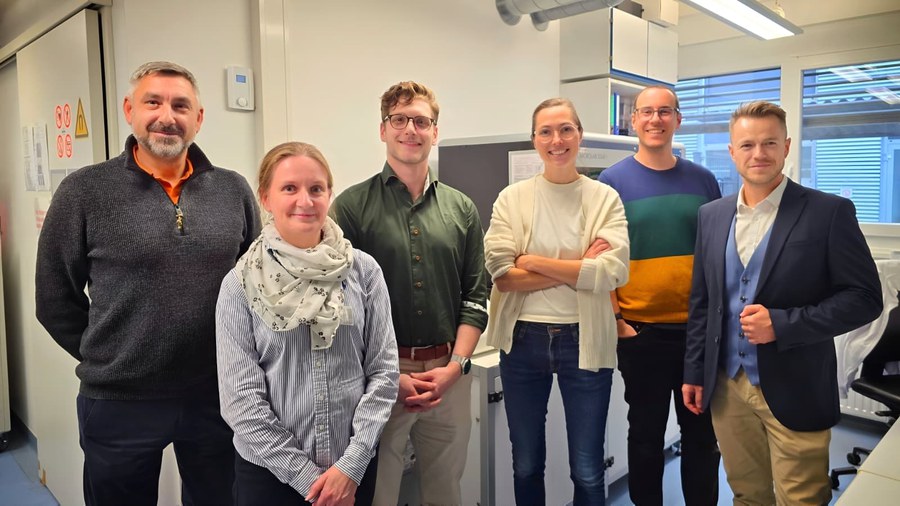
On October 13, we welcomed a visit from our partners at Lifelines Biobank (NL) and LvL.
The visitors included Hilde Laeremans and Rick Nijboer (Lifelines Biobank) as well as Waldemar Janzen and Nick Wolter (LvL).
Together, we took a closer look at the BBD—with a particular focus on our scanner technology and the integrated scanner solutions in the PBMC facility. Our engaging discussions covered troubleshooting, robotic systems, and the exchange of experiences and solutions. Our guests brought several technical challenges with them, and we were able to share our ideas and approaches to address them.
The day concluded with a cozy evening gathering—a lovely way to wrap up a day full of exciting insights and conversations.
We’d like to thank everyone for visiting and look forward to the next meeting!
----------------------------------------------------------------------------------------------------------------------------------
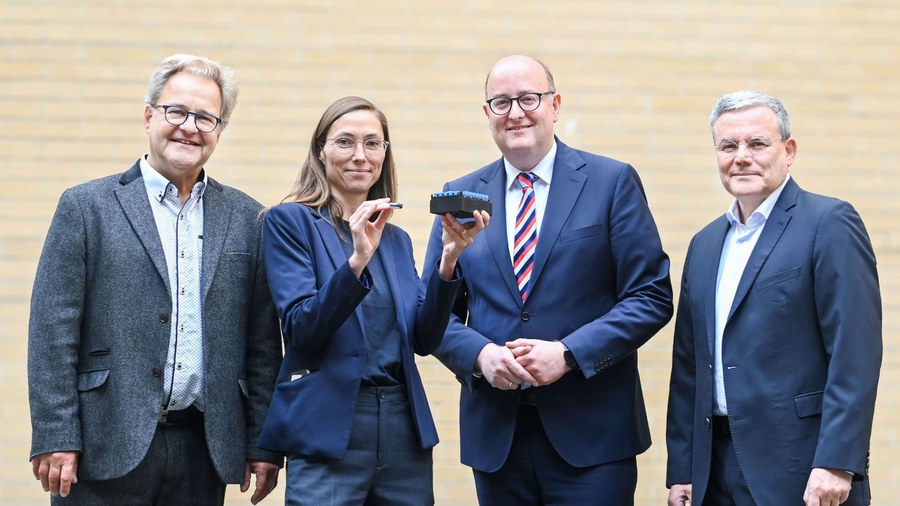
BioBank Dresden at the 13th National Biobank Symposium: Setting the Course for a National Biobank
From September 22 to 23, 2025, more than 200 experts gathered at the 13th National Biobank Symposium to discuss the future of biobanking in Germany. The focus was on the concept for a National Biobank, as envisaged in the coalition agreement, which is intended to serve as a central digital platform providing many millions of tissue and liquid samples, as well as data, for medical research.
As part of the University Medicine Network (NUM), BioBank Dresden supports this groundbreaking initiative, which was jointly developed by a broad alliance of academic researchers and industry partners. The goal is to ensure long-term access to quality-assured samples and to further improve the linking of biosamples with health data—particularly in the context of digitalization and with an eye toward the European Health Data Space.
We see the National Biobank as a major opportunity to strengthen Germany as a research hub and take biomedical research to a new level.
You can find more information here.
---------------------------------------------------------------------------------------------------------------------------------
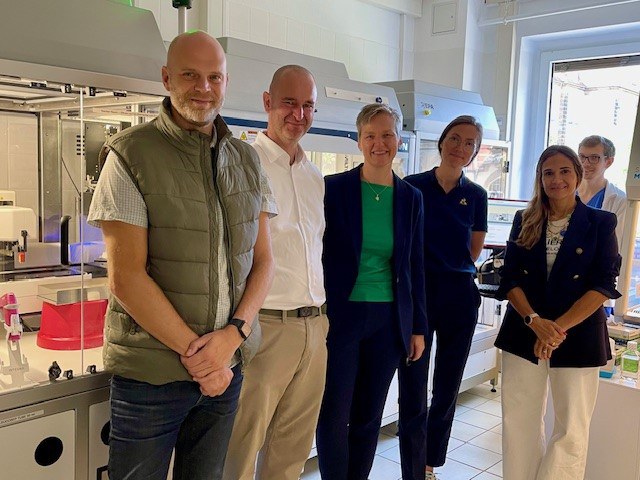
Visitor from Sweden: Teresa Mortera Blanco Visits the Dresden Biobank
We are pleased to have recently welcomed Dr. Teresa Mortera Blanco from the renowned Karolinska University in Stockholm to Biobank Dresden. Dr. Mortera Blanco heads the research department of Prof. Eva Hellström-Lindberg’s MDS working group—one of the world’s leading experts on myelodysplastic syndromes (MDS) and a member of the Nobel Prize Committee for Medicine. She is also responsible for the Karolinska Institute’s hematology biobank, which has garnered international attention in recent months after a technical failure necessitated a comprehensive restructuring.
In a fascinating presentation, Dr. Mortera Blanco outlined the future concept for the biobank to be rebuilt, which specifically includes measures to safeguard against and prevent technical failures. In her search for innovative solutions, she came across our publication on automated PBMC processing using robotics—a key focus of our work at the Dresden Biobank. The technologies presented sparked great interest, leading to a desire to visit our facility to get a firsthand look at our infrastructure and processes.
Dr. Mortera Blanco was accompanied by representatives from Hamilton, who shared technical insights and details about our automation solutions during the tour. An inspiring exchange developed regarding common challenges, potential solutions, and possible future forms of collaboration between the Dresden and Stockholm sites.
We look back on an insightful day filled with valuable scientific dialogue and look forward to continued collaboration with Dr. Mortera Blanco and the team at the Karolinska Institute.
---------------------------------------------------------------------------------------------------------------------------------
Our close partner GBN is unveiling a new name and logo.
Find all the important details here
PEDNET-LC Kickoff
Together with the Freeze Biobank, we coordinate biobanking within the Pednet-LC network. Biological samples are processed and stored according to common standards—either in Freiburg or Dresden—based on predefined center assignments. They are linked to LC registry data and made available to the Pednet-LC research community.
It is a great pleasure and honor for us at BioBank Dresden to be part of this significant project. This funding provides a unique opportunity to work together with partners from all over Germany to improve care and research on Long COVID and similar conditions in children and adolescents. We are proud to contribute to the development of tailored, sustainable solutions for affected young people and to advance scientific collaboration in this important field.
---------------------------------------------------------------------------------------------------------------------------------
German Biobank Node Becomes Part of the University Medicine Network—BioBank Dresden Is Also on Board
The German Biobank Node (GBN), which has been driving the networking and standardization of biobanks in Germany for years, will be integrated into the University Medicine Network (NUM) as of July 1, 2025. This will further strengthen collaboration between biobanks and university research. In the future, the GBN will operate under the new name German Biobank Network, which will also incorporate the German Biobank Alliance (GBA).
As part of the GBA and a member of the GBN, BioBank Dresden is directly affected by this development. In addition, we are currently actively participating in the NUM study NAPKON NUKLEUS, which further underscores our close ties to the university medical research community.
Integration into the NUM opens up new opportunities for collaboration—such as even closer coordination with the data integration centers—and simplifies access to quality-assured biosamples and associated data for researchers throughout Germany. This is an important step toward sustainable and forward-looking structures in biomedical research.
We look forward to pursuing this path together with our partners in the German Biobank Network and the NUM.
The full press release can be found here.
----------------------------------------------------------------------------------------------------------------------------------
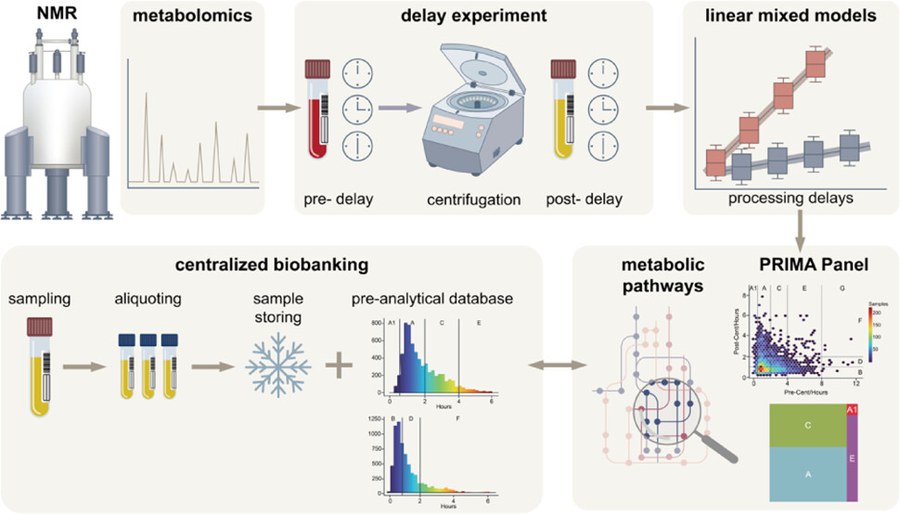
Exciting news from BioBank Dresden (BBD): Our first publication has been released!
In the study titled “Validating Centralized Biobanking Workflows for NMR Metabolomics Using the PRIMA Panel,” our researchers validate centralized biobanking workflows for NMR metabolomics using the PRIMA panel. This work represents a significant step forward in the standardization and quality assurance of biobanking processes and underscores the BBD’s commitment to excellent research. You can find the full study here.
----------------------------------------------------------------------------------------------------------------------------------

We are pleased to report on the successful third meeting of our Scientific Advisory Board (SAB), which has been held regularly since 2019. This time, the focus was on a discussion with Dr. med. Dr. rer. nat. Michael Kiehntopf (third from the left), Director of the Institute for Clinical Chemistry and Laboratory Medicine in Jena and the integrated biobank. His concept shares many parallels with our approach, leading to an inspiring and insightful dialogue. Dr. Kiehntopf is a leading expert in the quality management of biosamples, with numerous publications and active membership in international committees and biobank consortia such as ESBB and BBMRI.
In addition, Prof. Dr. Thomas Illig (5th from the left), Director of HUB Hannover and a key stakeholder in networks such as NUM, as well as Prof. Dr. Roland Jahns (4th from the left), Director of the IDBW in Würzburg and Chair of the Würzburg Ethics Committee, enriched the discussions with their extensive knowledge and experience.
The exchange was marked by constructive suggestions for improvement and inspiring perspectives that further strengthen and advance our concept.
We would like to thank all participants for their commitment and look forward to the next steps!
----------------------------------------------------------------------------------------------------------------------------------
In the sixth video, titled“Focus on Accreditation – Quality Management in Biobanks,”Dr. Heidi Altmann, PD Dr. Dr. Michael Kiehntopf, and Prof. Dr. Thomas Illig discuss the GBN’s quality program, particularly the “Friendly Audits” and the interlaboratory tests. Michael Kiehntopf emphasizes at the outset: “Our goal is for all samples in the network to meet consistent and standardized quality standards.” Heidi Altmann explains the role of the Friendly Audits, which help the biobanks of the German Biobank Alliance (GBA) achieve accreditation according to DIN EN ISO 20387: “The auditors support our quality management in a very constructive way.” Thomas Illig, director of the recently accredited Hannover Unified Biobank (HUB), sums it up: “We couldn’t have done it without GBN.”
----------------------------------------------------------------------------------------------------------------------------------

The German Biobank Node (GBN), BBMRI.at, and the Swiss Biobanking Platform (SBP)—all three “National Nodes” of the European biobanking organization BBMRI-ERIC—have jointly released a new film. The film highlights the important role that professional biobanks play in research and in fostering new discoveries in medicine.
With the slogan “Professional biobanks can make your life easier,” the two-minute animated film is aimed at researchers and encourages them to collaborate with professional biobanks. The biobanks in the GBN, BBMRI.at, and SBP networks offer comprehensive advice and support, operate according to international standards to ensure high sample quality, adhere to strict security protocols, and are committed to long-term research success.
The resulting film not only serves to convey information but also reflects the close collaboration between the “National Nodes”—in keeping with the founding vision of BBMRI-ERIC. As the film demonstrates, collaboration between researchers and biobanks can accelerate research and pave the way toward a healthier future.
----------------------------------------------------------------------------------------------------------------------------------

Change in Leadership at CCP-Bio: Dr. Heidi Altmann and Dr. Katja Steiger Take Over
In the second quarter of 2024, a significant leadership change took place within the DKTK Clinical Communication Platform (CCP): Dr. Heidi Altmann and Dr. Katja Steiger have taken over leadership of CCP-Bio, the division for networked biobanking, from Prof. Michael Hummel. This transition marks a new chapter for the platform, which focuses on optimizing access to biosamples. You can find the full article here.
----------------------------------------------------------------------------------------------------------------------------------
As part of its anniversary year in 2024, the German Biobank Node (GBN) is presenting a special video series. This series offers insights into the GBN’s past successes and activities. Among those featured is our spokesperson, Dr. Heidi Altmann.
----------------------------------------------------------------------------------------------------------------------------------

New Project Launched:
In a welcome partnership with a pioneering, environmentally conscious project, we are pleased to announce that LVL has now officially begun production of its fully recycled rack series.
----------------------------------------------------------------------------------------------------------------------------------
In March, we hosted two significant site visits:
The esteemed team led by Dr. Nadine Volk from NCT Cell and the Liquid Biobank // Heidelberg took the opportunity to evaluate our biobank infrastructure with regard to the automated workflow for PBMC isolation (isolation of cells from blood and bone marrow). The overarching goal is to provide a homogeneous sample collection for national cancer research across various sites. To this end, the PBMC biobanking process (automated isolation, freezing, and storage) was implemented in parallel with the procedure in Heidelberg. The visit facilitated a fruitful exchange as well as in-depth discussions about possible solutions to emerging challenges and potential opportunities for collaboration.

This was followed by a visit from the team led by Dr. Diana Debreceni, head of the Biobank Facility at the Center for Molecular Fingerprinting at the University of Szeged in Hungary, and Dr. Frank Fleischmann from the Max Planck Institute for Quantum Optics in Garching. The tour of our infrastructure was the main focus of the visit, accompanied by lively discussions about the biobanking workflow with a special emphasis on automated storage. The background to this is the goal of establishing a national biobank infrastructure in Hungary for the epidemiological biobanking of samples from healthy volunteers. The visit was marked by a lively exchange on topics such as process planning, system configuration, commissioning, validation, troubleshooting, and data management in the context of biobanking.
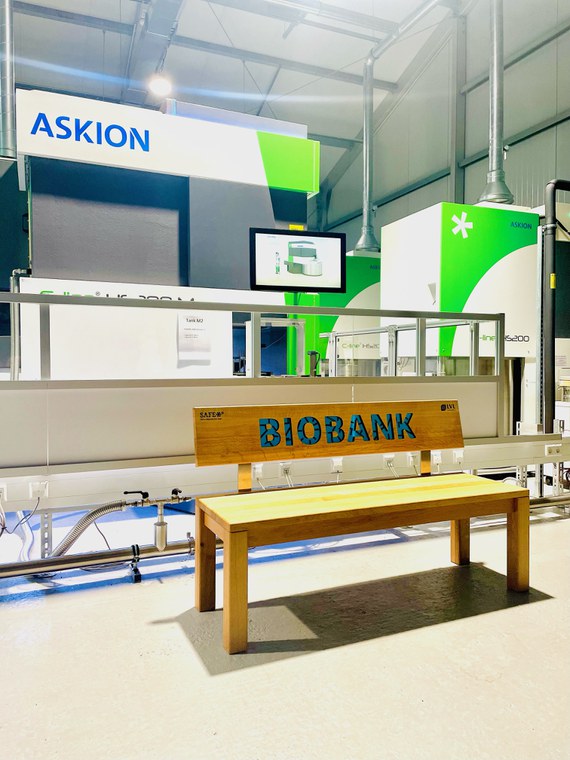
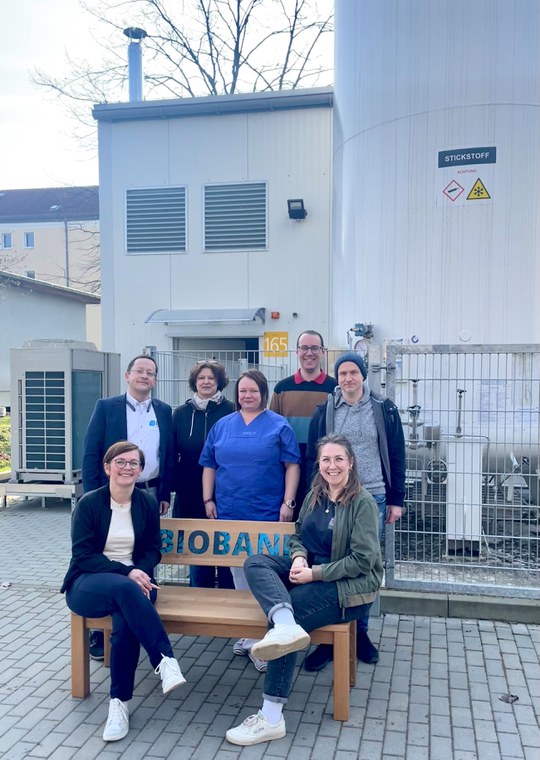
At the 11th National Biobank Symposium in May of last year, LVL Technologies GmbH & Co. KG caused a stir by raffling off a custom-made bench featuring the distinctive “Biobank” lettering, crafted from LVL Tubes. This bench, handcrafted by a carpenter, quickly found a lucky winner in our Quality and Project Manager, Dr. Susann Witt.
After an exciting wait, the bench was placed in our nitrogen storage facility on March 20, 2024, with a fitting ceremony. Mr. Tobias Häßner from LVL Technologies was present in person; he personally brought the bench to its new location and symbolically handed it over to BioBank Dresden. This gesture underscores not only the importance of collaboration between industry and research institutions, but also the innovative spirit and sense of community that characterize the biobank community.
----------------------------------------------------------------------------------------------------------------------------------
Press Release
Ten Years of the German Biobank Node (GBN) – A Decade of Progress in Biomedical Research
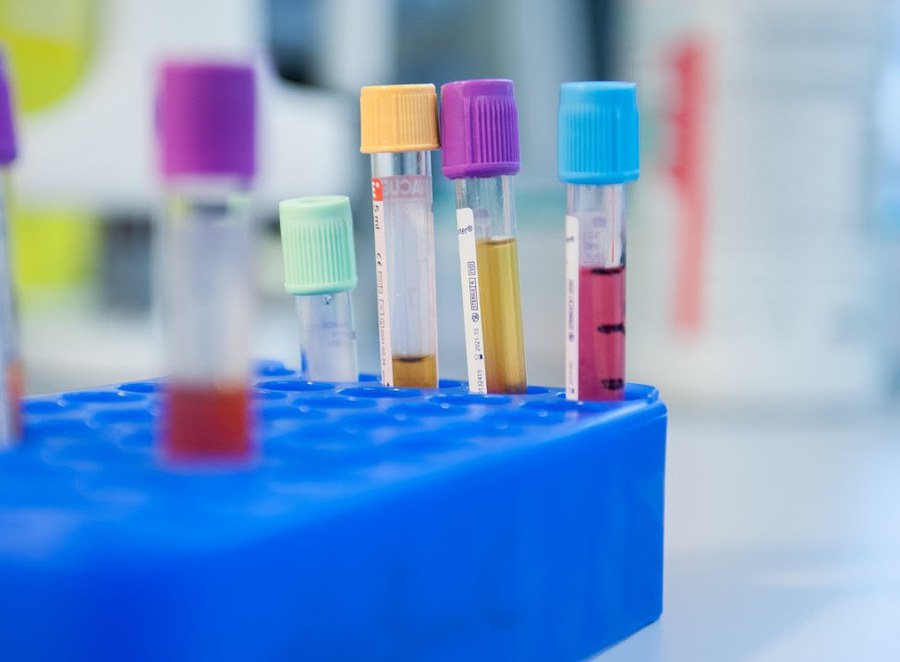
Berlin, January 17, 2024. Human biological samples and associated data stored in biobanks help detect diseases early and treat them successfully. To make these valuable resources more accessible to national and international research while ensuring the highest quality standards, the German Biobank Node (GBN) was founded as an umbrella organization for academic biobanks in Germany. This year, the GBN celebrates its tenth anniversary.
Dr. Heidi Altmann commented: “The future of quality-oriented biobanking lies in strong collaboration at the national and European levels. The GBN’s work helps accelerate research and develop innovative therapies.”
You can read the full press release here. A short article on this topic also appeared in the latest issue of *Ärztezeitung*.
----------------------------------------------------------------------------------------------------------------------------------

A starter kit is now available online via the GBA, which can be used as a tool for establishing biobanks. It was co-developed by our BBD spokesperson, Dr. Heidi Altmann.
----------------------------------------------------------------------------------------------------------------------------------

Staff members from various biobank sites within the German Biobank Alliance (GBA) have the opportunity to conduct audits of one another once a year in the form of so-called “Friendly Audits.” These audits support quality management by ensuring that the organization’s processes, requirements, and guidelines comply with the prescribed standards. On December 18, 2023, we successfully conducted and completed our first GBA Friendly Audit.
----------------------------------------------------------------------------------------------------------------------------------

Dr. Heidi Altmann was elected to the Steering Committee of the German Biobank Alliance for 2024–2025. More details here.
----------------------------------------------------------------------------------------------------------------------------------

Our quality manager, Dr. Susann Witt, has successfully completed her training and is now an official auditor for the German Biobank Node.
----------------------------------------------------------------------------------------------------------------------------------

On December 16, 2023, 3Sat aired an exciting documentary titled“Collecting, Storing, and Preserving,” which provided great insights into the work of our biobank.
The episode remains available for viewing in the media library.
----------------------------------------------------------------------------------------------------------------------------------

From August 21, 2023, through August 2024, you can visit the exhibition “From Shadow to Light” in Building 136 at the NCT Dresden.
As part of this exhibition, Julia Schmelzer is presenting, among other works, a film project created in collaboration with BioBank Dresden and the NCT/UCC that explores modern cancer medicine and research.
The camera guides viewers through parts of our DILB—the sober reality of testing equipment and laboratories—while simultaneously delving deep into the microcosm of microbiological and organic details.