Nov 04, 2026
Augsburg – BMT 2026: Health Data, AI and Interoperability in Focus

Three days of scientific presentations, poster sessions and discussions on the future of biomedical engineering: From 6 to 8 October 2026, the 60th Annual Conference of the German Society for Biomedical Engineering within the VDE took place in Augsburg.
Our Head of Research Area Interoperability, Dr. Eveline Prochaska, contributed two scientific presentations and helped shape the programme as a Session Chair and moderator of a poster session. The conference brought together perspectives from academia, medicine and industry – ranging from sensor technology and neurotechnologies to digital health, AI and regulatory issues.
At the Focus Session “AI-Driven Digital Health Solutions: from sensor to systems”, Dr. Prochaska presented the contribution “From Sensor Data to Clinical Decision Support: Translating Digital Biomarkers into Interoperable Health Data Infrastructures”. Using sensor-based gait analysis as an example, she explained how digital biomarkers can be described in a standardised way and integrated into health data infrastructures. The focus was on a conceptual approach to making measurement data understandable across system boundaries and usable for clinical decision support.
The second presentation, “Towards Gender-Sensitive Health Data Infrastructures: Interoperability Challenges and Design Implications for Biomedical Engineering”, was part of the Focus Session “Gender-Sensitive and Inclusive Biomedical Engineering”. It addressed the question of how sex- and gender-related information can be captured in health data and preserved when exchanged between systems. Inadequate representation of this information can impair the development and transferability of medical AI models. The contribution thus linked interoperability issues with the requirements for designing digital healthcare in a gender-sensitive way.
Together with Mario Cypko, she also took on a Session Chair role in the track “Digital Health, Multimodal Data Analysis and Methods of AI”. In addition, she moderated the Poster Pitches in the subject areas “Control, Assistive Technologies and Robotics”, “Digital Health, Multimodal Data Analysis and Methods of AI” and “Teaching, Training and Further Education”.
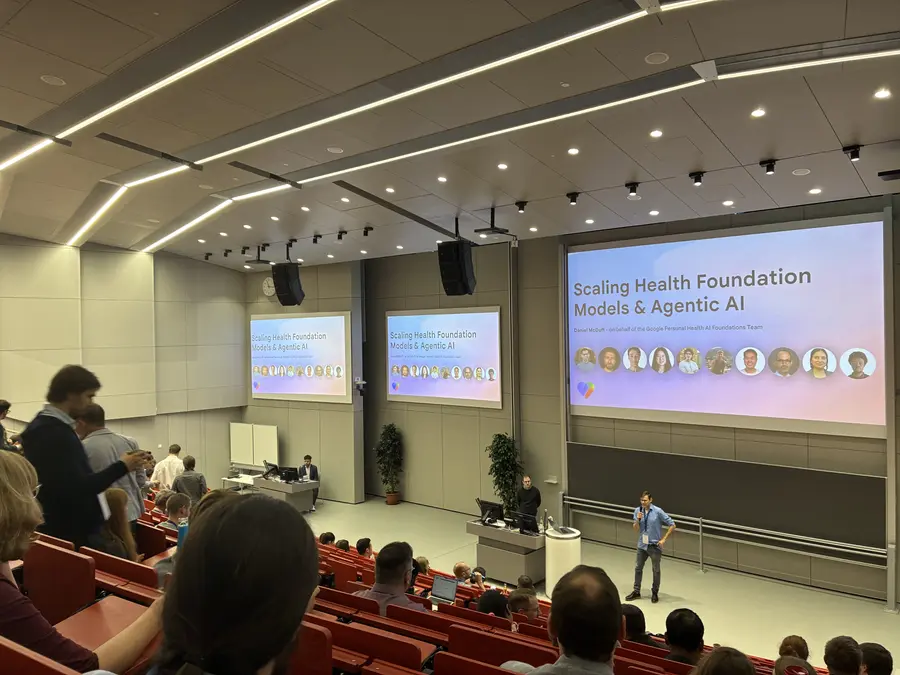
The conference keynotes provided further insights: Daniel McDuff (Google) presented developments in scalable AI models for health and sensor data in his talk “Scaling Health Foundation Models and Agentic AI”. The perspective of personal health agents he outlined showed how wearables and AI could enable more personalised support for health-related decisions in the future. Prof. Dr. Christian Johner addressed the challenges posed by regulatory requirements under the title “Medical Devices – Breaking Free from the Regulatory Stranglehold”. He emphasised the importance of taking these requirements into account at an early stage of research and development and discussed the use of AI in regulatory processes.
The contributions from Dresden thus addressed key questions raised at the conference: How can technological possibilities be transformed into clinically useful applications – and what requirements must health data meet to ensure that these applications are reliable and suitable for different patient groups?