
Apr 21, 2026
FAIR4Rare Completed: Laying the Groundwork for a Sustainable Registry Infrastructure for Rare Diseases
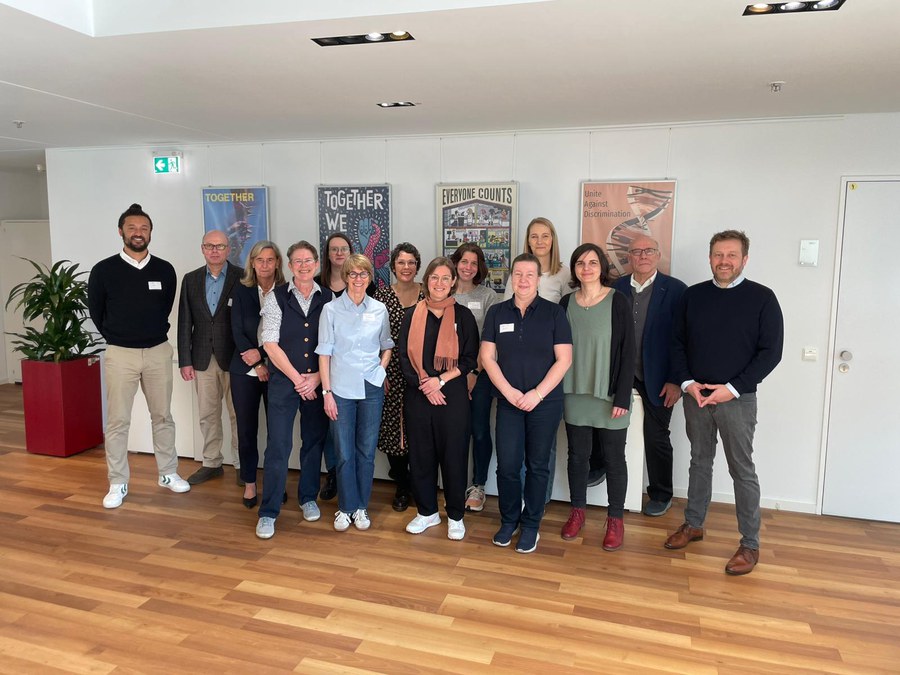
With the conclusion of the FAIR4Rare project on March 31, 2026, an important step toward establishing a sustainable registry infrastructure for rare diseases has been completed. On March 23, project participants gathered for the closing event to discuss results, experiences, and perspectives for the further development of the National Registry for Rare Diseases (NARSE). Rare diseases affect only a few people individually, but collectively affect several million patients in Germany. Reliable, comparable, and data-protection-compliant data are therefore of central importance for research, care, and health policy. This is where NARSE comes in: The National Registry is intended to help raise awareness of those affected, better capture the disease burden and care structures, and enable new research approaches.
Dresden Contributions to Registry Development and Evaluation
At Dresden University Medicine, the Center for Evidence-Based Healthcare (ZEGV) was involved alongside the Chair of Medical Informatics. While the ZEGV was responsible for the ongoing evaluation of NARSE, the Chair of Medical Informatics, together with the registry office, supported the further development of the registry from a technical and methodological perspective. The Chair’s work focused in particular on requirements management, data quality, and patient involvement. The team of the Rare Diseases Working Group (TUD link: https://tu-dresden.de/med/mf/imb/forschung/arbeitsgruppen-am-imb/seltene-erkrankungen; ZMI link: https://www.uniklinikum-dresden.de/de/das-klinikum/universitaetscentren/zentrum-fuer-medizinische-informatik/zentrum/professur-fuer-medizinische-informatik-1/seltene-erkrankungen) developed, among other things, a catalog for change and requirements management, a data quality concept, and a concept for patient participation. These contributions support the structured further development of NARSE and help to systematically integrate requirements from healthcare, research, and the patient perspective.
Findings are incorporated into NUM4Rare
The work on NARSE does not end with the conclusion of FAIR4Rare. The findings gained in the project are being incorporated into follow-up initiatives: In particular, in NUM4Rare (TUD link: https://tu-dresden.de/med/mf/imb/forschung/forschungsprojekte/num4rare; Link ZMI: https://www.uniklinikum-dresden.de/de/das-klinikum/universitaetscentren/zentrum-fuer-medizinische-informatik/zentrum/professur-fuer-medizinische-informatik-1/seltene-erkrankungen), which is establishing a national registry infrastructure for rare diseases within the Network University Medicine. NARSE is being further developed as a central component and integrated into NUM4Rare. This means that the results from FAIR4Rare can directly contribute to improving the visibility of people with rare diseases, strengthening data quality and interoperability, and laying the foundation for a long-term sustainable research and care infrastructure.
Further information on NARSE can be found at: https://www.narse.de/.