Jul 06, 2026
MIRACUM-DIFUTURE Symposium 2026


In bright sunshine and summer temperatures, experts in medical informatics, research, healthcare delivery, IT, and the health sector came together in Mannheim on June 30 and July 1 for the final joint MIRACUM-DIFUTURE Symposium to discuss current developments and future perspectives of data-driven medicine.
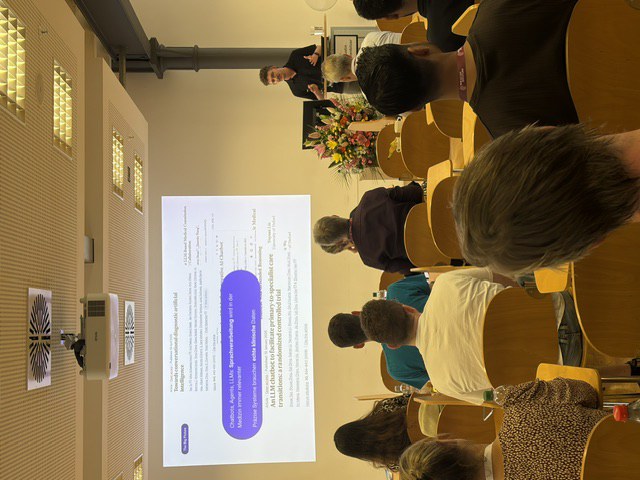
The first day of the event focused on international perspectives and forward-looking keynotes. Central topics included recent developments in the use of artificial intelligence in biomedical environments, generative AI and digital twins, as well as social robots in medicine and education. Additional themes were the potential of synthetic data and the European Health Data Space, strategies for transitioning from data silos to interconnected data spaces, and data-driven approaches in precision oncology. The presentations impressively highlighted the opportunities that modern data infrastructures and innovative technologies offer for research and healthcare.
Following the international perspectives of the first day, the second day focused on practical implementation. Regional innovation projects from Mannheim were presented, along with results from the MIRACUM-DIFUTURE Module 3 projects and approaches to federated analytics, real-world data, and interoperable AI services. Participants also discussed how components of the Medical Informatics Initiative can be further developed sustainably and used in future projects.
A key topic was also the national and international interoperability of the Medical Informatics Initiative. In the panel discussion, it became clear that common standards, close collaboration, and the long-term usability of data and infrastructures are essential prerequisites for advancing data-driven medicine. Dr. Ines Reinecke, former head of the Data Integration Center in Dresden and now head of the research area International Secondary Use at the Medical University of Lusatia – Carl Thiem, particularly emphasized the trusting and results-oriented collaboration that has developed across Germany through the Medical Informatics Initiative in recent years.
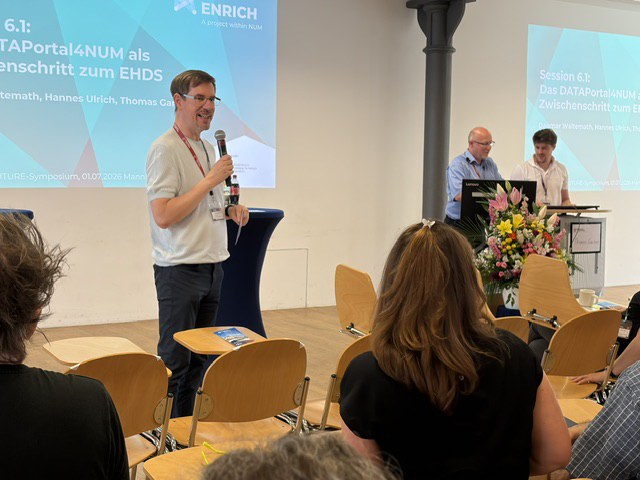
The symposium concluded with a session moderated by Prof. Martin Sedlmayr on the sustainable use of the components and infrastructures established within the Medical Informatics Initiative. It became clear that the structures built over recent years form an important foundation for future research and healthcare projects.
While the symposium marks the end of the joint MIRACUM and DIFUTURE event format, it does not mark the end of the collaboration. The past years have shown that sustainable progress in data-driven medicine can only be achieved together. The networks, infrastructures, and collaborations that have been established will continue to shape the development of medical informatics – and further advance the transfer of research findings into clinical care.