
10.09.2026
From Wastewater to High-purity Copper and Electricity
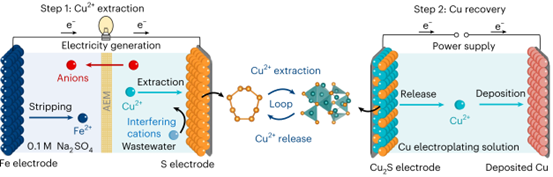
Figure 1. The developed S-mediated electrochemical Cu extraction and recovery strategy.
Copper is indispensable to modern society, underpinning electrical and electronic technologies, renewable energy infrastructure and emerging technologies. At the same time, extensive Cu mining, processing and manufacturing generate large quantities of Cu-containing wastewater. Conventional treatment technologies, including chemical precipitation and physical adsorption, primarily focus on removing Cu contaminants but often suffer from poor selectivity, secondary waste generation and difficulties in recovering high-value Cu products. Electrified technologies such as capacitive deionization can reduce secondary waste but generally require external electricity input and remain limited by competitive ion adsorption.
In this work, we introduce an electrochemical strategy that integrates wastewater purification, resource recovery and electricity generation (Figure 1). Elemental sulfur serves as a selective Cu2+ extraction electrode, leveraging the favourable thermodynamics of the S → Cu2S conversion to preferentially capture Cu2+ over common competing ions. The S electrode achieves a high Cu extraction capacity of 3.39 gCu gS−1, with Cu accounting for 93.9 wt% of the extracted cations in simulated electroplating wastewater. The captured Cu is subsequently released in a secondary electrochemical cell and deposited as high-purity metallic Cu, while regenerating the S electrode for reuse. By coupling the S electrode with a low-cost Fe electrode, Cu extraction becomes an electricity-generating process. Over ten extraction-recovery cycles, the system delivers a cumulative net electricity output of 14.3 Wh gS−1 while recovering 23.3 gCu gS−1, demonstrating a closed-loop process for simultaneous Cu recovery and energy generation. To demonstrate practical feasibility, a flow-type system was operated with real Cu-containing wastewater for approximately 250 h, achieving 1.00 kWh m−2 of net electricity output and 2.02 kgCu m−2 of Cu recovery. Life-cycle assessment and life-cycle costing further demonstrate favourable environmental and economic performance compared with conventional treatment methods. Together, these results highlight the potential of the S-mediated strategy for sustainable and scalable Cu recovery from wastewater. Rather than treating Cu-containing wastewater solely as an environmental burden, this strategy transforms it into a secondary resource for simultaneously producing clean water, high-value metallic Cu and electricity, offering a promising pathway towards sustainable and circular metal management.
Acknowledgements: We disclose financial support for the research of this work from the European Union’s Horizon Europe research and innovation programme (ERC Starting Grant, BattSkin, 101116722), from the German Research Foundation (Deutsche Forschungsgemeinschaft) via the ‘Responsible Electronics in the Climate Change Era-REC2’ Cluster of Excellence(EXC 3035, Project ID 533607596) and CRC 1415 (No. 417590517), from the CETPartnership and from the Clean Energy Transition Partnership under the 2024 joint call for research proposals, which was co-funded by the European Commission and co-financed from tax revenues on the basis of the budget adopted by the Saxon State Parliament (ZEBRA, 101069750).
Reference: Songshan Bi†, Francesca Demichelis†, Sijia Xu†, Xingyuan Chu†, Yuhang Zhuang, Jingwei Du, Leilei Zheng, Tian Sun, Wenqiang Yang, Feifei Wang, Dongqi Li, Jiaxu Zhang, Xinmei Song, Jie Xiao, Xinliang Feng & Minghao Yu*. Sulfur-mediated electrochemical copper recovery from wastewater with net electricity generation. Nat. Sustain. 2026, DOI: 10.1038/s41893-026-01912-w.