
Lourdes Vega
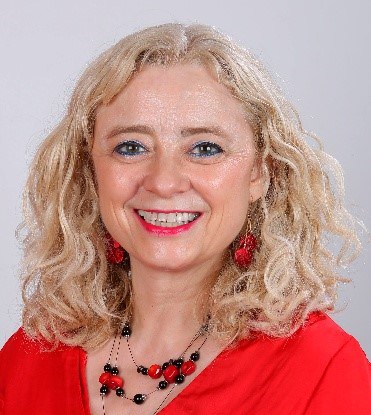
First and last name: Lourdes F. Vega
Title & Position: Professor and Director of the Research and Innovation Center on CO2 and Hydrogen (RICH Center). Theme Lead on Energy and Hydrogen at the RIC2D Center.
Affiliation: Khalifa University
Address: SAN Campus. Khalifa University. PO BOX 127788
Preferred contact number: +971554812020
Email: lourdes.vega@ku.ac.ae
Website(s): https://www.linkedin.com/in/lourdesvega/
Short Biography:
Prof. Lourdes F. Vega is Full Professor of Chemical Engineering, Director and Founder of the Research and Innovation Center on CO₂ and Hydrogen (RICH Center) and Theme Lead on Energy and Hydrogen at the Research and Innovation Center for Graphene and 2D Materials (RIC2D), at Khalifa University, Abu Dhabi, UAE. She has built her career across academia and industry in the USA, Spain, and the UAE. With 300+ publications and 7 patents under exploitation, she is internationally recognized for translating fundamental science into applied solutions in clean energy and sustainable technologies, including hydrogen, CO₂ capture and utilization, fuels, cooling, and 2D materials. She has received major awards, including the Mohammed Bin Rashid Medal for Scientific Distinguishment, and is a Fellow of AIChE and Academician of the Royal Academy of Science of Spain, and serves on several international scientific advisory and company boards.
Talk Title & Abstract: 2D Materials for a Sustainable Energy Future: Hydrogen and CO₂ Solutions
Rising greenhouse gas emissions from energy, transportation, and industrial sectors are driving the push for net-zero emissions by 2050, a central goal of the 2015 Paris Agreement. Achieving this requires decarbonizing key sectors while developing materials and technologies that support sustainable energy transitions.
This presentation will provide an overview of recent energy-related uses of 2D materials, with a focus on two high-potential areas: hydrogen technologies and carbon capture and utilization (CCUS). Examples from our recent work will include graphene-based proton-conductive membranes for fuel cells, graphene oxide combined with MOFs for CO₂ capture, and heteroatom-doped or nanoparticle-functionalized 2D materials for CO₂ conversion into fuels and chemicals. It will be shown how computational modeling combined with machine learning complement experiments to optimize 2D material performance, accelerating their deployment in clean energy technologies.
Z.F. Wu et al, Nat Commun 14, 7756 (2023).
J. Tong et al., Nature 630, 619–624 (2024).
S. Alareeqi et al., Nat Commun 16, 2639 (2025).