
10.04.2026
170 Jahre vor Artemis II: Hermann Krones frühe Aufnahmen des Mondes in den historischen Sammlungen der TU Dresden
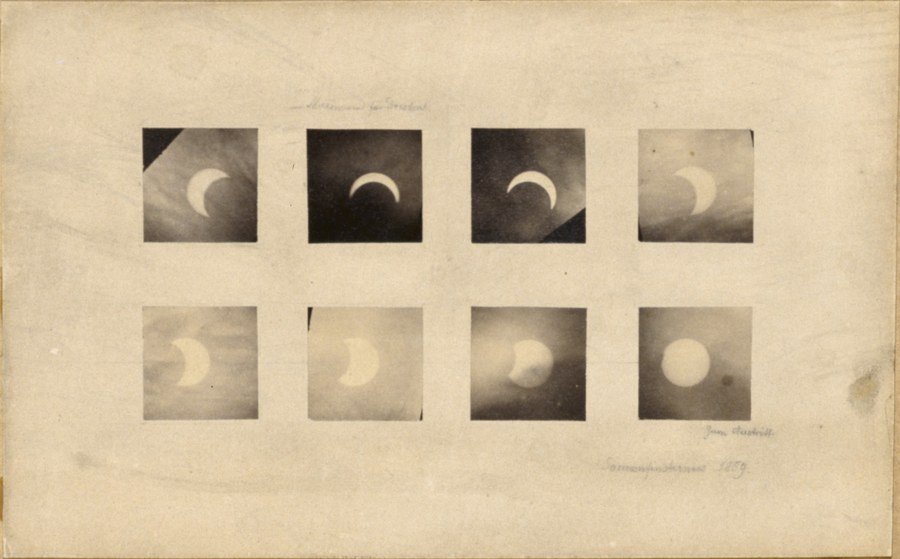
Hermann Krone, Historisches Lehrmuseum für Photographie, Tafel 66, Bild 1: "Sonnenfinsternis 1859" (TU Dresden, Hermann-Krone-Sammlung, KAD T 066/01)
Der 7. April 2026 war ein Meilenstein in der Geschichte der Raumfahrt. Zum ersten Mal beobachteten Menschen die erdabgewandte Seite des Mondes, die bis dahin nur von unbemannten Raumsonden dokumentiert worden war. Die vier Besatzungsmitglieder des Raumschiffs Orion umrundeten im Rahmen der ersten bemannten Mondmission der NASA seit den 1970er Jahren den Erdtrabanten. Bereits während ihrer Reise sendeten sie spektakuläre Fotografien zurück auf die Erde, die sich als Höhepunkte in die bald 200jährige Geschichte der Astrofotografie einreihen. Die TU Dresden verwahrt in ihren historischen Sammlungen einige der frühesten Beispiele dieser besonderen Disziplin.
Zu den frühesten Verfechtern der Idee, die Fotografie der Astronomie nutzbar zu machen, gehörte auch Hermann Krone (1827-1916). Bereits in den 1840er-Jahren dokumentierte er in seiner Heimatstadt Breslau erfolgreich eine Sternschnuppe auf einer - heute verlorenen - Daguerreotypie. Er gehört damit zu den ersten überhaupt, denen ein solches Kunststück gelang: Die Kombination aus galaktischer Dunkelheit und schwachen Lichtquellen stellt die Fotografie bis heute vor enorme Herausforderungen. Als Pionier der wissenschaftlichen Fotografie wirkte Krone ab etwa 1850 in Dresden, wo er an der späteren Technischen Universität auch Lehrveranstaltungen zur Astrofotografie leitete. Zu seinen größten Erfolgen gehören die Aufnahmen des Venusdurchgangs im Jahr 1874, den er als Teilnehmer einer Expedition von den Auckland-Inseln aus dokumentierte. Neben der Sonne und den mit ihr zusammenhängenden Phänomenen standen auch der Mond und die Planeten des Sonnensystems im Fokus seines Interesses.
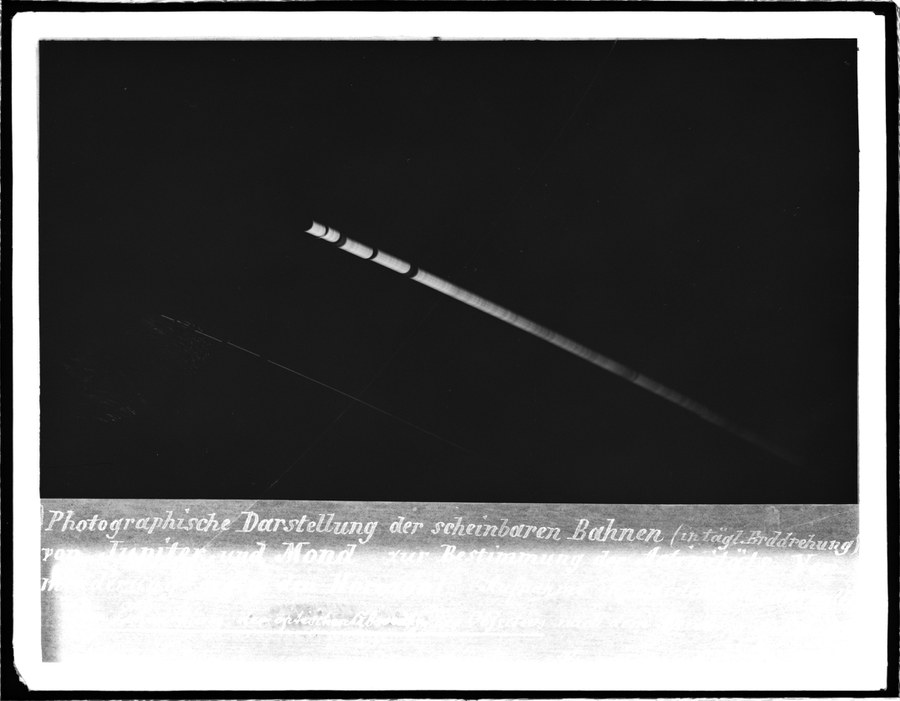
Hermann Krone, Mond- und Jupiterbahn, 1888 (TU Dresden, Hermann-Krone-Sammlung, KAD N 0167)
Die Hermann-Krone-Sammlung der TU Dresden verwahrt einen Großteil der noch erhaltenen Astrofotografien Krones. Zu den frühesten gehören seine Aufnahmen der partiellen Sonnenfinsternis, die 1859 von Dresden aus zu sehen war. In den 1880er-Jahren dokumentierte Krone die Laufbahnen von Mond und Planeten auf langzeitbelichteten Glasplatten. Handschriftliche Erläuterungen auf den Negativen belegen die astronomische Expertise des Fotografen, der zum Thema auch publizierte, sowie den wissenschaftlichen Anspruch der Aufnahmen:
"Photographische Darstellung der scheinbaren Bahnen (in täglicher Erddrehg.) von Jupiter und Mond zur Bestimmung der Aktinitäts-Verminderung gegen den Horizont. Aufnahmen in notierten Zeit-Intervallen. Die Einwirkung der optischen Abweichung des Objektivs nach dem Rande zu sichtbar. [...]"
(Hermann Krone, Beschriftung des Glasnegativs KAD N 0167, TU Dresden, Hermann-Krone-Sammlung)
Auch die Oberfläche des Mondes interessierte Krone: Eine Tafel aus dem einflussreichem "Photographischen Mond-Atlas" seines Freundes Ladislaus Weinek fand Eingang in das "Historische Lehrmuseum für Photographie", eine einzigartige Serie von Lehrtafeln, die ebenfalls an der TU Dresden verwahrt wird. Eine seiner eigenen Aufnahmen der Mondoberfläche hat sich in den Sammlungen des Deutschen Museum München erhalten.
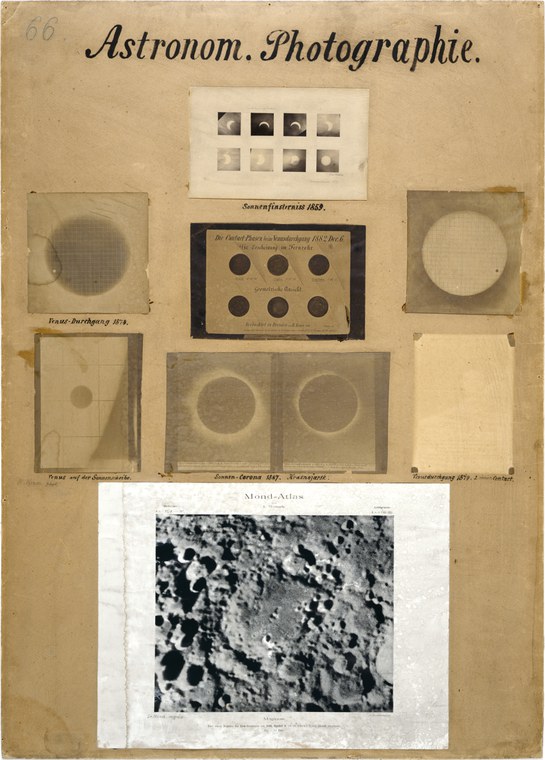
Hermann Krone, Historisches Lehrmuseum für Photographie, Tafel 66: "Astronom. Photographie", 1859-1888 (TU Dresden, Hermann-Krone-Sammlung, KAD T 066)