
Leaftronics
Curious about the future of sustainable technology? For students eager to explore cutting-edge research with real-world impact, this field offers a rare chance to be part of something both innovative and meaningful. 🌱
Leaftronics is an interdisciplinary field pioneered by the ODS group at TU Dresden, where decellularized leaves are transformed into sustainable, decomposable electronics. The natural quasi-fractal vein networks within leaves become lignocellulose scaffolds that, when functionalized with conductive inks or bio-derived polymers, result in transparent flexible electrodes or decomposable substrates respectively.
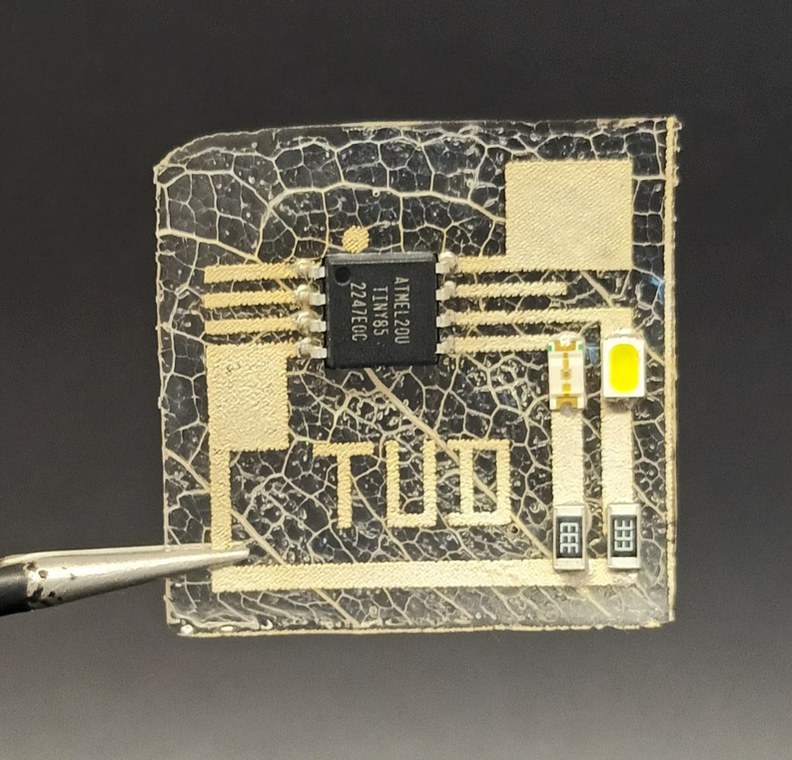
This biomimetic breakthrough is being used to directly tackle the 60+ million tons of annual global e-waste and opens thrilling research frontiers: biodegradable PCBs, antimicrobial leaf membranes for water purification, lignocellulose-based CO2 capture systems, and transient batteries powered by natural electrolytes. Each direction invites rigorous experimentation in materials chemistry, nano/microfabrication, and sustainability science.
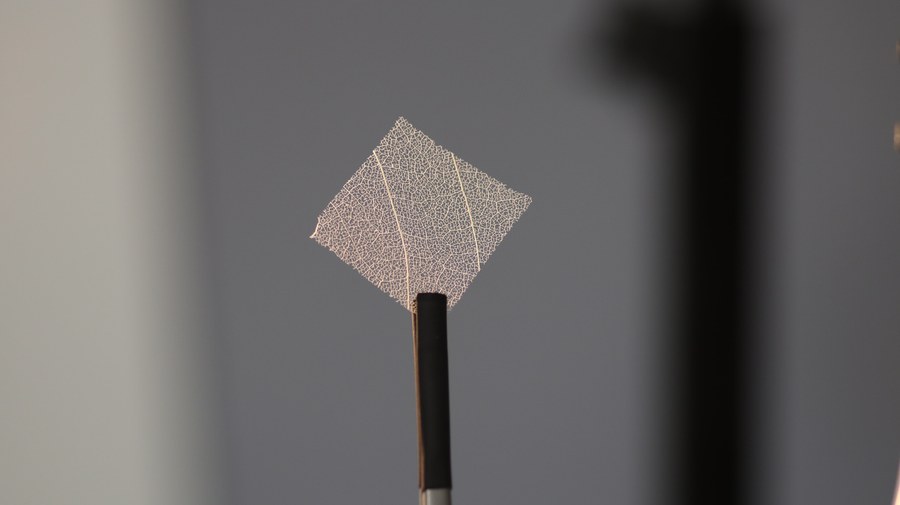
The field's impact is underscored by the prestigious Joachim Herz Prize 2025 (one of the most highly endowed science awards in Germany) awarded to the ODS group for pioneering this field, followed by the Richard Hartmann Prize by the Saxon Industry Association 1828 e.V. in 2026. For students with a solid science foundation, Leaftronics offers the rare chance to blend biology, physics, and engineering to build tomorrow’s truly green electronics.
 © Kai Schmidt/IAP
Dr. Hans Kleemann
ODS group (Organic Devices and Structures)
Send encrypted email via the SecureMail portal (for TUD external users only).