
Team members
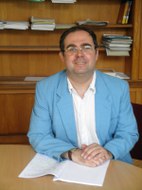
Chair
 © Prof. Dr. Aparajita Singha
Prof. Dr. Aparajita Singha
Send encrypted email via the SecureMail portal (for TUD external users only).
Visiting address:
Recknagelbau, REC C208 Haeckelstraße 3
01069 Dresden
zugang über Nordseite
Prof. Dr. Aparajita Singha has extensive research experience in magnetism of low-coordinated atoms and molecules using spatially resolving scanning probe methods (STM/AFM) as well as using element specific x-ray magnetic circular dichroism (XMCD). Most of her PhD (completed in 2017, from EPF Lausanne) and Postdoctoral phase (2017—2018 in EPF Lausanne & 2018—2019 in QNS, Seoul, Republic of Korea) was devoted to understand complex adatom-substrate and adatom-adatom interactions in lanthanide electron spin systems, which were instrumental in the discovery of surface-supported single atom magnets. From 2020 -- 2022, she was employed as a senior scientist at the Nanoscale Science department of the Max Planck Institute for Solid State Research (MPI-FKF), Stuttgart. During this time her group developed a new home-built NV magnetometry setup for performing quantum senisng experiments under ultra-high vacuum conditions and at liquid helium temperature. Her research ideas involving studies of quantum sensing and coherent spin dynamics in low-coordinated surface-supported systems, were recognized through a young researcher grant at IQST in 2021, the Nexus award from the Carl Zeiss Foundation in 2022 (later declined in favour of ENP), and an Emmy Noether grant from the German Research Foundation (DFG) in 2022. Her Emmy Noether group has been established since 2022 at MPI-FKF, Stuttgart. Since 2025, she has been appointed as the Chair of Nanoscale Quantum Materials in the Institute for Solid State and Materials Physics. With this appointment, she also has become a PI of the cluster of excellence ct.qmat.
Administrative Assistant
Visiting address:
Recknagelbau, REC C207 Haeckelstraße 3
01069 Dresden
Zugang über Nordseite
Technical Assistant
Visiting address:
Recknagelbau, REC C201 Haeckelstraße 3
01069 Dresden
Senior Scientists
Postdoctoral Researchers
Dr. Ricardo Javier Peña Román
Send encrypted email via the SecureMail portal (for TUD external users only).
Ricardo Javier Peña Román is a postdoctoral researcher working on the development of advanced quantum sensing techniques based on scanning NV magnetometry. His current research focuses on extending scanning NV magnetometry to ultra-high-vacuum and low-temperature (UHV-LT) conditions through the development of a custom-built scanning microscope for NV-based quantum sensing. His work includes the design and optimization of the experimental platform and measurement protocols, as well as the investigation of magnetic domain textures in synthetic antiferromagnets.
Ricardo received his B.Sc. in Physics from the University of Los Andes (Venezuela) in 2013 and completed his M.Sc. (2018) and Ph.D. (2022) in Physics at the University of Campinas (UNICAMP), Brazil. His doctoral research, complemented by a research stay at Université Paris-Saclay, France, focused on probing the local electronic and optical properties of atomically thin materials using scanning tunnelling luminescence microscopy and spectroscopy. This work led to the development of patented optical instrumentation for scanning tunnelling luminescence experiments, which was licensed and commercialized by RHK Technology as part of the PanScan Lumin-SLT platform.
Before joining TU Dresden in 2025, he was a postdoctoral researcher at the Max Planck Institute for Solid State Research in Stuttgart, Germany, where he specialized in scanning NV magnetometry. Throughout his academic career, he was supported by competitive scholarships, including the Gran Mariscal de Ayacucho Scholarship (Venezuela), a fellowship from the Brazilian National Council for Scientific and Technological Development (CNPq) for his master's studies, and a doctoral fellowship from the São Paulo Research Foundation (FAPESP).
Selected links
- PanScan Lumin-SLT: https://rhk-tech.com/products/panscan-lumin/
- Google Scholar: https://scholar.google.com/citations?user=lYGXLD4AAAAJ
- ORCID: https://orcid.org/0000-0003-4673-1127
Dr. Shirsopratim Chattopadhyay
Send encrypted email via the SecureMail portal (for TUD external users only).
Shirso has joined NQM as a postdoctoral researcher from Sept 2025. He completed his PhD in materials science with minor in electrical engineering and computer science from Oregon State university in 2023. At NQM, he will be involved in developing advanced NV-measurement and data analysis methods.
Mr Dr. rer. nat. Kwan Ho Au-Yeung
Send encrypted email via the SecureMail portal (for TUD external users only).
Kwan Ho Au-Yeung joined NQM as a postdoctoral researcher in August 2026. He received his Ph.D. in Materials Science (advisor: Dr. Francesca Moresco) at TU Dresden, where his research focused on the mechanics of single molecules using a low-temperature scanning tunneling microscope (STM). He subsequently joined the group of Prof. Dr. Philip Willke at the Karlsruhe Institute of Technology (KIT) as a postdoctoral researcher, focusing on the control of individual spins on surfaces using electron spin resonance combined with scanning tunneling microscopy (ESR-STM). His research interests lie at the intersection of scanning probe microscopy, quantum sensing, and atomic-scale quantum control.
PhD Students
Sandip has completed his BS-MS degree from the Indian Institute of Science Education and Research (IISER), Kolkata, India, in July, 2022. After a short stay as a project student at IISER Kolkata, he has joined the Singha group since Aug 2023 as a PhD student. Since then he has been working on a home-built UHV scanning NV magnetometry setup for exploring magnetic domain textures in complex synthetic antiferromagnets. His projects also involves understanding optical and spin properties of shallow NV sensors in scanning NV probes.
Olga has completed her master's degree in Physics with distinction from St. Petersburg State University in 2022. In her masters thesis project she focused on superconductivity in nanostructured gallium-containing alloys. Her current PhD project involves capturing magnetic signals from isolated as well as low-coordinated molecular spins using near-surface NV-sensors.
Yue has completed his master's degree in Medical Photonics from University of Jena in 2025. Soon after he has joined NQM as a PhD student. He has gained exposure to experimental research with NV-magnetometry, in particular for performing relaxometry measurements of paramagnetic ions. His current PhD project at NQM involves setting up a new room temperature NV-magnetometer and to investigate NV-probes with various surface-functionalization.
Mr Frederik Leon Carstens
Send encrypted email via the SecureMail portal (for TUD external users only).
Leon joined NQM as a doctoral candidate in April 2026, shortly after graduating with a M.Sc. in Physics at Heidelberg University. There he was working on bulk magnetic properties and magnetoelastic coupling, primarily of rare-earth containing quantum materials. At TU Dresden, Leon will be involved in a collaboration with Leibniz IFW and MPI-CPfS on topological superconductors. Furthermore, he is working on optimizing the workflow of NV magnetometry.
Bachelor and Masters Students
Visiting Researchers
Past group members
Debjoty is a doctoral student at the Tata Institute of Fundamental Research (TIFR) in Mumbai and focuses on non-collinear antiferromagnetic materials, particularly Mn₃Sn. In April and September 2026, he was a visiting researcher in Prof. Aparajita Singha’s group at TU Dresden as part of a joint research visit. The main objective of the visit was to use NV-center magnetometry to investigate the local magnetic stray field of Mn₃Sn devices during thermally assisted electrical switching of the topological Hall effects and to explore the corresponding local magnetic response of the antiferromagnetic spin structure. Essentially, the visit aimed to bridge the gap between macroscopic transport measurements and local quantum measurement techniques and to link electrical signatures to their underlying magnetic landscape.