
Mar 19, 2026
“The tropics are complex”
Dagmar Möbius
The English-language Master’s degree program in Tropical Forestry, initiated and led by Jürgen Pretzsch, now a Senior Professor, and Prof. Holm Uibrig, celebrated its 30th anniversary in 2025. Tropical forestry studies have been offered in Tharandt for a much longer time.
Tharandt is the second oldest forestry faculty in the world. Accordingly, many anniversaries have already been celebrated. This article focuses on the 30th anniversary of the English-language Master's degree program in Tropical Forestry, which was celebrated in fall 2025.
Complex science
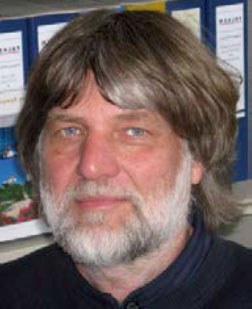
Portrait of Prof. Jürgen Pretzsch
“I am a forest ranger and an economist,” says Jürgen Pretzsch. He came to Tharandt from the western part of Germany in 1993 and became a full professor of tropical forestry. With his extensive experience in field research, particularly in Africa and South America, and international research collaboration with numerous universities in Latin America, Africa, and Asia, he continued the GDR tradition of the Tharandt location, which also included a focus on Eastern Europe. The latter was supervised by Prof. Albrecht Bemmann until 2014. “The tropics are very complex. I come from a background in development cooperation and have always worked primarily at the local level,” explains Prof. Pretzsch. “Those who work at the macro level don't have to go into the villages.” Both are important, he says.
Unique selling point of the degree program
Professor Pretzsch's teaching and research focused on the socioeconomics and politics of tropical forestry. Together with a team of East German experts with experience in the tropics, he established and headed the English-language Master's degree program in Tropical Forestry in 1994. “I poured my heart and soul into it,” according to Professor Lukas Gießen. However, it was not easy. “Many people didn't want the degree program that way,” Jürgen Pretzsch recalls. He focused on the following key areas:
- Socioeconomic and cultural aspects of forest development in the tropics
- Transformation, process and action orientation
- Close link between teaching, practice, and research
- Small groups with an intercultural focus; communication and mutual learning
- Research-oriented Master's thesis has high priority
- Empirical research in a subtropical or tropical country
- Ensuring knowledge transfer to the tropical reality.
Students were familiarized with all dimensions of scientific concepts, with analytical science and technology (control of the environment), humanistic science (understanding the world), and critical science (emancipation & empowerment). Professors from almost all TUD departments taught courses. Female lecturers were initially rare; later, this became a focus of the program. “Women often gain access to local transformation processes toward sustainable forest management more quickly,” said Prof. Pretzsch. Collaborations with numerous partner universities worldwide have existed and continue to exist.
Continuous development and awards
In 2006, the EU/Erasmus Mundus-funded SUTROFOR program was launched with the participation of four other European faculties. It covers topics such as integrated land use, management, expansion, and technology transfer, as well as cultural aspects of tropical forestry. In 2008, the DAAD/German Science and Humanities Council recognized the English-language Master's degree program in Tropical Forestry as one of the ten best international Master's degree programs. More than 20 tutors were funded with the support of the DAAD. Around 40 doctoral students were trained.
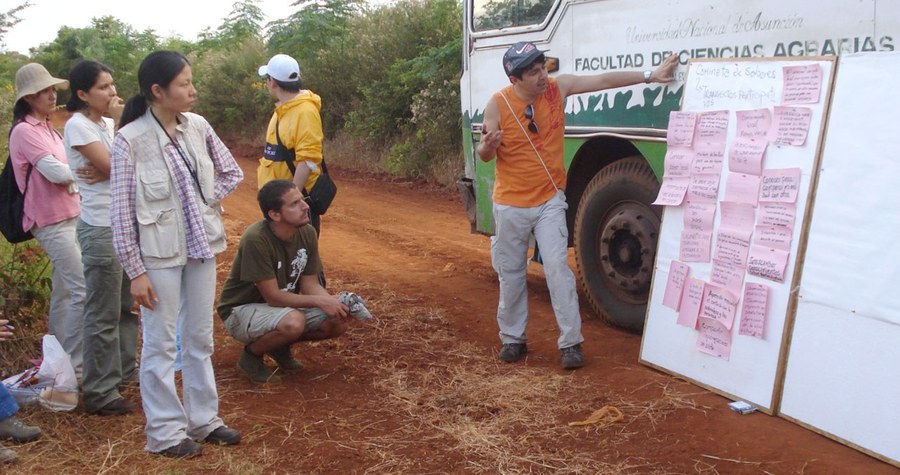
Network meeting on climate change in Paraguay
Anecdotes and encounters
Professor Pretzsch could share countless stories from his experiences with students on field trips or in lectures. His ability to improvise was always part of it. For example, the results of a network meeting on climate change in Paraguay were quickly pinned to the vehicle due to a bus breakdown.
Cultural differences and other knowledge systems occasionally caused conflicts. Prof. Jürgen Pretzsch said: “We can't bring people here and tell them to learn about sustainability. That won't work. We can't simply transfer our sustainability system to tropical villages.”
A different era
Model villages, large-scale projects with Vietnam or Ethiopia, a network in Sudan, university networks. Many local partnerships have been lost. Not only due to war, as in Sudan. “It's a different era now,” said Jürgen Pretzsch. He is also referring to the prospects for tropical forestry. For him, it is clear that training in tropical forestry remains important: “We need it if we want to get global climate policy under control, for example.”
For him, a few things are essential for the continuation of the Master’s degree program in Tropical Forestry. The development-oriented subjects must be relevant to tropical countries; it is not enough to teach only Western knowledge; students should critically examine theory and become “change agents.” To this end, they must be taught specific skills, and teaching must be transdisciplinary and interdisciplinary. Scholarships are also essential so that students from rural areas can begin their studies in the first place.
Updated edition of reference book
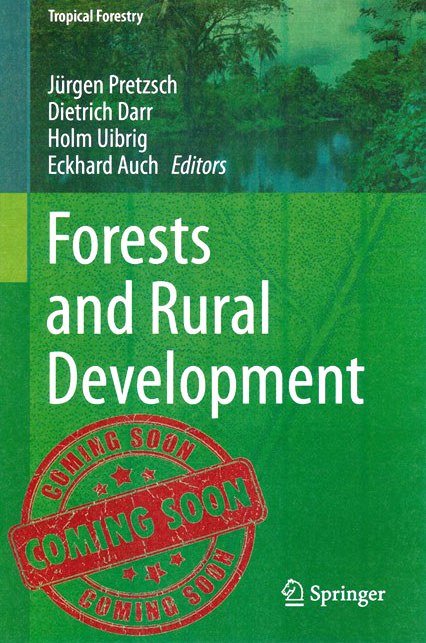
The Senior Professor is currently working with colleagues on the second edition of the reference book „Forests and Rural Development“. Almost half of the content needs to be updated since 2014 “because so much has changed.” He hopes that the established degree program will continue for a long time to come.
Contact:
TU Dresden
Faculty of Environmental Sciences
Department of Forest Sciences
Institute of International Forestry and Forest Products