
Oct 28, 2026
“My professional success comes from the expertise garnered at TU Dresden”
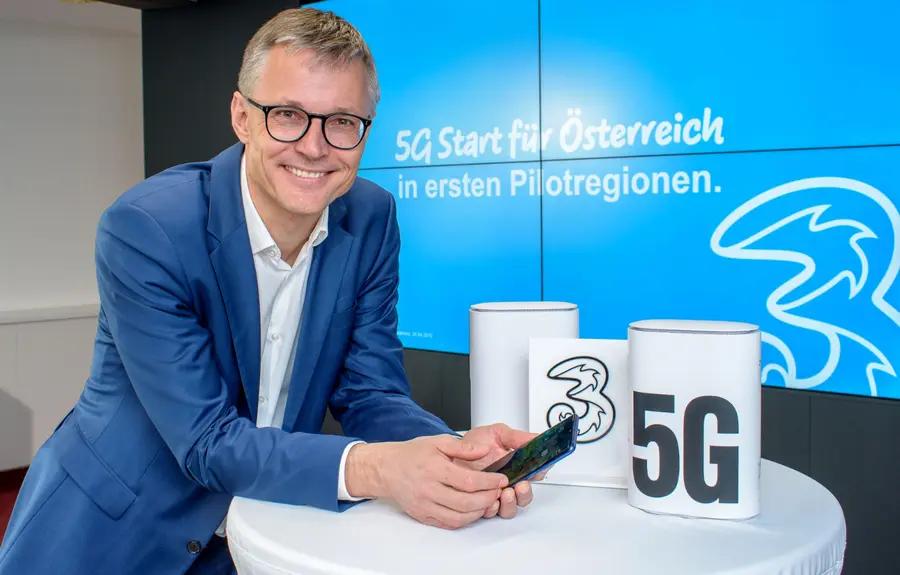
Jan Trionow can envision future collaboration with startups that have emerged from TUD.
(interview from 2026)
Thomas Scheufler
“I am very grateful for the excellent education I received during my time as a student in Dresden. And in the future, I would like to work more closely with my alma mater, e.g. as a startup mentor for TUD spin-offs.”
Jan Trionow developed an early interest in electronics as a teenager and, after completing his vocational education and A-Levels, he studied Electrical and Information Systems Engineering at TU Dresden. Today, the freelance Management Consultant looks back on a determined and successful career in the telecommunications industry and, as a consultant and business angel, is now passing on his wealth of experience to tech startups.
|
Name: |
Jan Trionow |
|
Degree program |
Electrical and Information Systems Engineering |
|
Faculty |
Electrical Engineering |
|
At the university: |
October 1991 – April 1997 |
|
Current work: |
Freelance Management Consultant / Senior Advisor |
Where are you currently employed and what are your responsibilities?
As a freelance management consultant and senior advisor, I primarily advise service providers, equipment manufacturers, and investors in the telecommunications industry. My areas of expertise cover a wide range of topics, from technology, markets, regulation, mergers, acquisitions, as well as matters of general management such as organizational development and transformation. For this, I am able to draw on my 30 years of professional experience, which includes, in particular, my 20-year tenure at the Austrian network operator Hutchinson Drei Austria. I had the opportunity to help shape various phases of the company’s journey, working as head of the technical division while the networks were being set up, to my 11-year role as CEO, during which I helped drive industry consolidation, among other initiatives. In addition, I work as a business angel and startup mentor, particularly in the field of impact investment.
What do you still benefit from today, and what would you have liked more of?
A key foundation of my professional success was the solid technical expertise I acquired during my studies at TU Dresden. I developed the ability to tackle intellectually challenging tasks methodically, and with focus and perseverance, which also helped me massively. Last but not least, the collaboration between the Chair of Mobile Communication Systems and the Mannesmann Foundation (now Vodafone) also immediately enabled me to kick my career up a notch. In the business world, however, it’s not just about competence, it’s also about effectively interacting with people within organizations. Cultivating the necessary skills for this didn’t play a major role during my time as a student.
What made you decide to study at TU Dresden?
I grew up in the GDR and completed my vocational education and A-Levels there. Although the company where I did my vocational education encouraged me to study at another partner university, I decided to go to TU Dresden. It seemed to be the best university for electrical engineering in the GDR. Even though I began my studies in a reunified Germany after finishing my conscription, I stuck with my decision and never regretted it.
What made you choose this degree program?
I’d been interested in electronics since I was a teenager and chose to complete vocational education and A-Levels so that I could become a communications electronics technician. Therefore, studying electrical and information systems engineering was a natural corollary of my educational path. The Endowed Chair for Mobile Communication Systems, which was newly established during my time as a student in Dresden, opened up exciting opportunities for me, particularly in a field that was beginning to boom in society.
What researchers or lecturers influenced you the most during your studies?
As I mentioned, I benefited greatly from the solid foundational training in the various areas of electrical engineering and from the experienced faculty at TU Dresden. Towards the end of my studies, however, the then-young Prof. Fettweis was particularly important to me; coming from the industry, he brought a certain dynamism and enthusiasm that helped me get off to a running start in my professional career.
What advice would you give to our current first-years?
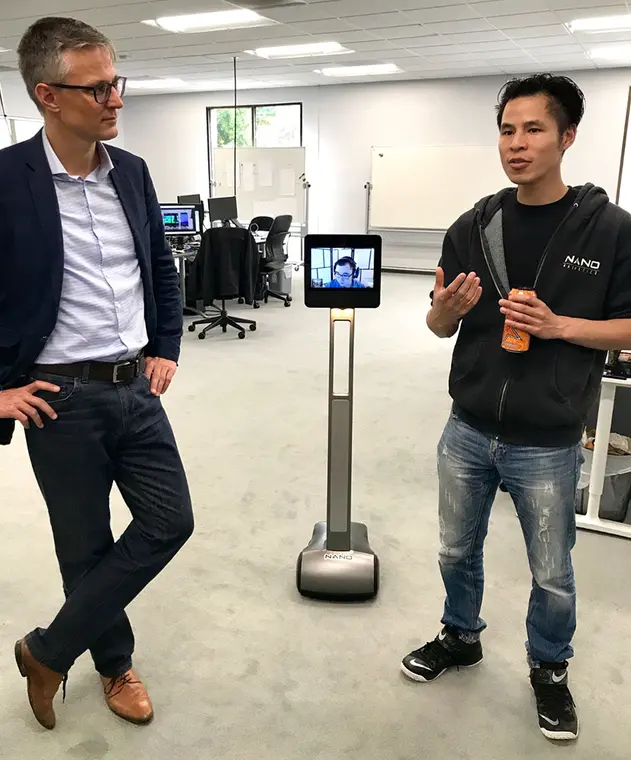
2018, 3Digitalimpuls Tour of Silicon Valley, Visit to Nanoport
Every person is different, and there are various paths that lead to a successful academic career. I would recommend trying things out whenever possible and playing close attention to which topics inspire you the most. You should then strive to excel in those areas. This is the first step towards starting a successful career. Especially in the second half of your studies, it’s also a good idea to start building networks that can be helpful for when you enter the world of work.
What do you remember most fondly about your time as a student?
I have fond memories of life amongst the other students. In the seminars, we tackled the challenges of our studies together; we lived together in the dorms; and in Dresden, we took advantage of the many opportunities to go out and enjoy the cultural highlights.
What was your favorite place on campus?
My favorite lecture hall was the one in the Barkhausen Building, my home base, so to speak. I also really enjoyed the beer hall in the “Neue Mensa” canteen, and that’s where we had our Skat night every Wednesday.
What tips do you have for hitting the ground running in your industry?
The easiest way is still, of course, to secure a future position through an internship, a student assistant role, or your thesis. This gives both sides the opportunity to see if it’s a good fit. In general, there’s always a demand for strong graduates who are enthusiastic about the work and the company.
What connects you to TU Dresden today?
For many years, it was primarily the fond memories of my time there as a student and gratitude for the excellent education I received. This was what laid the foundation for my successful career. Lately, I’ve also been exploring whether there might be opportunities for collaboration, for example, with startup that have emerged from TU Dresden. I’d love to be in Dresden more often again.