
19.03.2026
Glückliche Hand bei der Berufswahl gehabt
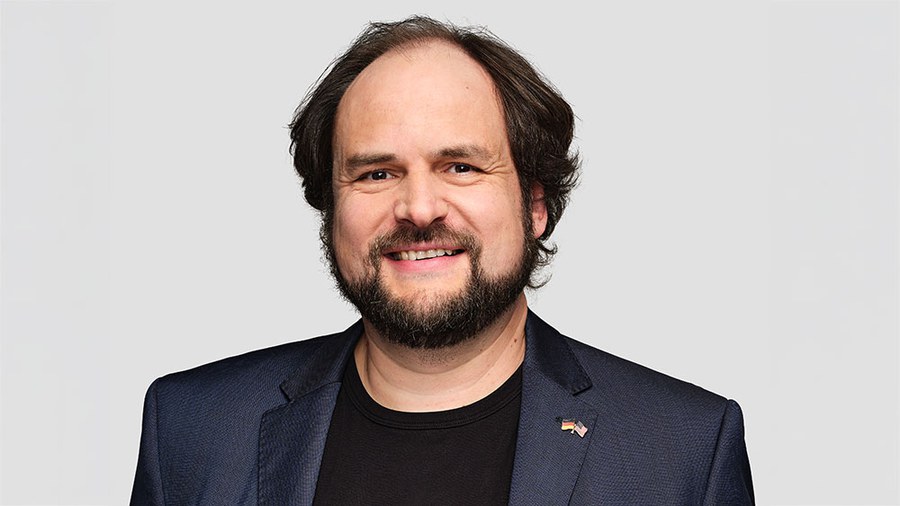
(porträtiert im Jahr 2026)
Dagmar Möbius
Wie trifft Künstliche Intelligenz Entscheidungen? Dies ist eine der Fragen, die Dr. Hendrik Strobelt beschäftigen. Er lebt und arbeitet er in Amerika und forscht aktuell als Senior Research Scientist bei IBM in Cambrigde zu Künstlicher Intelligenz. Ein Ziel ist beispielsweise, Aufgaben für große KI-Modelle in kleinere Programme herunterzubrechen, die man auf einem Laptop ausführen kann.
„Mit 18 hatte ich eine sehr lokale Weltsicht“, sagt Hendrik Strobelt. Geboren und aufgewachsen in Zwickau entschied sich der computeraffine junge Mann 1997 für ein Informatik-Studium an der TU Dresden. Schon sein Vater hatte hier Bauingenieurwesen studiert, die Mutter das gleiche Studienfach in Leipzig. „Mit keiner Wimper habe ich damals daran gedacht, ins Ausland zu gehen.“ Über die exzellente Reputation der TUD und die internationale Wertschätzung wusste er damals noch nichts.
Das Hobby in Profession konvertiert
„Mit einem in der DDR erhältlichen ABC-Elektronikbaukasten konnte man sogar ein Langwellenradio bauen“, erinnert sich Hendrik Strobelt. Manchmal durfte der damals 13-Jährige abends in der Firma seiner Eltern an den Computer. Sie arbeiteten unter anderem mit Statik-Programmen. „Der PC war ein Heiligtum“, lacht er. „Anfangs wussten meine Eltern mehr, aber das hat sich schnell geändert.“ Auch sein Informatiklehrer in der Schule hat einen großen Anteil am wachsenden Interesse für das Fach. „Einmal waren irgendwo Fernseher vom Laster gefallen, aus den Überbleibseln haben wir dann im Unterricht kleine Computer gebaut.“ Die 1990-er Jahre empfand er als Teenager sehr lebhaft und prägend, „weil man nicht mehr bestraft wurde, wenn man seine Meinung frei äußerte“. Im Käthe-Kollwitz-Gymnasium besuchte er in der Wendezeit eine sogenannte Versuchsklasse. „Da gab es einen Schulclub, wo wir in der 9. Klasse ein Bier kaufen konnten“, fällt ihm eine Anekdote ein. Aber auch: „Die Schule hatte noch Kohle-Heizung, da mussten zwei Leute Kohlen schaufeln.“
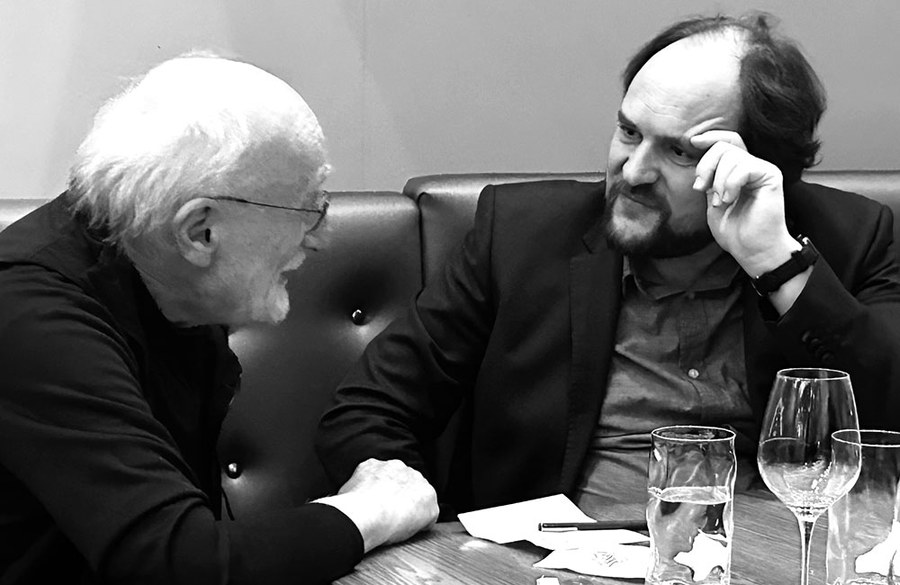
Dr. Hendrik Strobelt (r.) im Gespräch mit dem Bioinformatiker Chris Sander
Vereitelte Datenpanne und prägende Lehrkräfte
2007 beendete Hendrik Strobelt sein Studium, in dem er auch im Studentenrat aktiv war, an der TUD erfolgreich. „In der akademischen Selbstverwaltung lernte ich sehr viel über Dynamik in Meetings. Das hilft mir immer noch“, sagt er. Den vermittelten Lehrstoff könne er heute kaum noch nutzen, da sich die Dinge in der Computerwissenschaft rasant ändern. Was jedoch blieb, sind grundlegende wichtige Prinzipien: „Keine Angst vor Neuem, Abstraktion als Kernkompetenz für Informatik und eine ganzheitliche Sicht auf Probleme.“ Drei Lehrkräfte haben ihn nachhaltig geprägt. Professor Michael Schröder betreute seine Diplomarbeit – bei ihm schätzte er die Erfahrungen aus Wirtschaft und Universität. Von Prof. Andreas Pfitzmann (ƚ) lernte er viel über Hochschulpolitik und Datensicherheit, konnte zudem gute Gespräche mit ihm führen. Zum Stichwort Datensicherheit fällt Hendrik Strobelt eine lustige Episode ein: „Durch einen Fehler im Rechenzentrum war eine Datei öffentlich gemacht worden, die nicht öffentlich sein sollte.“ Für Laien bedeutungslos, für den Informatiker „eine Challenge“, denn man konnte, wenn man wusste wie, aus der Datei mit Geheimnummern die Prüfungsergebnisse herausbekommen. Der informierte Datenschutzbeauftragte soll über die Erkenntnis nicht amüsiert gewesen sein. Professor Oliver Deussen folgte Hendrik Strobelt nach Konstanz, um dort bei ihm 2012 über die Visualisierung von großen Dokumentensammlungen zu promovieren.
New York – Boston – Cambridge
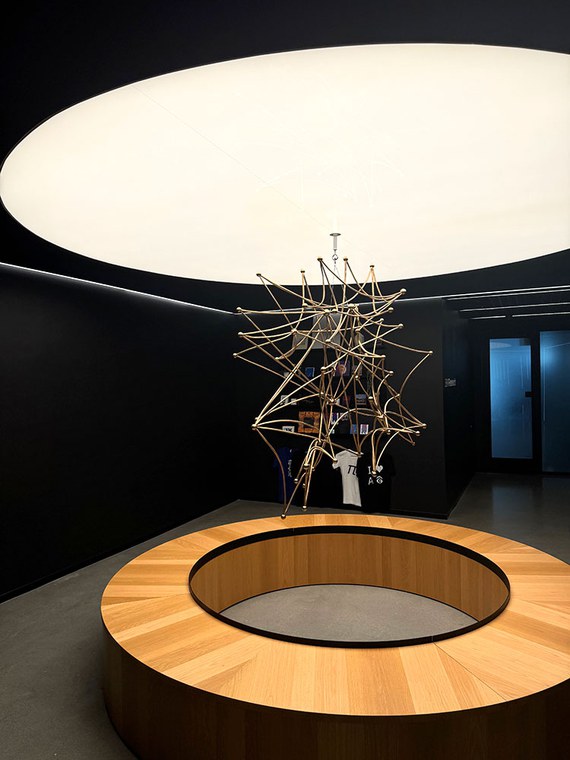
Skulptur am Eingang des MIT-IBM-KI-Labors
Nach seiner Doktorarbeit ging Dr. Hendrik Strobelt in die USA. Zunächst an die New York University, von 2014 bis 2017 nach Boston an die Harvard University. Seit 2017 ist der Wissenschaftler bei IBM Research in Cambridge (Massachuttes) tätig. Zudem gehört er dem MIT-IBM Watson AI Lab an. Die Gemeinschaft betreibt KI-Forschung und entwickelt Algorithmen, die Wirtschaft und Gesellschaft voranbringen. „Meine Firma“ sagt Dr. Hendrik Strobelt, wenn er über IBM spricht. Das 110 Jahre alte Unternehmen sei vielleicht nicht so glänzend wie Meta und ein bisschen unterschätzt, aber eine „sehr erwachsene Firma“. Sie sei eine der wenigen freien Forschungseinrichtungen, bei denen Wissenschaftler eine große Freiheit für ihre Forschungsgegenstände genießen.
Aktuelle KI-Forschung – nicht mit Kanonen auf Spatzen schießen
Für seine konkrete Arbeit bedeutet das, zu erforschen, wie man Nützliches aus KI-Modellen herausholen kann. Wie Künstliche Intelligenz Entscheidungen trifft, ist eine der Fragen, die ihn beschäftigen. Ein Ziel ist beispielsweise, Aufgaben für große KI-Modelle in kleinere Programme herunterzubrechen, die man auf einem Laptop ausführen kann. „Große Aufgaben in kleine aufzuteilen, ist ein Grundprinzip der Informatik“, erklärt Dr. Hendrik Strobelt. Er veranschaulicht: „Kleine KI-Modelle bestehen heute aus etwa sieben Milliarden Parametern. Interessant ist, dass wenn KI-Modelle in traditionellen Computerprogrammen benutzt werden, treten plötzlich Wahrscheinlichkeiten auf. Beispiel: 1 + 1 = 2. Frühere Modelle konnten durchaus die Lösung 2,5 vorschlagen. Das passiert heute in der Regel nicht mehr, dazu sind die Modelle zu gut. Aber wie baut man einen Code so um, dass Wahrscheinlichkeiten reduziert werden und dass man das Ergebnis überprüfen kann?“ Oder: „Wie nutze ich ein Modell, das weiß, was es machen soll?“
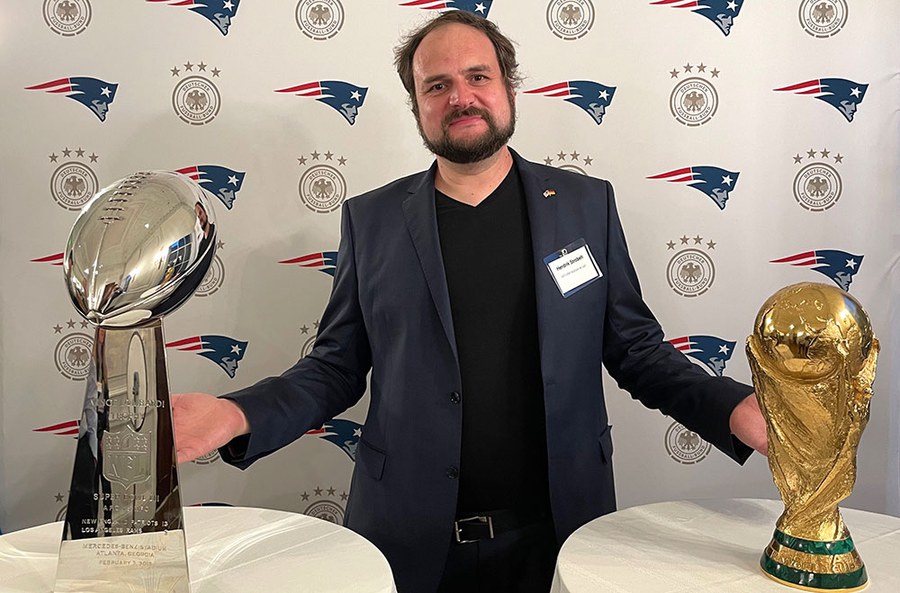
Besuch der deutschen Nationalmannschaft bei den New England Patriots (2023) – Die Entscheidung fällt schwer
Diese Arbeit ist auch deshalb so wichtig, weil für viele Anwendungen große KI-Agenten Ressourcen verschwenden. Ein weiterer Aspekt ist, Angriffe auf Modelle der Künstlichen Intelligenz zu verhindern. „Nicht mit Kanonen auf Spatzen schießen“, nennt das Dr. Hendrik Strobelt. „Für Akademiker langweilig, für Praktiker hochinteressant.“
Für ein aktuelles Projekt arbeitet er momentan mit der Berliner Charité zusammen. Dabei geht es um Vorstudien, wie man Informationsextraktion aus Arztbriefen für Krebsbehandlungen automatisieren kann. Das trifft mit seinem Interesse für biomedizinische Themen sehr gut zusammen. Was ihn noch beschäftigt neben seiner Arbeit: „Wie man in Deutschland Gesundheitsdaten für die Forschung sammeln kann, um vorwärts zu kommen.“
Nach mehreren beruflichen Betätigungsfeldern wie Elektronik, Data Engineering, Visualisierung und Künstlicher Intelligenz schätzt Dr. Hendrik Strobelt ein, „ein glückliches Händchen bei der Berufswahl gehabt“ zu haben.
Kontakt:
Dr. Hendrik Strobelt (PhD)
Senior Research Scientist at IBM Research
Explainability Lead at MIT-IBM Watson AI Lab
Visiting Researcher at MIT
E-Mail:
Web
TUD-Filmclip zum Studium der Informatik:
Informatikstudium © TUD 2024