
Jul 30, 2026
CanSat: Building a Mini-Satellite with Students – Online Information Session on September 4, 2026
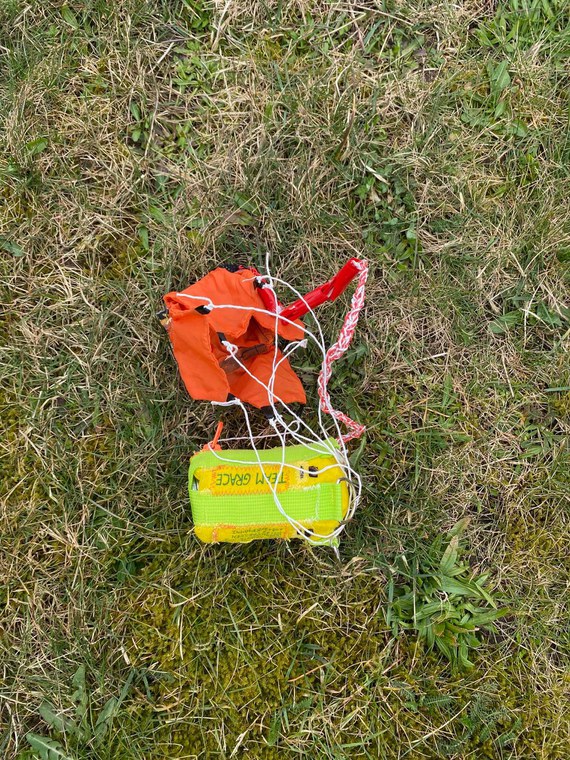
Der Mini-Satellit des Team GRACE.
At a Glance
-
What? Online information session on the German CanSat Competition for schools, organized by the German Aerospace Center (DLR)
-
When? September4 , 2026, 4:00–5:00 p.m.
-
Who is it for? Teachers and school administrators from Dresden and Saxony (please share this information)
A CanSat is a miniature satellite the size of a soda can that students design, build, and program themselves. In the German CanSat Competition, this mini-satellite is launched by rocket to an altitude of several hundred meters and then descends to the ground via parachute. During the flight, it carries out a specified primary mission—measuring air pressure and temperature and transmitting the data via radio to a ground station—as well as a secondary mission of the team’s own choosing, in which the teams implement their own scientific or technical ideas. A CanSat project thus replicates a real space mission on a small scale: from planning through design, testing, and execution to the analysis and presentation of the data.
The fact that this works exceptionally well in Saxony is demonstrated by the Dresden-based GRACE team, which placed third nationwide in the last round of the competition. Young people learn an enormous amount from such projects—not only in the fields of science and technology, but also in teamwork, self-organization, and problem-solving. This is precisely where a project team from TU Dresden comes in: they aim to establish the competition more broadly and permanently in the region.
A Support Network Backing the Schools
A CanSat project thrives on the collaboration of many participants. With the goal of spreading the workload more evenly among teachers and mentors and making it easier to get started in the competition, a project team at TU Dresden is offering support: Student Assistants and staff from TU Dresden, the STAR association (Student Space Working Group), and the DLR_School_Lab can provide technical support to the teams, grant access to laboratories, and offer assistance with tricky challenges. The DLR_School_Lab also contributes its experience from previous CanSat missions.
What to Expect at the Information Session
During the one-hour online event, the competition will be introduced, followed by reports on previous Dresden missions. In addition, the specific support that TU Dresden, the STAR association, and the DLR_School_Lab can offer will be explained. Above all, however, the project team would like to engage in dialogue with teachers and other school stakeholders: What is realistic for schools, and what kind of support would actually be helpful to you?
The project team looks forward to the participation of teachers and school administrators from Dresden and Saxony.
Schedule:
| Start: 4:00 p.m. | |
| Welcome & Overview | Project objectives, introduction of the team. |
| What is CanSat? | Competition, primary/secondary mission, timeline, framework conditions, costs, launch campaign in Bremen, example: Team GRACE. |
| Lessons Learned from Previous Missions | Report from a former participant. |
| TUD’s offerings for schools | Support options provided by TU Dresden/STAR/DLR School Lab, such as lab access, integration into the General Technical Course (GTA), and thesis projects. |
| Questions, Discussion & Next Steps | |
| End: 5:00 p.m. | |
Contact:
martin.laabs@tu-dresden.de