
Biologie
Entdecke die vielfältigen Verbindungen zur Biologie!
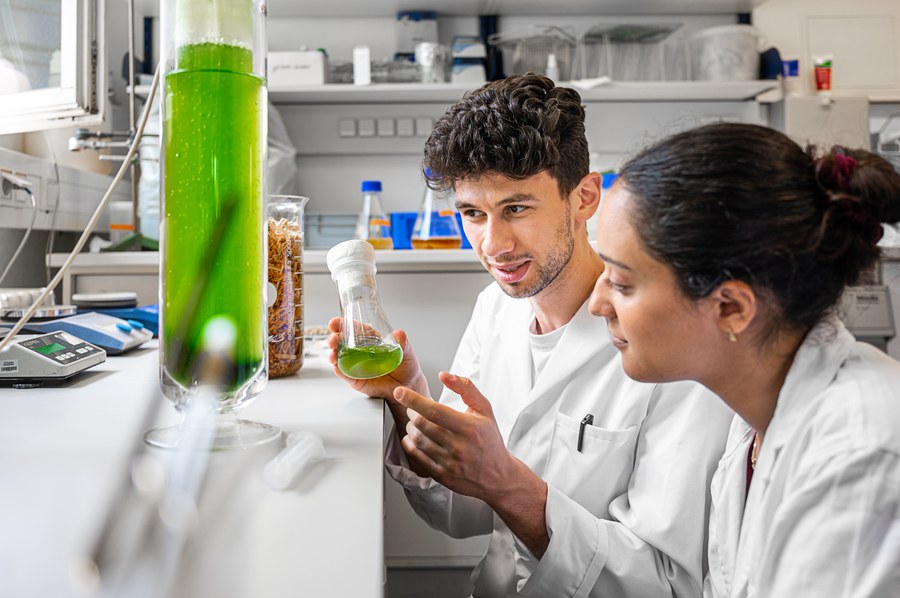
Die Biologie steckt in weit mehr Bereichen, als man auf den ersten Blick vermuten würde. Von der Umweltforschung über Materialwissenschaften bis hin zu medizinischen Anwendungen – überall gibt es spannende Anknüpfungspunkte. Unsere Angebote zeigen, wie die Biologie mit anderen Themen und Disziplinen verknüpft ist, und eröffnen dir neue Blickwinkel auf die Welt. Lass dich inspirieren und entdecke, wo Biologie überall eine Rolle spielt!
Tangierte Fächer: Biologie | Physik | BNE
Themenschwerpunkte: Material, Holz, Nachhaltigkeit, Umweltschutz
Format: Workshop
Workshop mit kurzem Einführungsvortrag zur Entwicklung von biobasierten Ölbindern die in Kombination mit Bakterien Ölschäden auf dem Meer, an der Küste oder auf Binnengewässer beseitigen können (mit Videobeiträgen von Feldversuchen auf der Ostsee); Praktische Versuche zur Messung der Ölaufnahme holzbasierter Ölbinder, trocken und von der Wasseroberfläche eines Aquariums; Wettbewerb zum Ölbinderweit- und Zielwurf mit mehreren Teams, kleine Preise
| TN-Kapazität | Alter/Klassenstufe: | Dauer: | Ort: |
| (5 – 30) | 8. bis 10. Klasse | 30 – 60 min | MAR 32 / Marschnerstrasse |
- Auch mobil möglich (Bspw. als Format direkt im Klassenzimmer)
Institution: Professur für Holztechnologie und holzbasierte Bioökonomie
Jetzt anfragen
Tangierte Fächer: Biologie, Chemie, Physik
Thememenschwerpunkte: Werkstoff-/Materialwissenschaft, Neue Materialien, Schadensfallanalyse
Format: Workshop & Führung
Mit der Abbildung von Oberflächendetails im Rasterelektronenmikroskop kann durch die dabei entstehende Röntgenstrahlung die Zusammensetzung von kleinsten Bereichen im Mikrometermaßstabbestimmt werden. Mit diesem Angebot werden Anwendungen der Optik, des Atomaufbaus und der Festkörperphysik demonstriert.
| TN-Kapazität | Alter/Klassenstufe: | Dauer: | Ort: |
| (5-25) | 11. bis 13. Klasse bzw. bis nach dem Abitur (Ab 16 Jahre) | 90 min | Berndt-Bau, Raum 201, Helmholtzstr. 7, 01069 Dresden |
Institution: Professur für Biomaterialien
Tangierte Fächer: Chemie, Physik, Biologie, BNE
Themenschwerpunkte: Nachhaltigkeit, Umwelttechnologie, Ressourcenschutz
Format: Vortrag
Im Kurs "Umweltschutz" erhalten die Teilnehmenden eine fundierte Einführung in die Grundlagen und globalen Herausforderungen des Umweltschutzes. Themen wie Energie, Ethik, Umweltrecht und die Ökonomie des Umweltschutzes werden ebenso behandelt wie technische Ansätze zur Luft-, Wasser- und Abfallreinhaltung. Weitere Schwerpunkte sind Stoff- und Produktkreisläufe, Lärmschutz sowie Altlastensanierung und Bodenschutz. Ergänzt wird das Programm durch die Analyse von Schadstoff-, Strahlen- und Lärmauswirkungen sowie durch Strategien zur Risikominimierung und Anlagensicherheit. Dank der thematischen Vielfalt werden aktuelle Entwicklungen aufgegriffen und in einem dialogorientierten Format mit den Teilnehmenden vertieft.
| TN-Kapazität | Alter/Klassenstufe: | Dauer: | Ort: |
| Ab 20 Personen | Ab Klasse 8 | 90 Min | Mollier-Bau, George-Bähr-Str. 3, 01069 Dresden, Raum 213 (MOL/213/H) |
Institution: Professur für Energieverfahrenstechnik
Tangierte Fächer: Biologie | Physik | Chemie | BNE
Themenschwerpunkte: Nachhaltigkeit, Ernährung, Lebensmittel, Technologie, Verfahrenstechnik
Format: Workshop & Führung
Das Ernährungsverhalten und die Verfahren der Lebensmittelzubereitung wandeln sich. Eine wachsende Weltbevölkerung und Klimaveränderungen erfordern zudem ressourcenschonende Technologien der Lebensmittelherstellung. An welchen Produkten und Verfahren wird daher geforscht? Wie prüft man die Qualität von Lebensmitteln und was ist Lebensmittelsensorik? Wir stellen gemeinsam im Technikum ausgewählte Lebensmittel her und analysieren die Produkte messtechnisch und sensorisch. Diese Beispiele zeigen die ingenieurwissenschaftlichen Herausforderungen, geben einen Einblick in das Studium der Fachrichtung Lebensmitteltechnik im Studiengang Verfahrenstechnik und Naturstofftechnik der TU Dresden sowie die beruflichen Perspektiven für Lebensmitteltechnolog:innen.
| TN-Kapazität | Alter/Klassenstufe: | Dauer: | Ort: |
| (5 – 20) | Ab Klasse 8 | Ab 90 Min | ZIN, Bergstraße 120 |
- Auch mobil möglich (Bspw. als Format direkt im Klassenzimmer)
Institution: Professur für Lebensmitteltechnik
Tangierte Fächer: Mathematik | Physik | Chemie | Biologie
Themenschwerpunkte: Klima und Umwelt, Kreislaufwirtschaft
Format: Workshop
Workshop mit kurzem Einführungsvortrag zu Papier allgemein, Verpackungstrends und Verpackungsfunktionen. Überblick zur Berechnung von Isolationsmaterialien. Vorstellung von Projekten zur Entwicklung von Isolationsverpackungen aus Papier. Gruppenarbeit zur Kalkulation einer Verpackung (Berechnung der Dicke) für bestimmte Isolationsanforderungen. Demonstration der Rezyklierbarkeit der entwickelten Papierverpackung im Labor inkl. selbständige Herstellung von Laborblättern (unter Anleitung).
| TN-Kapazität | Alter/Klassenstufe: | Dauer: | Ort: |
| (5 – 30) | Ab Klasse 8 | 120 Min | TU Campus / Merkelbau und VVT Halle |
Institution: Institut für Verfahrenstechnik und Umwelttechnik
Tangierte Fächer: Physik, Mathematik, Chemie, Biologie, Informatik
Themenschwerpunkte: Raumfahrt, Medizintechnik, Nachhaltigkeit
Format: Führung/Laborbesichtigung
Wir schauen uns in Maschinenhallen Entwicklungen an, die neue, ressourceneffizient herstellbare Produkte für die Medizintechnik, das Bauwesen und den Leichtbau ermöglichen.
| TN-Kapazität | Alter/Klassenstufe: | Dauer: | Ort: |
| (5 – 30) | Ab Klasse 5 bis nach dem Abitur | 45 bis 90 Min | Walter-Frenzel-Bau der TU Dresden |
Institution: Institut für Textilmaschinen und Textile Hochleistungswerkstofftechnik
Tangierte Fächer: Physik |Mathematik |Biologie
Themenschwerpunkte: Leichtbauwerkstoffe, Leichtbaukonstruktion, Ressourceneffizienz, Nachhaltigkeit, Verkehr
Format: Workshop
In diesem Workshop lernen die Teilnehmer:innen die Grundlagen von Leichtbauwerkstoffen und Bauweisen, die im Leichtbau angewendet werden kennen. Es wird dabei ein besonderer Schwerpunkt auf der selbst durchgeführten Ermittlung und Erklärung von Werkstoff- und Bauteileigenschaften gelegt. Anhand von mehreren Stationen wird praktisch ausprobiert welche Eigenschaften die jeweiligen Leichtbauwerkstoffe haben und wie diese geometrisch ausgelegt werden sollten um hochbelastbare und leichte Bauteile zu ermöglichen. In einer anschließenden Bastelaufgabe wird das vorher erfahrene und gelernte angewendet. Die Stationen des Leichtbauparcours sind mit einem hohen experimentellen Anteil verbunden, so dass die Teilnehmer:innen viel ausprobieren und selbst Erklärungen für die beobachteten Phänomene ableiten können.
| TN-Kapazität | Alter/Klassenstufe: | Dauer: | Ort: |
| (5 – 20) | Grundschule bis nach dem Abitur (Angebot altersentsprechend anpassbar) | 30 bis 120 Min | Institut für Leichtbau Und Kunststofftechnik, Holbeinstraße 3, 01307 |
Institution: Institut für Leichtbau und Kunststofftechnik
Tangierte Fächer: Physik | Biologie | Mathematik |Sozialkunde | Politikwissenschaft | BNE
Themenschwerpunkte: Mobilität, Verkehrsplanung, Ökologie
Format: Führung/Laborbesichtigung
Klimafreundlich, sicher, inklusiv: Wie soll der Verkehr in der Stadt in Zukunft gestaltet werden? Schülerinnen und Schüler lernen in diesem Workshop, eigene Perspektiven auf ihr Verkehrsverhalten zu entwickeln und können kreative Lösungsansätze für die Mobilität der Zukunft entwickeln.
| TN-Kapazität | Alter/Klassenstufe: | Dauer: | Ort: |
| (5 - 20) | Ab Klasse 1 bis Klasse 7 | 45 bis 90Min | Gerhart-Potthoff-Bau, Hettnerstr. 1-3, Seminarraum, 01069 Dresden |
- Auch mobil möglich (Bspw. als Format direkt im Klassenzimmer)
Institution: Professur für Verkehrsökologie
Tangierte Fächer: Physik | Biologie |Informatik | Mathematik |Ethik | Philosophie | Technik und Computer | Werken
Themenschwerpunkte: KI, Programmierung, Digitalisierung, Taktiles Internet, 5G
Format: Workshop
Das Exzellenzcluster Centre for Tactile Internet with Human-in-the-Loop (CeTI) bietet derzeit acht Schulmodule an, die an den sächsischen Lehrplan anknüpfen. Die Module wurden von Wissenschaftler:innen mit Pädago:ginnen entwickelt und richten sich an unterschiedliche Klassenstufen aller Schularten. In unseren Workshops werden dabei Fragen und Probleme der Digitalisierung erarbeitet und diskutiert. Die Schüler:innen können beispielsweise auch die Grundlagen des Programmierens lernen und ein eigenes mobiles Spiel entwickeln. CeTI möchte so neue Technologien ins (virtuelle) Klassenzimmer bringen und Lernende im Umgang damit stärken. Die Module sind für jeweils 90 Minuten ausgelegt, können aber flexibel angepasst werden. Dabei werden alle technischen Voraussetzungen von uns gestellt, um einen reibungslosen Ablauf zu gewährleisten.
| TN-Kapazität | Alter/Klassenstufe: | Dauer: | Ort: |
| (5 - 30) Nach Absprache auch mit mehr Personen möglich |
Ab Klasse 1 bis nach dem Abitur | 45 bis 120 Min sowie nach Absprach (Vormittags- oder Nachmittagsprogramm) | An der Schule oder im Barkhausenbau der TU Dresden |
- Auch mobil möglich (Bspw. als Format direkt im Klassenzimmer)
- Online
Institution: Exzellenzcluster Centre for Tactile Internet with Human-in-the-Loop (CeTI)
Tangierte Fächer: Informatik | Biologie | Kunst
Themenschwerpunkte: Mensch-Computer-Interaktion, Informationsvisualisierung, Augmented Reality, Virtual Reality, Medizin, Biologie, Technologie
Format: Führung/Laborbesichtigung
Dresden ist das Zentrum des Silicon Saxony und die wichtigste Mikroelektronik-Region Europas. Mit der Ansiedlung und dem Ausbau von immer mehr, immer moderneren und immer größeren Fabriken durch internationale Firmen (Infineon, Bosch, Global Foundries, ESMC, X-FAB) zur Herstellung integrierter Schaltkreise für eine Vielzahl von Kunden und Anwendungen ist die Mikroelektronik zur wichtigsten Industrie in unserer Region aufgestiegen. Wir möchten Schülern zeigen, was Mikroelektronik ist, wo sie überall eingesetzt wird (nämlich wirklich überall) und wie moderne Halbleiterbauelemente und integrierte Schaltkreise hergestellt werden. Außerdem können wir einen Einblick die komplexen Herstellungsprozesse der Mikroelektronik und in unsere Forschungaktivitäten geben und eine Führung durch unseren Reinraum anbieten.
| TN-Kapazität | Alter/Klassenstufe: | Dauer: | Ort: |
| 10 - 20 | Ab Klasse 8 bis nach dem Abitur | 30 - 60 Minuten | Andreas-Pfitzmann-Bau in den Räumen 2042 und 2044 |
- Auch mobil möglich (Bspw. als Format direkt im Klassenzimmer)
- Online
Institution: Professur für Multimedia-Technologie
Tangierte Fächer: Biologie
Themenschwerpunkte: Mikrobiologie, Forschung, Bakterien
Format: Workshop
Tauchen Sie mit Ihrer Schulklasse in die verborgene Welt der Bakterien ein! In unserer interaktiven Ausstellung im Botanischen Garten Dresden lernen Schüler:innen, wo Bakterien im vorkommen und welche wichtigen Aufgaben sie erfüllen. Wie sehen Bakterien eigentlich aus – und wie unterschiedlich können sie sein? Anhand spannender Beispiele und aktueller Forschung entdecken die Teilnehmenden die erstaunliche Vielfalt der Bakterienwelt. Verschiedene Mitmach-Angebote bieten Raum für eigenständiges Erkunden, Ausprobieren und den Dialog mit der Lehrkraft. Ein Besuch in Bakteriopolis macht Mikrobiologie greifbar – altersgerecht, anschaulich und praxisnah.
| TN-Kapazität | Alter/Klassenstufe: | Dauer: | Ort: |
| 5 - 30 | 1. Klasse bis nach dem Abitur | 90 Minuten | Botanischer Garten Dresden |
- Auch mobil möglich (Bspw. als Format direkt im Klassenzimmer)
Institution: Professur für Allgemeine Mikrobiologie
Tangierte Fächer: Biologie | Chemie | Physik | BNE
Themenschwerpunkte: CO2 Transport zw. Erde und Atmosphäre
Format: Workshop
Jedes Jahr gelangen in Deutschland mehrere hundert Millionen Tonnen CO2 in die Atmosphäre. Damit die CO2-Konzentration in der Atmosphäre nicht weiter steigt, muss es wieder aufgenommen werden. Pflanzen atmen CO2 ein und können den Kohlenstoff binden, aber wie viel CO2 kann ein Wald oder eine Wiese überhaupt aufnehmen? Wir schauen uns an, wie der Transport von CO2 zwischen der Atmosphäre und der Erdoberfläche funktioniert und wie er gemessen werden kann.
| TN-Kapazität | Alter/Klassenstufe: | Dauer: | Ort: |
| 10 - 30 | 8. bis 10. Klasse | 90 Minuten | Messstation in Tharandt |
- Auch mobil möglich (Bspw. als Format direkt im Klassenzimmer)
Înstitution: Professur für Meteorologie
Tangierte Fächer: Biologie | Physik
Themenschwerpunkte: Material, Holz, Musik
Format: Workshop
Nach einem kurzen Überblick zu Studienmöglichkeiten zum Thema Holz starten spannende Versuche für dich in kleineren Gruppen. Wir möchten gerne der Frage auf den Grund gehen, warum für viele Musikinstrumente, wie zum Beispiel die Gitarre, Holz das Material der Wahl ist. Dabei lernst du etwas über die Unterschiede zwischen den verschiedenen Holzarten kennen und wie sich das auf die Eigenschaften auswirkt. Folgende Punkte wollen wir uns in Versuchen genauer anschauen:
- Welche mechanische Belastung muss Holz in einer Gitarre aushalten? Was passiert, wenn ich dafür unterschiedliche Holzarten einsetze?
- Wie kann ich Holz Töne entlocken? Warum klingen die nicht gleich?
- Wie kann ich Holz in Form biegen? Warum bzw. wie ist das möglich?
| TN-Kapazität | Alter/Klassenstufe: | Dauer: | Ort: |
| 5 – 24 | 8.-12. Klasse | 90 min | MAR 39 / Marschnerstrasse |
- Auch mobil möglich (Bspw. als Format direkt im Klassenzimmer)
Institution: Professur für Holztechnologie und holzbasierte Bioökonomie
Jetzt anfragen
Tangierte Fächer: Biologie | Physik | Geografie | BNE
Themenschwerpunkte: Wasser | Wasserkreislauf | Landschaft
Format: Workshop
Wie fließt Wasser durch eine Landschaft? Und was hat das mit Einzugsgebieten zu tun? In einem kurzen Vortrag und einer praktischen Übung erkunden die Schüler:innen den Wasserkreislauf – mit Papier, Stift und der Augmented Reality Sandbox.
| TN-Kapazität | Alter/Klassenstufe: | Dauer: | Ort: |
| 10 - 30 | 8. bis 10. Klasse | 90 Minuten | Klassenzimmer und an der Professur Hydrologie, Bergstrasse 66 |
- Auch mobil möglich (Bspw. als Format direkt im Klassenzimmer)
Institution: Professur für Hydrologie
Tangierte Fächer: Biologie | Chemie| Geografie | BNE
Themenschwerpunkte: Wasser | Chemikalien| Trinkwasser
Format: Workshop
In diesem Vortrag mit vielen Mitmachfragen geht es um die Verschmutzung von Wasser durch Chemikalien. Die Schülerinnen und Schüler diskutieren Fragen wie: Wo kommen die Chemikalien her? Wie kommen sie ins Wasser? Wie bekommt man sie wieder raus? Kann ich Leitungswasser weiterhin trinken? Was kann ich selbst tun damit weniger Chemikalien im Wasser landen?
| TN-Kapazität | Alter/Klassenstufe: | Dauer: | Ort: |
| 10 - 30 | 8. bis 10. Klasse | 90 Minuten | Klassenzimmer und an der Professur Hydrologie, Bergstrasse 66 |
- Auch mobil möglich (Bspw. als Format direkt im Klassenzimmer)
Institution: Professur für Hydrochemie und Wassertechnologie
Tangierte Fächer: Physik | Biologie | Chemie| Geografie | BNE
Themenschwerpunkte: Wasser | Chemikalien| Trinkwasser
Format: Workshop
Der Block besteht aus zwei Teilen: Ein Vortrag mit max 45 Minuten über das Grundwasser. Wo und wie findet man es? Wieviel davon ist da? Woher kommt es und wohin fließt es? Der zweite Teil des Blocks ist praktisch und wird den Schüler:innen Modelle und kleine Versuchsanlagen zeigen, die das Verhalten des Grundwassers im Untergrund veranschaulichen. Dabei darf auch Hand angelegt werden und es könnte auch ein bisschen naß werden.
| TN-Kapazität | Alter/Klassenstufe: | Dauer: | Ort: |
| 10 - 30 | 8. bis 10. Klasse | 90 Minuten | Vortrag im Klassenzimmer oder an der TUD. Praktischer Teil im Technikum. |
- Auch mobil möglich (Bspw. als Format direkt im Klassenzimmer)
Institution: Professur für Grundwassersysteme
Tangierte Fächer: Physik | Biologie | Chemie| Geografie | BNE
Themenschwerpunkte: Abfall | Recycling | Kreislaufwirtschaft
Format: Workshop
In dem Vortrag werden die Grundlagen der Abfallwirtschaft vermittelt. Grundlegende technische Prozesse der Abfallbehandlung werden erläutert und anschaulich dargestellt. Die Wege unserer Abfälle werden dargestellt. Bei einem Vor-Ort-Termin können Aufbereitungsaggregate, Versuchsanlagen, die Laboratorien und die Abfallverbrennungsanlage "VERENA" besichtigt werden.
| TN-Kapazität | Alter/Klassenstufe: | Dauer: | Ort: |
| 10 - 30 | 5. bis 7. Klasse | 90 Minuten | Vortrag im Klassenzimmer oder an der TUD. Praktischer Teil (falls gewünscht) an der TUD (Außenstelle Pirna) |
- Auch mobil möglich (Bspw. als Format direkt im Klassenzimmer)
Institution: Professur für Abfall- und Kreislaufwirtschaft
Tangierte Fächer: Biologie | Chemie| Geografie | BNE
Themenschwerpunkte: Wasser| Trinkwasser | Abwasser
Format: Vortrag & Führung
In dem Vortrag werden die Grundlagen der Abfallwirtschaft vermittelt. Grundlegende technische Prozesse der Abfallbehandlung werden erläutert und anschaulich dargestellt. Die Wege unserer Abfälle werden dargestellt. Bei einem Vor-Ort-Termin können Aufbereitungsaggregate, Versuchsanlagen, die Laboratorien und die Abfallverbrennungsanlage "VERENA" besichtigt werden.
| TN-Kapazität | Alter/Klassenstufe: | Dauer: | Ort: |
| 10 - 20 | Grundschule (6 - 10 Jahre) | Kurzprogramme (unter 30 Min), möglich, jedoch auch 90 Min und länger als 120 Min (Vormittags- oder Nachmittagsprogramm) | Klassenzimmer und am Institut für Siedlungs- und Industriewasserwirtschaft, Bergstrasse 66 |
- Auch mobil möglich (Bspw. als Format direkt im Klassenzimmer)
Institution: Professur für Verfahrenstechnik in Hydrosystemen
Tangierte Fächer: Biologie | Geografie | BNE
Themenschwerpunkte: Wasser| Wasserressourcen | Klimawandel
Format: Workshop
In diesem Vortrag mit vielen Mitmachfragen geht es um die Bedeutung des Wassers für das Leben, den (anthropogenen) Wasserkreislauf und Klimawandel, virtuelles Wasser und Wasserfußabdruck, Trinkwassernutzung und die Dresdner Trinkwasserwerke. Optional können auch Informationen zur Berufswelt Wasser gegeben werden.
| TN-Kapazität | Alter/Klassenstufe: | Dauer: | Ort: |
| 30 Personen | 8. bis 10. Klasse (14 - 16 Jahre) | 90 bis 120 Minuten | Klassenzimmer und am Institut für Siedlungs- und Industriewasserwirtschaft, Bergstrasse 66 |
- Auch mobil möglich (Bspw. als Format direkt im Klassenzimmer)
Institution: Professur für Verfahrenstechnik in Hydrosystemen
Tangierte Fächer: Biologie | Chemie | Geografie | BNE
Themenschwerpunkte: Wasser| Wasserressourcen | Wasserqualität
Format: Workshop (Durchführung auf Englisch)
The workshop gives insight to water scarcity in terms of quantity and quality and the challanges shaped by conflicts of interests and limited resources for action. After thematic introduction the pupils get to play the serious game "MoRe Water". They will plan monitoring campaigns to identify land uses and will be confronted with a specific scenario with need for action. This will challenge them to identify the causes and responsible parties in order to secure the scarce resource water.
| TN-Kapazität | Alter/Klassenstufe: | Dauer: | Ort: |
| 20 - 30 Personen | 11. bis 13. Klasse bzw. bis nach dem Abitur (Ab 16 Jahre) | Länger als 120 Minuten (Vormittags- oder Nachmittagsprogramm) | Institut für Hydrobiologie, Drudebau, Zellescher Weg 40 |
- Auch mobil möglich (Bspw. als Format direkt im Klassenzimmer)
Institution: Institut für Hydrobiologie
Tangierte Fächer: | Wirtschaft & Recht| Geografie | Biologie | BNE
Themenschwerpunkte: Nachhaltigkeit | Ressourcen | Wirtschaft
Format: Workshop
Mit Hilfe eines Planspiels wird den Schüler:innen vermittelt, welche Auswirkungen die Nutzung von Verschmutzungsrechten (Emissionen) haben und inwiefern deren Begrenzung als limitierender Faktor bekannte Betrachungsweisen verändern. Innerhalb des Spiels ist jede:r Teilnehmer:in Emittient:in und kann über den Umgang mit den Ressourcen selbst entscheiden und deren Wechselwirkung ,auch mit anderen Spieler:innen, beeinflussen. Das Lernziel ist die Schwierigkeiten bei einem globalen Abkommen, wie zum Klimaschutz kennenzulernen und welche Herausforderungen dort bestehen.
| TN-Kapazität | Alter/Klassenstufe: | Dauer: | Ort: |
| 20 - 30 Personen | 5. bis 7. Klasse (11 - 13 Jahre) | 90 Min | direkt im Klassenzimmer oder an der TUD |
- Auch mobil möglich (Bspw. als Format direkt im Klassenzimmer)
Institution: Professur für Internationale Wirtschaftsbeziehungen
Tangierte Fächer: Biologie | Chemie| Geografie| BNE
Themenschwerpunkte: Plastik | Mikroplastik| Meeresverschmutzung
Format: Vortrag
Wie gelangt Plastikmüll ins Meer und was macht das dort mit den Tieren und Pflanzen? Immer öfter hören wir von Plastikinseln im Ozean und Mikroplastik in unseren Lebensmitteln. Doch wie kommt das dahin, und was lässt sich aus wissenschaftlicher Sicht zu den Gefahren sagen? Diese und weitere Fragen werden in dem Vortrag beantwortet.
| TN-Kapazität | Alter/Klassenstufe: | Dauer: | Ort: |
| 10 - Über 30 Personen | Grundschule (6 - 10 Jahre) | 45 - 60 Min | direkt im Klassenzimmer |
- Auch mobil möglich (Bspw. als Format direkt im Klassenzimmer)
- Online
Institution: Institut für Abfall- und Kreislaufwirtschaft
Tangierte Fächer: Physik | Informatik | Biologie | BNE
Themenschwerpunkte: Geruchssinn · Sensorik · Digitalisierung
Format: Workshop
Für einige unserer Sinne gibt es bereits elektronische Gegenstücke. Für das Auge eine Kamera — für das Ohr ein Mikrofon. Kann man aber auch eine künstliche Nase bauen und wofür brauchen wir sowas? Der menschliche Körpergeruch wird unter anderem durch die Ernährung, aktuelle Entzündungsprozesse und den Hormonhaushalt beeinflusst und folglich können Veränderungen des Körpergeruchs Hinweise auf Krankheiten liefern. Eine elektronische Nase könnte wertvolle Informationen verfügbar machen, die in der Medizin bislang weitgehend ungenutzt sind. Elektronische Nasen können auch Menschen im Alltag helfen, da Körpergerüche in vielen sozialen Situationen entscheidende Rolle spielen. Sie beeinflussen die Anziehungskraft auf unseren Partner, schaffen ein Gefühl der Zugehörigkeit in der Familie und lassen Rückschlüsse auf Gefühle zu. Daher wird die Unfähigkeit, den eigenen und nicht-eigenen Körpergeruch wahrzunehmen, als eine der schwerwiegendsten Beeinträchtigungen für Menschen mit Riechstörungen beschrieben. Im Workshop wird erklärt, wie Digitalisierung des Geruchsinns funktioniert und gleichzeitig werden Sensoren vorgestellt. Schülerinnen und Schüler bauen gemeinsam ein Experiment auf, in dem ein solcher Sensor angeschlossen und eine Messung durchgeführt wird. Ein kleines Quiz, in dem Gerüche erkannt werden müssen, ist Teil des Workshops.
| TN-Kapazität | Alter/Klassenstufe: | Dauer: | Ort: |
| (5 – 20) | Ab Klasse 8 | Bis zu 120 Min |
Hallwachsstraße 3 (HAL), 01069 Dresden |
Institution: Professur für Materialwissenschaft und Nanotechnik
Tangierte Fächer: BNE | Geografie | Biologie | Gemeinschaftskunde / Sozialkunde
Themenschwerpunkte: Klimawandel · Biodiversität · Nachhaltigkeit
Format: Workshop
„Die gefährlichste aller Weltanschauungen ist die Weltanschauung der Leute, welche die Welt nie angeschaut haben.“ (Alexander von Humboldt). 60 bis 90-minütige Reise [anpassbar] zu den Spitzen der Eisberge, welche die großen Herausforderungen unserer Zeit darstellen: Verlust von Biodiversität, Klimawandel und wie wissenschaftliche Fakten sowie neue Sichtweisen zu einem gesellschaftlichen und wirtschaftlichen Umdenken beitragen können.
| TN-Kapazität | Alter/Klassenstufe: | Dauer: | Ort: |
| (5 – 30) | Ab Klasse 10 | Dauer 60 bis 90 Min | TU Dresden oder direkt im Klassenzimmer |
- Auch mobil möglich (Bspw. als Format direkt im Klassenzimmer)
Institution: Bereich Bau und Umwelt
Tangierte Fächer: Biologie | Wirtschaft | Gemeinschaftskunde/Sozialkunde
Themenschwerpunkte: Biologie · Wirtschaft · Gemeinschaftskunde
Format: Planspiel
Entdeckt die spannende und komplexe Welt der Schulverpflegung! Trefft wegweisende Entscheidungen, sammelt Punkte in digitalen Challenges und lasst euch von unerwarteten Ereignissen überraschen! Erspielt euch ganz intuitiv wichtige Eckpfeiler der Ernährung und Schulverpflegung!
Steigt im Workshopmodus tiefer ins Thema ein und werdet von Betroffenen zu Beteiligten. Nehmt eure Schulverpflegung selbst in die Hand! Entwickelt Visionen für eine nachhaltige Mensa!
- Eine Handreichung für Lehrkräfte beinhaltet alle Infos zur Vorbereitung und Umsetzung des Workshopkonzepts. Die Zukunftswerkstatt verläuft in drei Phasen: Fantasiephase, Kritikphase und Umsetzungsphase.
- Das Spiel kann bei der Veretzungsstelle Kita- und Schulverpflegung direkt angefragt werden
| TN-Kapazität | Alter/Klassenstufe: | Dauer: | Ort: |
| (5 – 30) | Ab Klasse 6 | Flexibel | Im Klassenzimmer |
- Auch mobil möglich (Bspw. als Format direkt im Klassenzimmer)
Institution: TU Dresden