
Nov 05, 2026
An approach to solving the nuclear waste problem: TUD plans experimental recycling reactor “DEMO” in Saxony
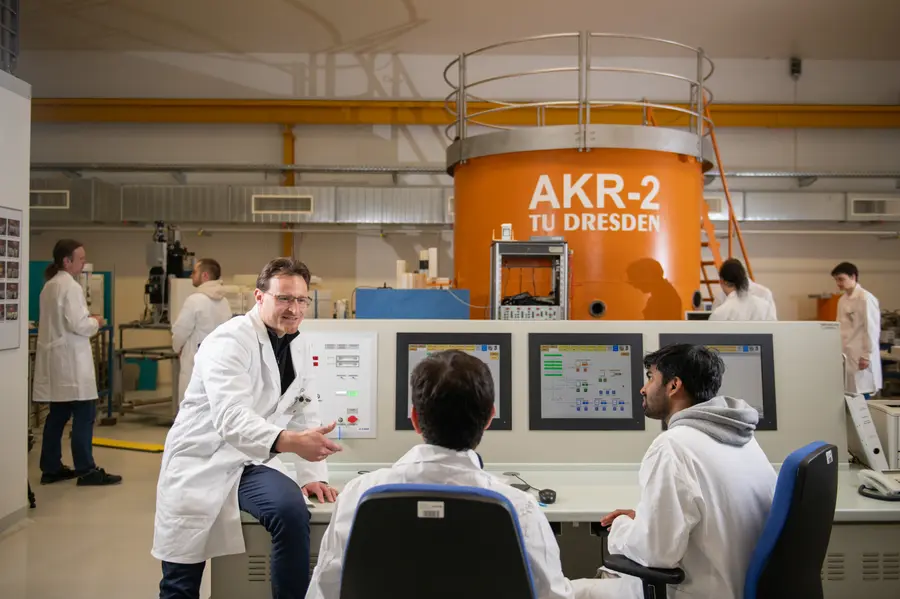
The training reactor AKR-2 of the TU Dresden is Germany’s most modern research reactor. It is available for training and research. It also played a key role in the feasibility study. AKR-2 also played a key role in the feasibility study.
TUD Dresden University of Technology is presenting an ambitious concept to address one of humanity’s greatest environmental challenges: managing highly radioactive waste from Germany’s nuclear power plants by converting it into low-carbon energy and predominantly short-lived radioactive materials. A feasibility study funded by the Free State of Saxony demonstrates how a so-called molten salt reactor can be operated without conventional nuclear fuel reprocessing. This could potentially eliminate the need for a final repository meeting the requirements of the Site Selection Act (StandAG), while enabling Saxony to establish itself as a global leader in this innovative technology and benefit from significant export opportunities.
A flagship project with two objectives
High-level radioactive waste is considered one of humanity’s most dangerous legacies. To address this problem at its source, TUD plans to build the experimental recycling reactor “DEMO” as part of a technology transfer project based on a so-called molten salt reactor. The reactor is designed to recover both energy and valuable materials from highly radioactive substances generated during the operation of light-water reactors, leaving only fission products as residual waste, which would not require disposal under the StandAG. The operation of “DEMO” is intended to demonstrate that existing spent nuclear fuel and vitrified waste materials can be converted directly into sustainable, low-carbon energy and predominantly short-lived fission products, without the costly chemical reprocessing procedures conventionally used to date. In addition, radionuclides are to be produced for medical and technical applications. The project is also expected to generate synergies with fusion energy research.
Potential sites for the facility initially include the existing Rossendorf research site (operated by VKTA) and industrial transformation sites in Lusatia, such as Schwarze Pumpe and Boxberg. With a maximum thermal output of 50 MW, the reactor is designed to operate over a 20-year period. The estimated public investment amounts to approximately EUR 1.95 billion. The development and construction phase alone is expected to take at least five years.
Political and financial implications
The “DEMO” project has been strategically designed to allow construction under the current Atomic Energy Act (AtG), as it will not involve commercial electricity generation or nuclear fuel reprocessing. Following amendments to the AtG based on the findings of this project, commercial power plants could begin contributing to climate-neutral energy production as early as 2045.
The implications of the concept of reusing spent nuclear fuel are particularly significant from a political and regulatory perspective. In Germany, the search for a final repository for high-level radioactive waste is an extremely complex and socially contentious process, subject to strict regulation under the StandAG. TUD’s approach of “transmutation without reprocessing” promises to make this process obsolete.
The economic and societal potential is enormous: Transmuting the radioactive materials would eliminate the need for a final repository meeting the requirements of the StandAG, potentially saving an estimated EUR 50 billion. In addition, the technology would unlock energy resources equivalent to 300 times Germany’s annual electricity consumption. For Saxony and the companies involved, this presents an opportunity to achieve global technological leadership and unlock enormous economic potential, particularly in terms of export opportunities.
The scientific foundation
The feasibility study, led by TUD and funded by the Free State of Saxony, provides the scientific foundation for this endeavor. It defines the necessary steps and serves as the basis for a detailed development plan with a reliable timeline. The aim is to safeguard Europe’s energy independence and competitiveness while fostering broad public and political acceptance by resolving or mitigating the problem of final radioactive waste disposal.
Note:
If you are interested, you can contact Dr Carsten Lange directly to request background information and details regarding the feasibility study.
Press inquiries:
Dr. Carsten Lange
TUD Dresden University of Technology
Institute of Process Engineering and Environmental Technology/Chair of Hydrogen and Nuclear Energy
+49 351 463 34111