
Nov 12, 2026
Deciphering Traffic Rules in Nerve Cells: ERC Grant of 10 Million Euros for International Research Team with Strong TUD Participation
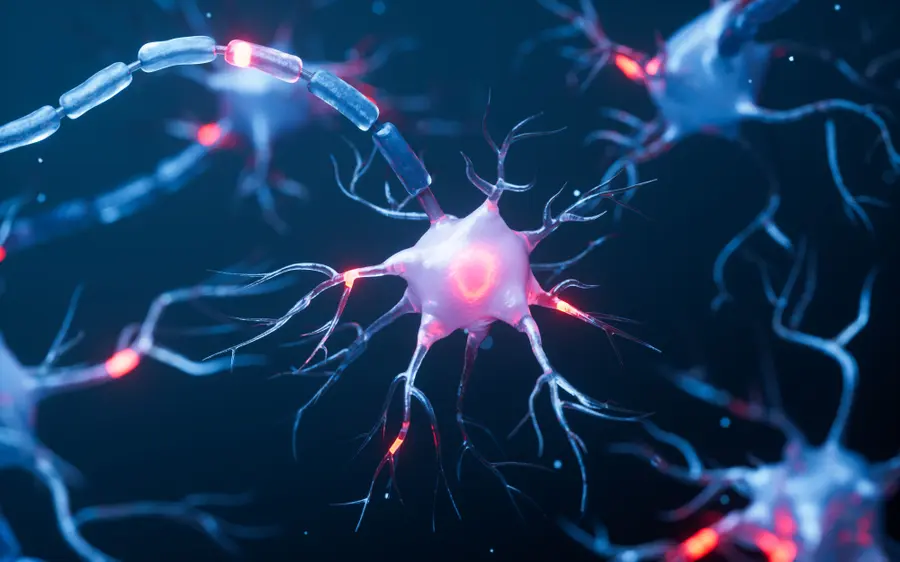
Transport in an axon where kinesin motors (orange) pull cargos towards the axon tip while dynein motors (red) bring cargoes to the cell center.
Our nerve cells face an extraordinary logistical challenge: they have to deliver essential materials through extremely narrow spaces, along tiny tracks, over distances up to one meter. When this internal delivery system breaks down, nerve cells can be damaged, giving rise to serious neurological diseases. In a new project, researchers from Dresden, Warwick, and Göttingen want to uncover the rules that keep this microscopic traffic flowing. The European Research Council (ERC) is funding the project with a Synergy Grant of 10 million euros, around 3.5 million of which will go to Prof. Stefan Diez at the B CUBE – Center for Molecular Bioengineering at TUD Dresden University of Technology.
Our cells are busy places. At any moment, countless packages are on the move through a complex delivery network: some carry signaling molecules, others carry tiny powerhouses. Molecular motors act as delivery vehicles, hauling these packages along microscopic tracks. The deliveries have to reach different destinations, travel at different speeds, and often squeeze through spaces barely wider than the packages themselves.
In nerve cells, there is an additional challenge of scale. A single molecular motor travels along tracks that are only fractions of a millimeter long, yet the complete transport system must reliably deliver packages over distances up to one meter, for example from the spinal cord to the toes.
When Transport Fails
If this delivery system breaks down, the longest nerve cells are often the first to suffer. Defects in intracellular transport have been linked to several inherited neurological diseases, including Charcot-Marie-Tooth disease, hereditary spastic paraplegia, and spinal muscular atrophy. These diseases damage the nerves that control movement and sensation, leading to muscle weakness, stiffness, or loss of feeling, often in the legs and feet first.
“Surprisingly, we don’t really understand how this traffic stays organized, and without that, we cannot really address what goes wrong in these diseases. In a way, we are now setting out to discover traffic rules inside our cells,” explains Prof. Stefan Diez, research group leader at the B CUBE, principal investigator at the Cluster of Excellence Physics of Life (PoL), and Max Planck Fellow at the Max Planck Institute of Molecular Cell Biology and Genetics (MPI-CBG).
Three Approaches to One Problem
Researchers want to find out how packages pass each other, how the vehicles get around obstacles and switch tracks, and how the transport can continue over very long distances without major traffic jams.
To do this, the ERC Synergy project “TransportRules” brings together three groups with complementary expertise: Prof. Stefan Diez in Dresden, Prof. Anne Straube at the University of Warwick, and Prof. Stefan Klumpp at the University of Göttingen.
In Warwick, the team will observe how packages move in living human nerve cells. In Dresden, they will rebuild the entire transport system in the laboratory. In Göttingen, computer simulations will show how all the parts work together.
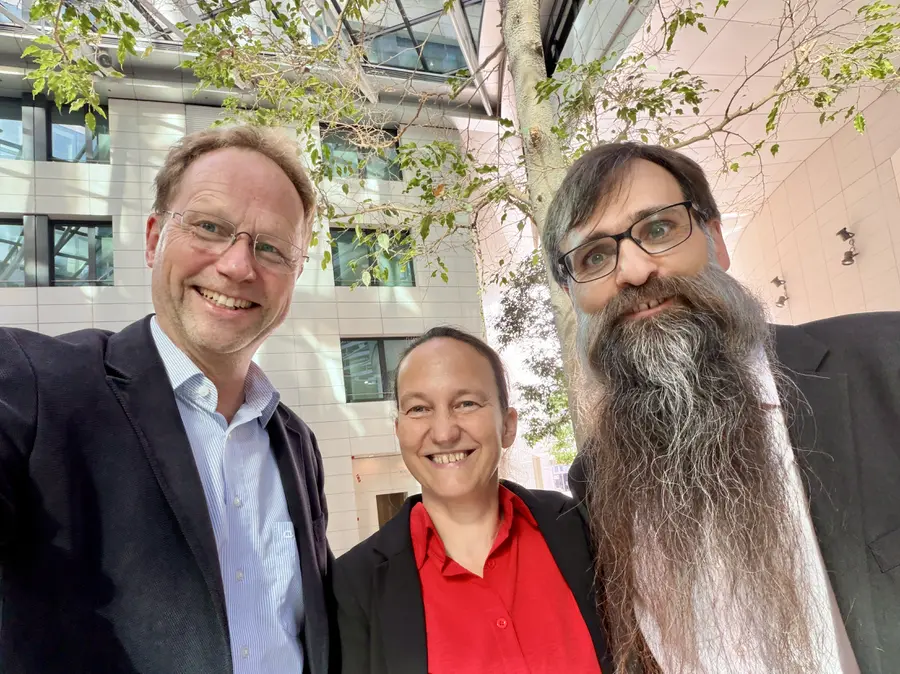
Principal Investigators leading the ERC Synergy project “TransportRules.” Prof. Stefan Diez, Prof. Anne Straube, and Prof. Stefan Klumpp.
“Inside nerve cells, cargo travels along complex networks of tracks, often moving in opposite directions and at very different speeds. Yet somehow, cells manage to avoid constant traffic jams,” explains Prof. Straube.
“Understanding how traffic inside the nerve cells works requires us to combine our different perspectives. Only through close collaboration can we answer questions that none of the three groups could tackle alone,” adds Prof. Klumpp.
Recreating Traffic Systems in a Petri Dish
The Diez group in Dresden specializes in the biophysics of motor proteins. The team combines advanced microscopy techniques with precise engineering of microscopic structures and experiments with biological molecular motors. For the new project, they will build a synthetic transport system that reproduces the physical challenges found inside nerve cells as closely as possible.
“We will design networks of extremely thin tracks, similar to those used for transport in nerve cells, and build artificial, adjustable packages to test how different types of cargo move along these tracks,” explains Prof. Diez. “This will also allow us to study traffic jams and collisions.”
The project will run for six years, creating opportunities for young scientists to work across disciplines and spend time in partner laboratories in Germany and the UK.
“Together, we hope to develop a quantitative model of the traffic system that explains the rules behind the normal transport and why it is so robust. This would give us the understanding we need to explain how traffic breaks down in disease, and a basis for developing new therapeutic strategies,” says Prof. Diez.
About the B CUBE – Center for Molecular Bioengineering
B CUBE – Center for Molecular Bioengineering was founded as a Center for Innovation Competence within the initiative “Unternehmen Region” of the German Federal Ministry of Education and Research. It is part of the Center for Molecular and Cellular Bioengineering (CMCB). B CUBE research focuses on the investigation of living structures on a molecular level, translating the ensuing knowledge into innovative methods, materials and technologies.
Web: https://tud.de/bcube
About the ERC Synergy Grants
The ERC Synergy Grants enable groups of two to four principal investigators with complementary expertise to pursue ambitious research questions that they could not address individually. This year, a total of 957 proposals were submitted for this call, of which approximately one in twenty were selected for funding. The 48 research teams will receive a total of 500 million euro. The grants are part of the European Union’s Horizon Europe research and innovation program.
Scientific Contact Person
Press contact
Dr. Magdalena Gonciarz
PR Officer
Center for Molecular and Cellular Bioengineering (CMCB)