
Apr 08, 2026
Ich sehe was, was du nicht siehst – Sinti:zze und Rom:nja im Blick der TUD
Der Roma Day (8. April) ist ein internationaler Aktions- und Gedenktag, der an die Selbstorganisation der Sinti:zze und Rom:nja erinnert und auf ihre historische sowie gegenwärtige Diskriminierung aufmerksam macht.
Im dessen Rahmen und darüber hinaus richtet die Technische Universität Dresden ein Veranstaltungsprogramm aus, das sich der Sichtbarmachung von Sinti:zze und Rom:nja sowie der kritischen Auseinandersetzung mit antiziganistischem Rassismus widmet. Ziel ist nicht nur die Vermittlung von Wissen, sondern die Förderung eines Perspektivwechsels: Stimmen aus den Communities sollen hörbar werden, Erfahrungen und politische Kämpfe nachvollziehbar und in ihrem gesellschaftlichen Kontext diskutierbar.
© Milós Déri
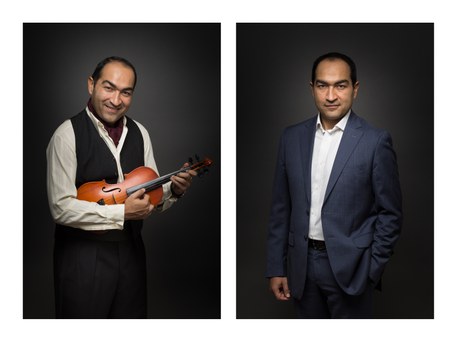
© Milós Déri
Das Programm macht Kontinuitäten von Ausgrenzung, Verfolgung und Widerstand sichtbar und versteht Bildungsarbeit ausdrücklich als mehr als reine Faktenvermittlung. Künstlerische, aktivistische und selbstorganisierte Beiträge eröffnen Zugänge zu Themen, die im öffentlichen und akademischen Diskurs häufig marginalisiert bleiben.
Programm
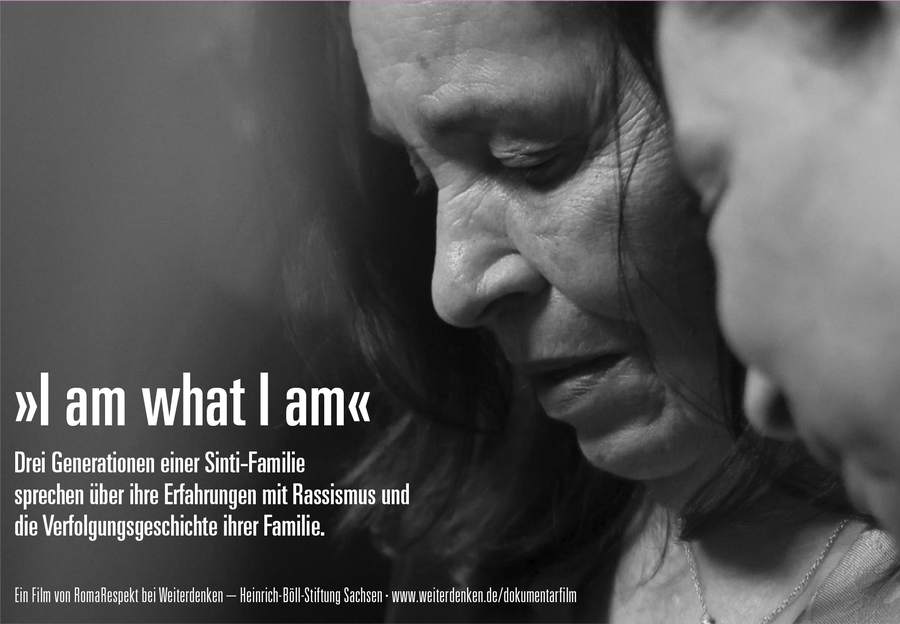
The short film "I am what I am" traces the story of the Blum family, who lived on the Laubegaster Ufer in Dresden in the 1930s and were deported under National Socialism.
At the center of the film is Ella Braun, a contemporary witness and civil rights activist who has been fighting for the recognition and dignity of Sinti and Roma for decades. Together with her daughter and grandson, the film spans an arc from Nazi persecution through the post-war period to the present day and makes the continuities of antiziganism visible.
The film gains additional relevance for the university context in particular: Daniel also provides the perspective of a student who reflects on his identity as a Sinto in today's society. His experiences point to current challenges of diversity, belonging and discrimination in everyday student life and make it clear that antiziganism is not a closed historical phenomenon, but can also be effective in the university environment.
In the presence of the filmmaker, the production of the film as well as historical and current forms of antiziganism will be discussed afterwards.
Date: 24.04.2026 08.00 am to 09.00 am Online
The documentary Gelem Gelem - Wir gehen einen langen Weg by Monika Hielscher and Matthias Heeder follows Rrom_nja families fighting for their right to stay in Germany in the early 1990s. Made between fall 1989 and spring 1991, the film impressively shows the everyday lives, hopes and resistance of around 1,500 people who were threatened with deportation to south-eastern Europe.
The title "We are walking a long road" refers to a story that extends far beyond the documented period: to experiences of exclusion, but also to solidarity, cohesion and self-organization. With public actions, hunger strikes, a protest march through Germany and the occupation of Cologne Cathedral, the families made their situation visible, driven by the desire for security, recognition and a life in dignity.
Following the film, we invite you to a discussion with Isidora Randjelović from RomaniPhen e.V. and inirromnja. Together we will talk about the historical background of the film, about racism and political struggles, but above all about perspectives of self-empowerment, memory and today's follow-up questions.
15.04.2026 18.30 Klemperer Saal SLUB
Think far ahead, because the monument is already standing.
Gndin dur, kaj o monumento lace si kothe.
Workshop on the persecution and extermination of Roma* and Sinti* under National Socialism with artistic practices
with Stefanie Busch (artist), Renáta Horváthová and Kathrin Krahl from the Antiziganism/Antiromaism Network
The persecution and extermination of Roma* and Sinti* under National Socialism is almost invisible in this city, in Europe. Memorials and monuments had to be fought for, some are falling into disrepair. The Berlin memorial to the Sinti and Roma of Europe murdered under National Socialism is to make way for an infrastructure project. Dresden is home to one of the larger memorials in Germany commemorating the murder of Sinti* and Roma*: Boxing Ring 9841 - A Memorial to Johann Rukeli Trollmann on the grounds of the Festspielhaus Hellerau. Based on this monument, we will examine architectures and practices of remembrance - the associated struggles, forms and aesthetics. What ideas, thoughts, politics and resistance are needed to remember the persecution and murder of Roma* and Sinti* in the present? The workshop seeks answers.
April 21, 2026, 1-5 pm (location to be announced after registration )
with Renata Horváthová and Kathrin Krahl, Antiziganism/Antiromaism Network
An investigation of the TU Campus on traces of discrimination, persecution and invisibilization of Roma* and Sinti* in the past and present
The city game examines urbanity and anti-Romaism - racism against Roma* and Sinti* - "while walking" across the campus. It raises awareness of the immediate university environment and asks: By whom and for whom was this university designed and built? Where are the traces of past persecution of Sinti* and Roma* under National Socialism? What names do the buildings bear and whose names are not to be found? Who feels excluded or observed here? What could be changed to make the space more "accessible" or "just"?
We start the tour by presenting historical sources from the Münchner Platz memorial site. This learning in and with the urban space has close links to urban artistic practices. We cordially invite you!
May 19, 2026, 1 - 2:30 pm, Meeting point: Foyer of the Münchner Platz Dresden Memorial, Münchner Platz 3, 01187 Dresden, to the left of the Georg Schumann Building's outside staircase
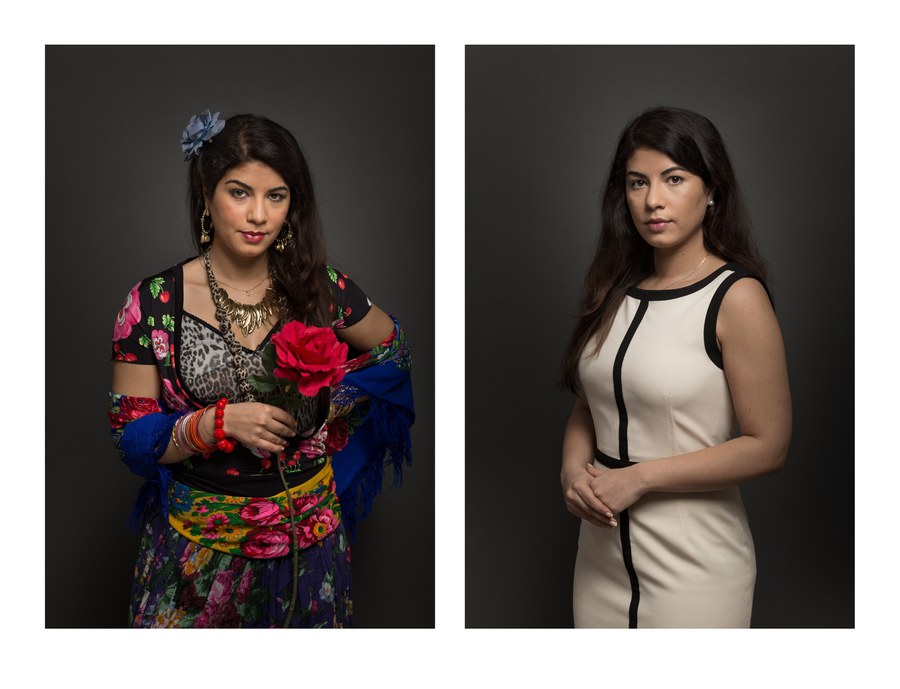
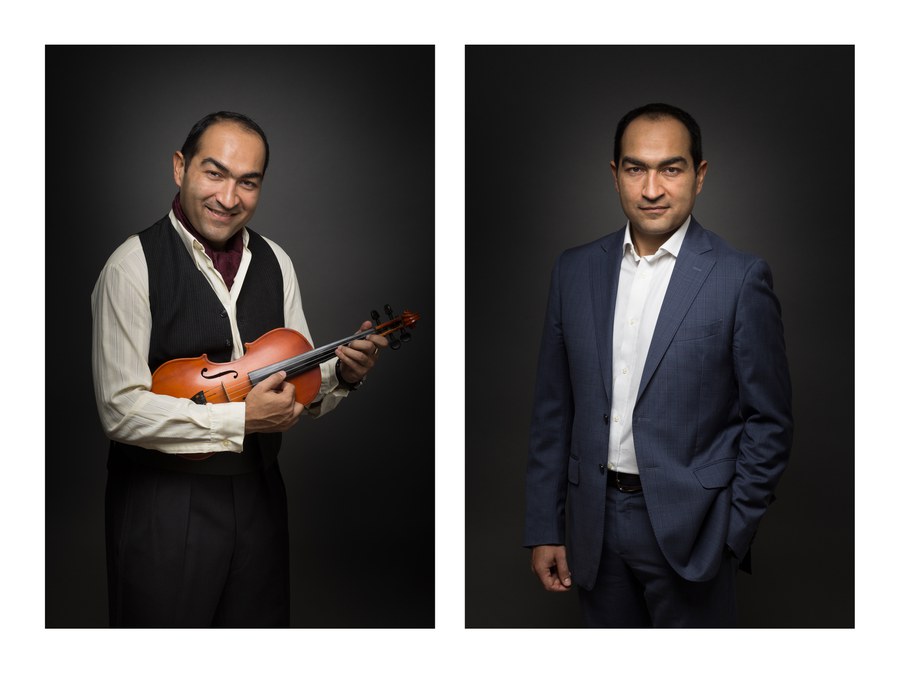
With photographic works by Miklós Déri (photographer, photojournalist, editor)
In his 2015 series Roma Body, he photographed posed, composed portrait pairs of Roma personalities, contrasting the stereotypes about Roma with the real lives of the "models" and their actual position in the world. With these opinion photographs, he showed the absurdity of negative stereotypes. He has taken part in several international exhibitions with his pictures on the subject of Roma, including in Prague and Berlin.
The first date of the traveling exhibition is on 08.04.2026 from 11-13 o'clock in front of the old cafeteria (GeTugetherZone).
The Safer Space is designed as a confidential community space, a community of people with shared life realities. The focus is on experiences, voices and forms of self-care and mutual encouragement.
The space thus offers an opportunity for exchange about everyday student life, attributions and questions of belonging. It will be accompanied by a student representative of the Sinti:zze and Rom:nja community.
Date: June 10, 2-5 p.m.
Location: GLB- 7102
Die Veranstaltungen werden gemeinsam realisiert mit dem Fachnetzwerk Antiziganismus/Antiromaismus.
Alle Veranstaltungen sind für die Teilnehmenden kostenfrei. Sollten Sie auf Grund sprachlicher oder anderer Barrieren von einer Teilnahme absehen, scheuen Sie sich bitte nicht uns diese zurückzumelden.
Antidiskriminierungsregel
Die Veranstaltenden legen großen Wert auf ein respektvolles, wertschätzendes und möglichst diskriminierungsfreies Miteinander. Jede Form von herabwürdigendem, beleidigendem oder störendem Verhalten ist nicht akzeptabel. Verstöße gegen diese Grundsätze können zum Ausschluss von der Veranstaltung führen.
Hinweise, Anregungen und Fragen richten Sie bitte an:
 © Crispin Mokry
Anja Wiede
Contact person in cases of harassment, discrimination, violence
Send encrypted email via the SecureMail portal (for TUD external users only).
Visiting address:
M13 Mensa und TUD, Room 6-234 Mommsenstr. 13
01069 Dresden
Unfortunately, access to my office is not barrier-free. Please let me know if you have any needs.
Gefördert vom Bundesministerium für Forschung, Technologie und Raumfahrt (BMFTR) und dem Freistaat Sachsen im Rahmen der Exzellenzstrategie von Bund und Ländern.