
Jan 23, 2026
Our plant of the week: Dermatobotrys saundersii
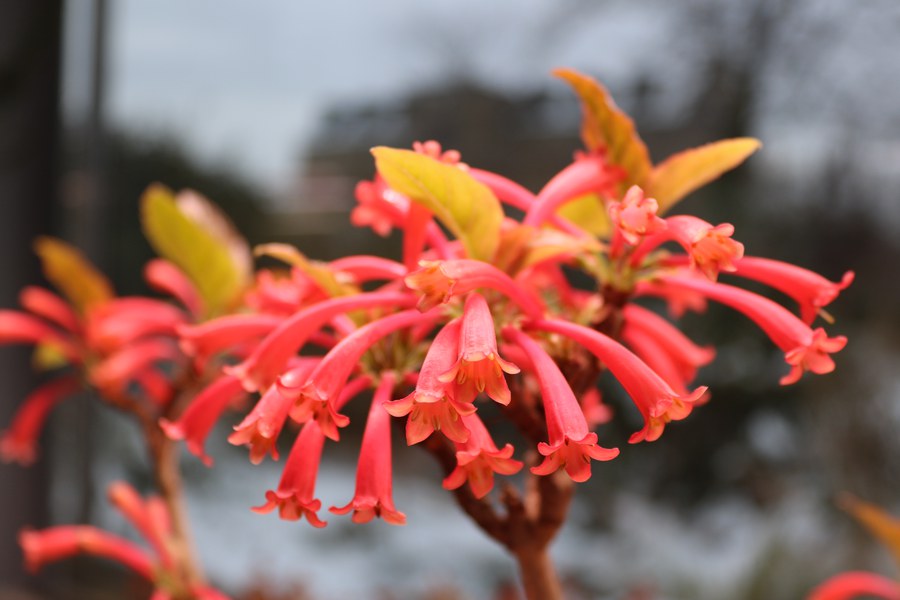
Dermatobotrys saundersii Bolus
A shrub with an unusual way of life is currently flowering in the Geophyte House: Dermatobotrys saundersii. In its native country it is known as the "Tree Jockey". A jockey on a tree - what a strange image? In fact, the up to 1 m tall shrub often grows as a perching plant (epiphytic) in treetops. However, it also thrives on the ground (terrestrial).
The brown root plant (family Scrophulariaceae) originates from the winter-dry coastal forests in the east of the Republic of South Africa. They are part of a variety of subtropical forest types which, alongside the deserts, are among the most species-rich habitats in the country.
The coral-red, tubular flowers open in the winter months. In South Africa, the plant, which is pollinated by nectar birds, now uses the rainy southern summer for its reproduction. In the subsequent dormant phase, it can lose all its leaves without damage.
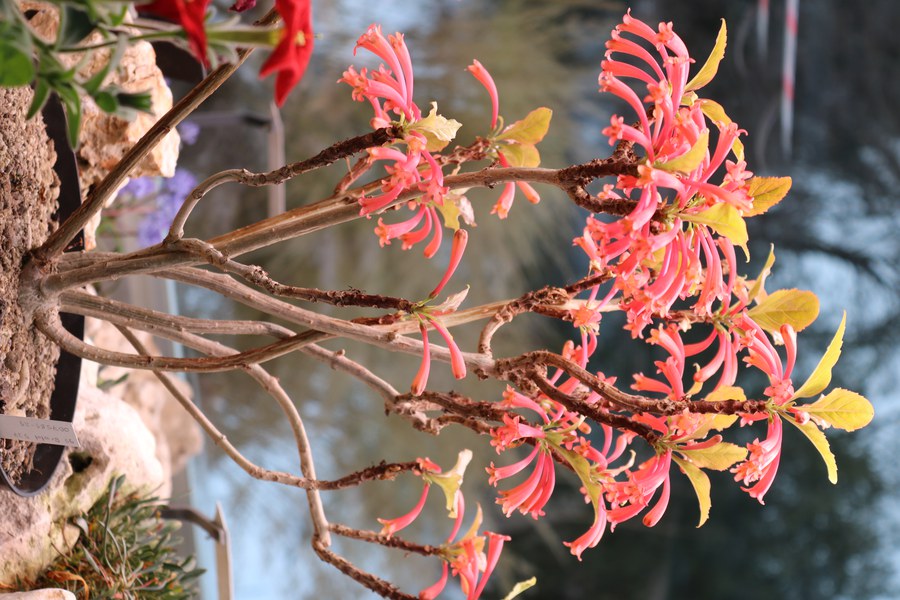
coral-red flowers occur in winter of northern hemisphere
The genus Dermatobotrys is monotypic: there is only this one species. The genus name is derived from the Greek words "derma" (skin) and "botrys" (grape). It refers to the fruits: the pointed-oval, edible berries, which are arranged in clusters, become soft with age, turn brown and develop a wrinkled surface. This apparently reminded South African namesake Louisa Bolus of weather-beaten human skin.
The second part of the species name honors Katharine Saunders. Born in England, she lived in the British colony of Natal in eastern South Africa from 1854 to 1901, where she became famous as a plant collector and botanical illustrator. She sent seeds of Dermatobotrys saundersii to the famous Kew Gardens in London, where the plant was cultivated and scientifically described in 1890.
(CW 4/26)
Around 10,000 plant species grow in the Botanical Garden of TU Dresden. On this page, we regularly present an example of this diversity in more detail. The special features of our scientific plant collection can be seen in many different ways: in amazing adaptations, strange names, interesting uses or even in the extraordinary splendor of their flowers.
You can view previous Plant of the Week articles in the archive.