
Oct 30, 2026
HyBridGen Keynote Presentations and Simulation Game on Digital Citizen Participation
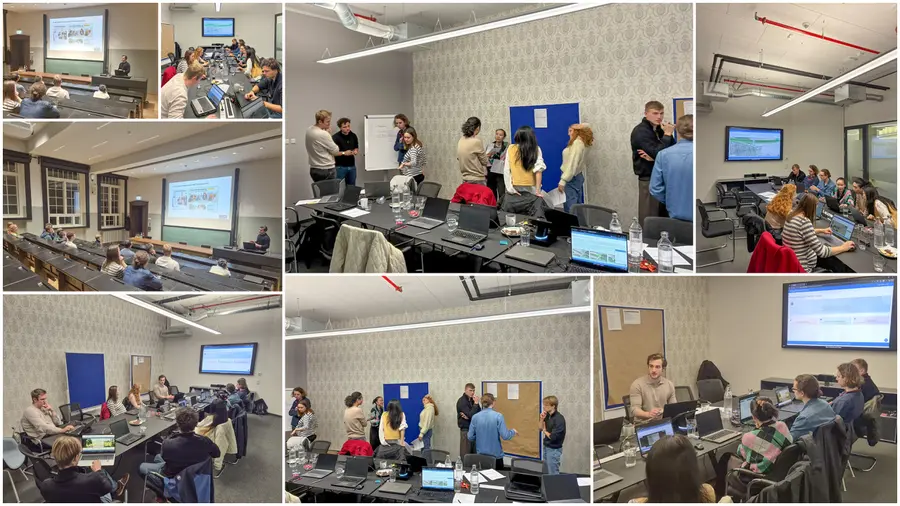
HyBridGen Keynote Presentations and Workshop Featuring a Simulation Game at Drees & Sommer in Dresden
On October 22 and 23, 2026, two events were held as part of the HyBridGen research project, focusing on digital and AI-supported bridge design as well as early public participation.
The event kicked off on Thursday with the HyBridGen keynote presentations at TU Dresden. Mengyan Peng, Tim Noack, and Han Qian from the Institute of Concrete Structures presented the HyBridGen research project, the objectives of the AI-supported bridge generator, and current developments in the field of digital planning. Jonah Scheible from Drees & Sommer, also a project partner in the HyBridGen consortium, then provided insights into public participation and its role within the project.
This was followed by an interactive workshop at Drees & Sommer on Postplatz in Dresden. We were particularly pleased by the active participation of students in Civil Engineering as well as colleagues from the Institute of Concrete Structures. Participants were able to try out the platform developed in the project for themselves, explore 3D bridge models, evaluate different design variants, and provide feedback directly within the digital model.
The combination of different perspectives proved particularly valuable. The students contributed their viewpoint as future users of digital planning tools, while colleagues from the Institute of Concrete Structures supplemented the testing with their technical expertise in bridge engineering. This provided us with valuable feedback not only on the bridge designs but also on the platform’s usability and comprehensibility, as well as its potential application in digital citizen participation.
The simulation provided a good opportunity to test the project results to date under realistic conditions and to gather direct feedback for further development.
We would like to extend our sincere thanks to all participating students as well as to our colleagues at the Institute of Concrete Structures for their keen interest, active participation, and numerous constructive comments. Special thanks also go to Drees & Sommer for their on-site organization and support, as well as to all other project partners who contributed to the success of the two-day event through the development of the platform and their professional and technical support.
The insights gained will now be incorporated into the further development of HyBridGen.