95th UNEP/UNESCO/BMUKN International Short Course - Circular Solutions for Sustainable Construction and Land Management (SC95)
Promoting circular construction and land management strategies that reduce environmental impacts, conserve resources, and support resilient, inclusive urban and regional development.
|
Funding period |
08 November – 12 December 2026 |
|
Course period |
12 November – 09 December 2026 |
|
Duration |
4 weeks, full-time |
|
Location |
On-site, Dresden |
|
Participants |
21 fellows |
|
Language |
English |
|
Application Period |
27 January – 03 March 2026 |
Interactive full-time course with intense personal guidance and support for building lasting networks in a peer-group of international professionals.
Motivation
The construction industry significantly contributes to global environmental challenges. It consumes vast amounts of natural resources, generates substantial waste, and produces a large share of global carbon emissions each year. The demand for infrastructure and housing has surged due to population growth and rapid urbanization, particularly in the Global South, intensifying environmental pressures.
The construction sector’s environmental footprint varies globally, with rapid urbanization in regions such as sub-Saharan Africa, South Asia, and Latin America driving sharp increases in construction activities. In many of these regions, informal construction practices dominate, exacerbating resource inefficiencies and environmental degradation. At the same time, the Global South presents unique opportunities for sustainable and circular practices due to its growing infrastructure needs and the potential to leverage locally available, renewable, and low-carbon construction materials and techniques.
These challenges are directly addressed in international agendas such as the 2030 Agenda for Sustainable Development—especially SDG 11 on sustainable cities and communities and SDG 12 on responsible consumption and production—as well as the Paris Agreement, which calls for deep decarbonization of the buildings and construction sector. Recent global assessments, including the Global Status Report for Buildings and Construction of the UNEP-hosted Global Alliance for Buildings and Construction, show that buildings and construction still account for a substantial share of global energy-related CO₂ emissions and are not yet on track to meet Paris-aligned pathways.
To address these challenges, construction, and land management must shift from a linear “take–make–dispose” model to a circular economy approach that prioritizes resource efficiency, reuse, and regeneration. Sustainable construction practices aligned with circular principles can reduce environmental impacts across the building life cycle, create economic opportunities, and foster innovation in materials, design, and building processes.
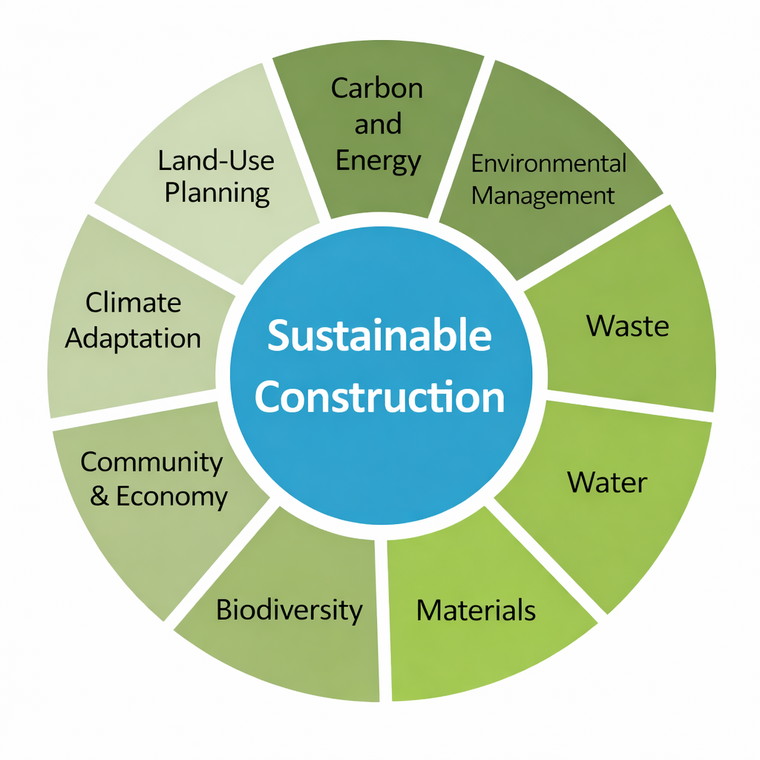
Figure 1: Pillars of Sustainable Construction
Concept
This short course examines the relationship between sustainable construction, land use planning, and the circular economy framework. It explores how integrating circular principles can transform construction practices and land management to create resilient and sustainable built environments.
The course combines theoretical insights with practical applications, leveraging a multidisciplinary approach to address environmental, social, and economic dimensions. Participants will explore core principles such as resource efficiency, material circularity, lifecycle thinking, and sustainable land management. They will analyse the impacts of conventional construction and land use practices and develop innovative strategies for sustainable building design, adaptive land use planning and ecosystem preservation.
By integrating land use into the sustainable construction discourse, the course emphasizes the importance of spatial planning, zoning regulations and landscape-level approaches. Participants learn how to minimize environmental impacts, protect natural habitats and ensure efficient use of resources. Through this blend of theoretical and practical knowledge, the course provides participants with tools to assess environmental impacts, design adaptive measures and implement effective sustainable construction practices within a circular economy framework.
The short course will explore critical topics such as:
- Resource Efficiency: Minimizing the use of virgin materials by optimizing designs for material efficiency, adopting renewable resources, and leveraging advanced construction technologies like prefabrication and 3D printing.
- Material Circularity: Designing buildings for disassembly, using recyclable or reusable materials, and adopting modular construction methods to facilitate material recovery at the end of a building’s life.
- Carbon Reduction: Utilizing low-carbon materials (e.g., cross-laminated timber, recycled concrete), enhancing energy efficiency in building operations, and integrating renewable energy systems to minimize the carbon footprint.
- Waste Minimization: Implementing waste management strategies such as on-site segregation, reuse of demolition materials, and incorporation of industrial by-products like fly ash or slag in concrete production.
- Land Use Planning: Ensuring that construction projects align with sustainable land use strategies to minimize habitat destruction, optimize urban density, and integrate green spaces. This includes prioritizing brownfield redevelopment over greenfield expansion and employing nature-based solutions to enhance resilience against climate change impacts.
- Innovation and Collaboration: Encouraging cross-sectoral partnerships to develop new technologies, share knowledge, and foster a culture of circularity across the construction value chain.
Learning Targets
Upon completion of the course, participants will be able to:
- Describe the core principles of sustainable construction and circular economy with examples.
- Evaluate the environmental, economic, and social impacts of construction activities using case studies or data from different regions.
- Develop strategies for integrating resource efficiency, material circularity, and land use planning into construction projects.
- Apply fundamental lifecycle assessment concepts and sustainable construction frameworks, and gain practical exposure to digital technologies (e.g., BIM, GIS) to support sustainable construction and land use planning decisions.
- Demonstrate the ability to coordinate and communicate with stakeholders to promote circular construction practices.
- Justify construction project decisions based on land use strategies that support habitat preservation, urban density, and green space development.
Target groups
This course is aimed at experts who prepare and implement political decisions and practical measures in ministries, authorities, local government, and non-governmental institutions in developing countries (including emerging economies) working on forest restoration, resource sustainability, as well as sustainable societal development.
explore circular construction and land management concepts and to work towards implementing them in their professional contexts. A first university degree (BA, BSc) in a related field is essential. Adequate English communication skills and formal nomination by the delegating institution are mandatory.
Why participate?
- Extensive experience of the CIPSEM team in delivering high-quality, impactful training programmes that address the specific challenges faced by professionals in developing countries and emerging economies.
- An intensive four-week, full-time learning experience that combines classroom sessions, field excursions, collaborative group work, and guided self-study units.
- Instruction by renowned international and German facilitators with strong academic and practical expertise.
- Increased motivation and professional inspiration through experience sharing, peer learning, and strong cohort bonding in a diverse group of 21 experts.
- Integration into a large and active international network of environmental professionals and leaders, supported by ongoing alumni activities.
- Practical transfer of knowledge and skills through the mentored development of Post-Training Action Plans (PTAPs) for implementation in participants’ professional contexts.
- Eligibility for course alumni to apply for Training-to-Action Fellowships of €2,000 each to support the implementation of their post-training action plans.
How to apply?
- Qualified professionals are welcome to apply from 27 January until 03 March 2026 via CIPSEM’s online application portal.
- The Steering Committee selects 21 participants by June 2026; successful participants are awarded a Certificate of Proficiency in Circular Solutions for Sustainable Construction and Land Management.
Application link: https://crm.bu.tu-dresden.de/ausschreibung?call=CIPSEM2026-SC95
Before applying, please also take a look at our hints on application, explanations regarding the application portal and answers to frequently asked questions. For information on other courses, please visit https://tud.de/cipsem/upcoming.
► If you have an important question that is not addressed on our website or in the help texts within the application form, please contact us at . Before reaching out, we ask you to check the resources provided thoroughly.